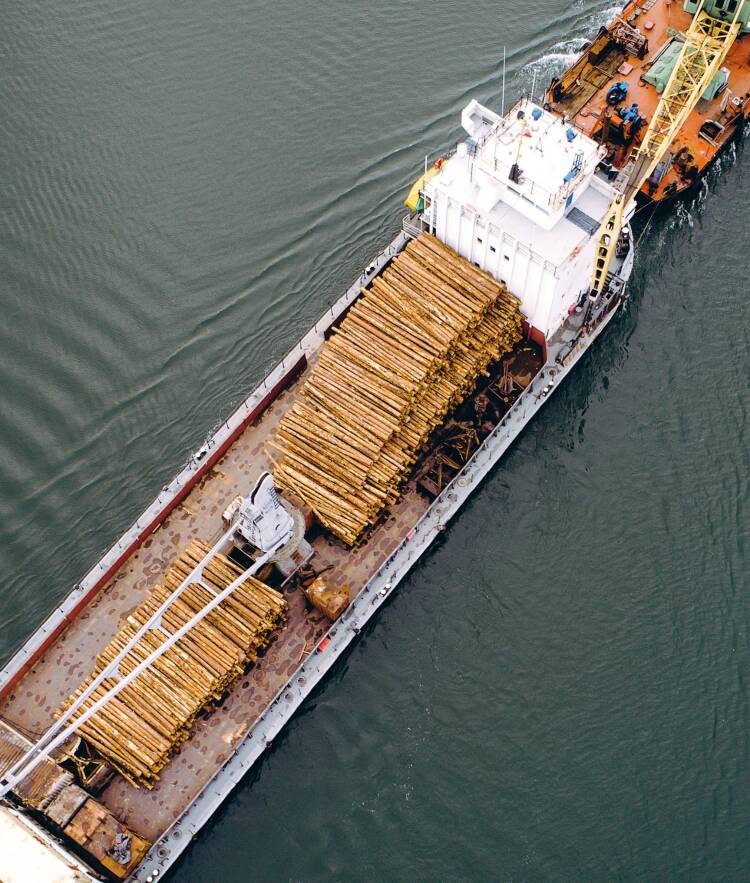
Most conversations about wood construction begin with design, performance, affordability or carbon sequestration. Yet before Canadian wood can become part of a home, school or commercial building, it must move through a long and complex supply chain.
The journey from the forest to a mill in a rural or northern community to a fabricator, distributor or job site may involve truck, rail, and intermodal connections. The extent to which these interlinking systems work reliably and efficiently has a direct effect on project cost, delivery schedules and the confidence of builders choosing wood-based systems.
The relationship between transportation supply chains and project delivery is especially important as Canada looks to expand housing supply. Light-frame construction, mass timber, hybrid systems, panelization, prefabrication and modular delivery can - help build faster and cheaper. Canada already has proven wood products and construction systems capable of supporting this growth. The challenge is not simply producing more material but creating an integrated forest-to-factory-to-front-door system that can move the right products to the right place, on time and at a competitive delivered cost.
ASK AN EXPERT
Forest-to-Factory-to-Front Door:
To Build More with Canadian Wood, Transportation Supply Chains Matter
Cost, timing and certainty
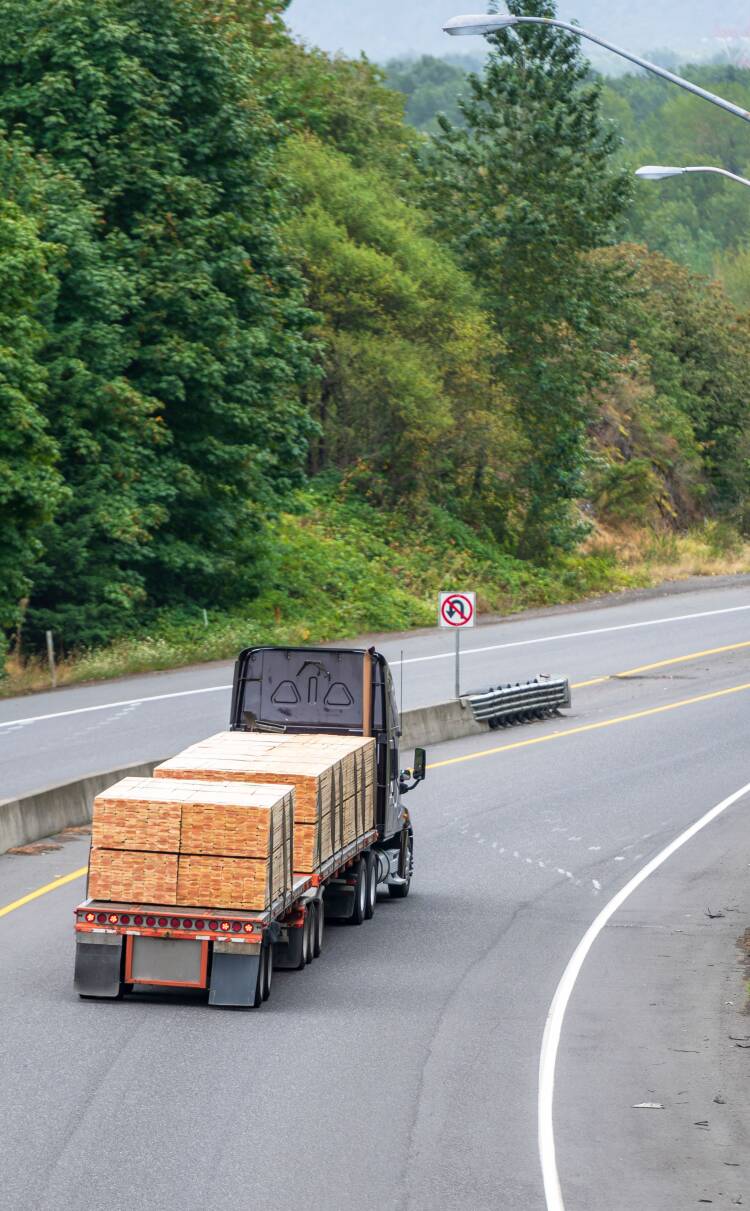
For lumber and other wood building materials like plywood and OSB, an average shipment travels roughly 1,200 kilometres over land. Approximately 90 per cent of Forest Products Association of Canada (FPAC) member mills are served by only one railway, limiting practical alternatives for long-distance movements. Trucks are indispensable for first- and last-mile connections, regional deliveries and access to rail terminals, but long-distance trucking is rarely economical for high-volume forest products. In many cases, rail remains the backbone of movement from mill regions to major domestic markets or gateways.
Connecting housing ambition to delivery
Canada’s housing challenge is often discussed as a question of starts, financing or approvals. It is also an industrial and logistics challenge. Scaling wood-based construction requires coordinated policy across housing, procurement, manufacturing, workforce, codes, approvals and transportation. Progress in one area can be undermined if the others do not keep pace.
A stronger domestic market can give Canadian manufacturers more predictable demand and help diversify a sector that remains highly exposed to external trade conditions. But domestic demand is not a substitute for competitive access to export markets, nor can it overcome supply chain constraints on its own. Canada needs both reliable market access and a domestic delivery platform capable of turning proven wood systems into repeatable housing outcomes.
One counterintuitive measure of success in transportation policy is the degree to which our freight supply chains go unnoticed. If Canada can resolve the acute and chronic challenges described here, the freight networks that deliver lumber, building materials, and manufactured goods will remain largely invisible to the people who benefit from them every day. Materials will arrive when expected, factories and job sites will remain productive, builders will have greater confidence in Canadian wood systems, and forest communities will be more closely connected to the housing and infrastructure needs of a growing country. That is the real promise of a forest-to-factory-to-front-door approach—not simply moving more wood but building a supply chain that allows Canadian wood to help deliver more homes, more reliably.
3
2
1
First, supply-chain performance should be measured in both operational and economic terms. Throughput is important, but it is not enough if products move at costs that make Canadian production uncompetitive. Public reporting should provide useful visibility into service, cost and corridor performance, while shippers need accessible remedies when service or pricing practices are unreasonable.
Second, infrastructure investment should focus on measurable user outcomes. Canada needs resilient trade corridors, but it also needs strategic first- and last-mile investments in transload capacity, inland terminals, warehousing, data technologies, road connections and projects that remove bottlenecks or provide redundancy. Policy should encourage private investment and prioritize projects that improve the performance of the network, rather than treating infrastructure announcements as outcomes in themselves.
Third, labour policy should support earlier negotiated settlements and credible, predictable processes that reduce the likelihood and duration of supply-chain stoppages. FPAC respects collective bargaining and represents a highly unionized sector. At the same time, repeated disruptions in rail, ports or marine transportation put forest-sector workers, customers and communities at risk. Labour stability and worker security should be treated as mutually reinforcing objectives.
Recent policy discussions about targeted rail relief have shown the importance of reflecting actual freight patterns, regional differences and potential effects on established truck-based supply chains. Durable improvements should strengthen the system as a whole and avoid shifting costs or traffic in ways that create new distortions.
FPAC proposed a roadmap to effective policy in its 2025 report,Fixing Canada's Transportation Supply Chains: Solutions for a Competitive Forest Sector. The strategy organized around three connected outcomes: stronger competition and accountability, modern infrastructure and data, and greater labour stability. These are practical foundations for a transportation system that supports housing, manufacturing and trade.
What better public policy should deliver
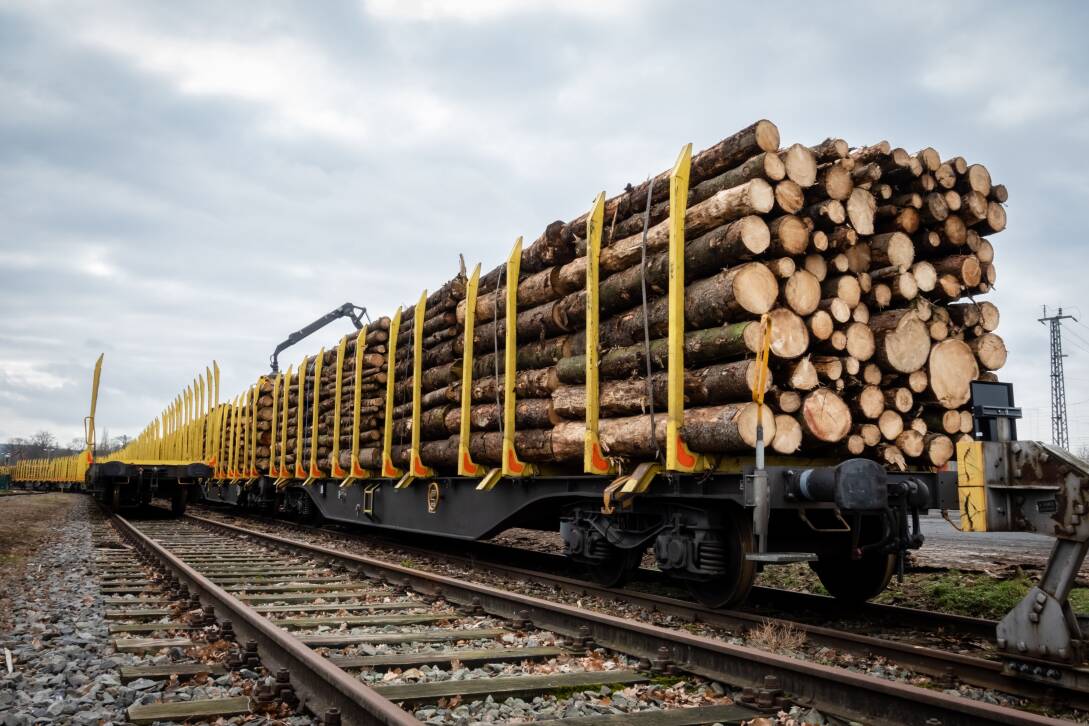
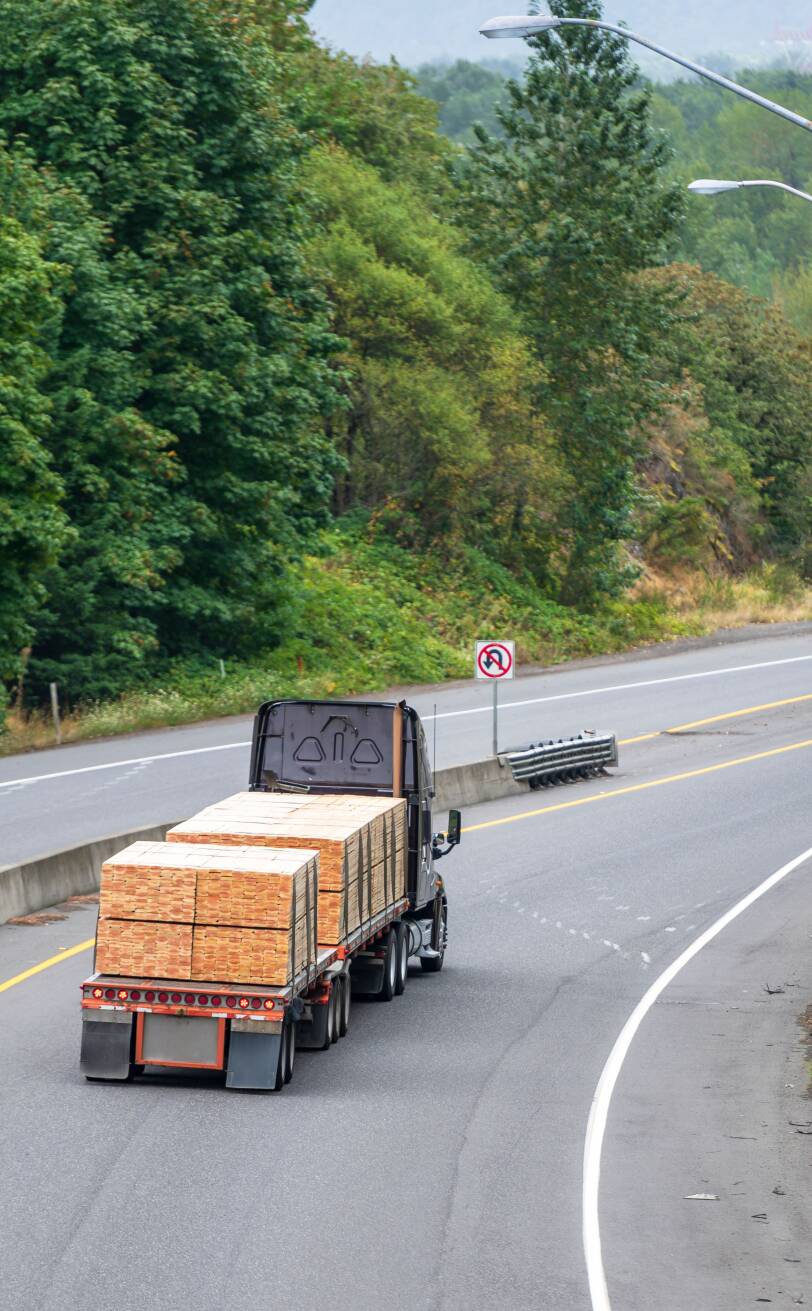
Wood-based housing depends on a network in which each mode plays a different role. Trucks connect forests, mills, transload facilities, fabricators and local customers. Rail provides long-haul capacity for large volumes moving between regions. Weakness in one mode can cascade through the others.
This is why transportation policy should be conceived holistically, with the full system and its functionality in mind.No singular action or adjustment will improve overall system function or resilience, which will instead come from the cumulative effect of actions up, down, and across the supply chain.
These conditions make delivered cost and service reliability central competitiveness issues. Rail and terminal expenses can represent a significant share of delivered product value, particularly when commodity prices are weak. FPAC analysis suggests that rail costs can represent 20–25% of typical delivered product value, or $2–3 billion annually for the sector. This is roughly equivalent to 15% of the forest industry’s annual real GDP, or 50% of current annual capital and repair expenditure across the sector.
In addition to cost pressures, reliability has been a persistent challenge within Canadian transportation supply chains. Interruptions, congestion, infrastructure outages and labour disputes can quickly leave mills without shipping capacity and buyers without predictable delivery. For construction customers, the result can be budget pressure, rescheduling and greater reluctance to adopt unfamiliar systems.
Persistent work stoppages at railways and ports have affected supply chains in 15 of the last 16 years, with prolonged disputes costing manufacturers millions per week and eroding customer confidence. In the trucking sector, historic tightness in labour markets for long haul drivers has been a persistent worry—Trucking HR Canada notes that the trucking industry’s job vacancy rate is still “1.5 times higher than the average across the Canadian economy.”
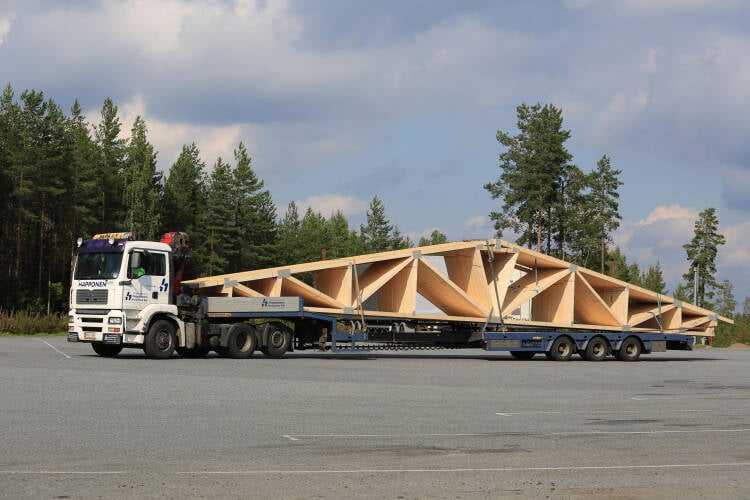
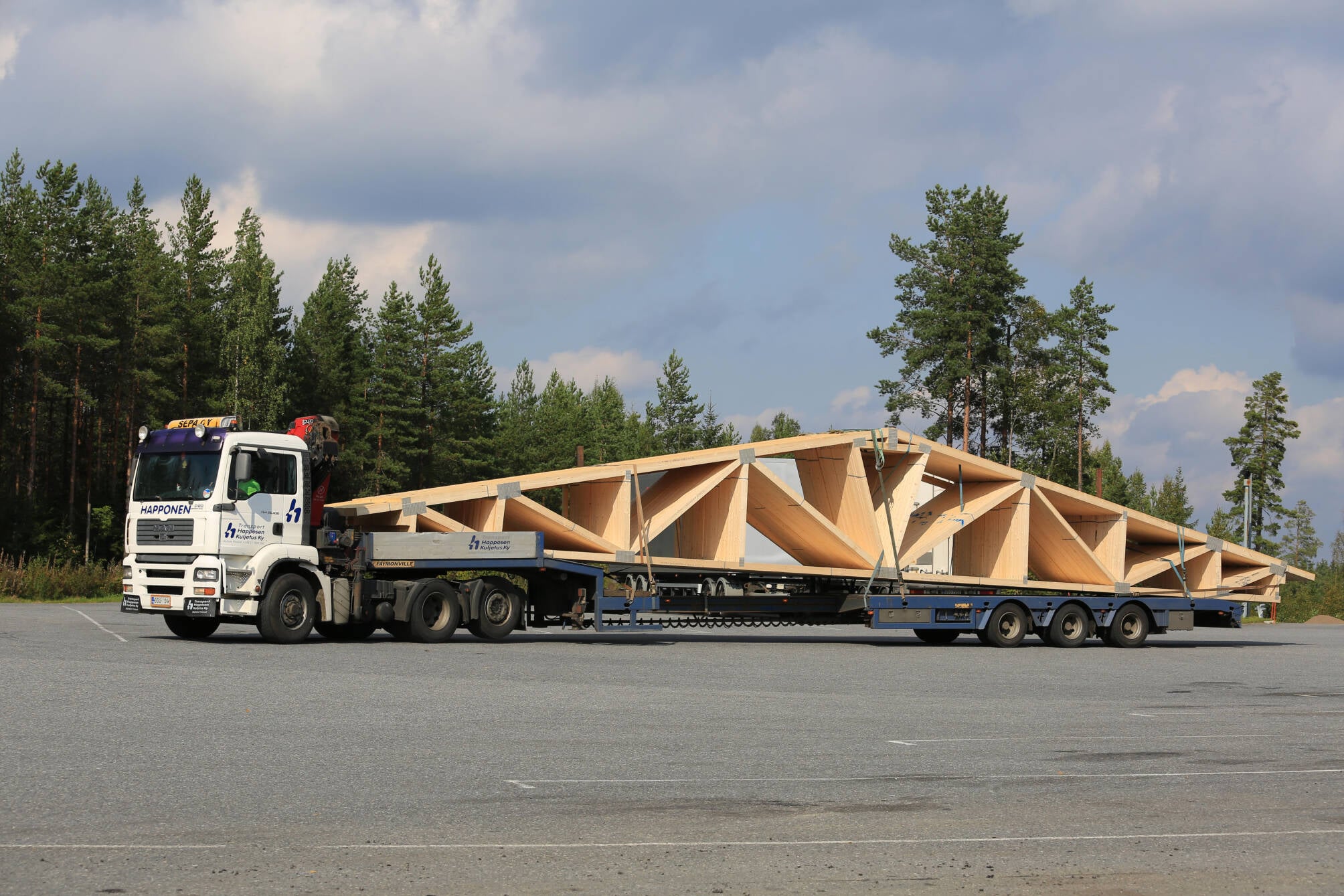
The issue becomes even more visible with modern methods of construction. Off-site manufacturing depends on a synchronized flow of inputs into factories and finished components out to projects. A late load of dimensional lumber can disrupt production, and a late mass-timber panel or modular element can interrupt an installation sequence.
For lumber and other wood building materials like plywood and OSB,
an average shipment travels roughly 1,200 kilometres over land.
A national opportunity rooted in regional supply chains
Canada’s wood-products manufacturing base is distributed across the country, often in rural and remote communities, far from its largest construction markets. That geography is, on one hand, a significant asset. Canada’s forests produce slow-growing, high-quality timber that is valued globally for its physical properties, and forest-sector facilities support jobs, investment and economic activity in hundreds of communities. However, the vastness of our country also means transportation cannot be an afterthought.
Different products follow different routes. Conventional lumber and panels may move from mills to wholesalers, lumber yards, retailers or directly to builders. Engineered wood products may pass through secondary manufacturers or fabricators. Mass-timber elements and prefabricated wall, floor or roof systems may require carefully sequenced deliveries to match installation schedules. The more construction becomes industrialized, the more important coordination becomes across manufacturers, logistics providers, project teams and sites.
Canadian Wood Council (CWC) analysis identifies more than 500 million board feet in incremental growth potential for wood products across residential and non-residential construction, even without an increase in housing starts. That's enough lumber to build nearly 30,000 additional homes, equivalent to adding the housing stock of a mid-sized Canadian city. Townhouses, mid-rise multi-unit housing, schools, warehouses and standardized public buildings can all support greater use of Canadian wood.But market growth will only be durable if the delivery system is as reliable as the building systems themselves.

By Ben McArthur, Director of Policy, Forest Products Association of Canada
ASK AN EXPERT
Forest-to-Factory-to-Front Door:
To Build More with Canadian Wood, Transportation Supply Chains Matter
Most conversations about wood construction begin with design, performance, affordability or carbon sequestration. Yet before Canadian wood can become part of a home, school or commercial building, it must move through a long and complex supply chain.
The journey from the forest to a mill in a rural or northern community to a fabricator, distributor or job site may involve truck, rail, and intermodal connections. The extent to which these interlinking systems work reliably and efficiently has a direct effect on project cost, delivery schedules and the confidence of builders choosing wood-based systems.
The relationship between transportation supply chains and project delivery is especially important as Canada looks to expand housing supply. Light-frame construction, mass timber, hybrid systems, panelization, prefabrication and modular delivery can - help build faster and cheaper. Canada already has proven wood products and construction systems capable of supporting this growth. The challenge is not simply producing more material but creating an integrated forest-to-factory-to-front-door system that can move the right products to the right place, on time and at a competitive delivered cost.
Cost, timing and certainty
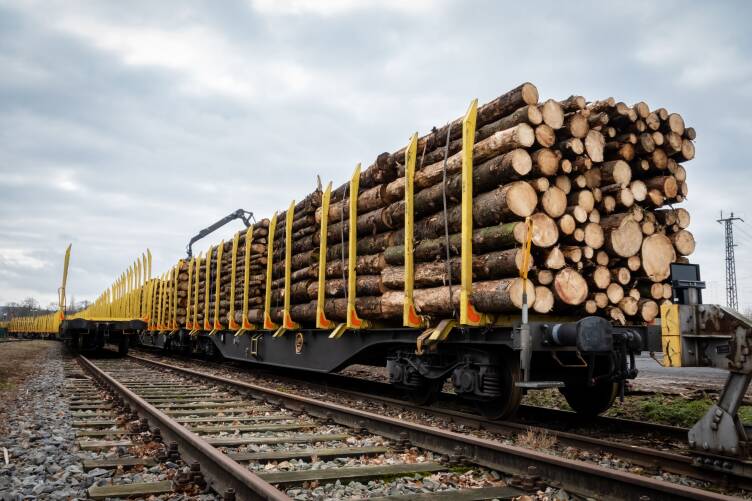
For lumber and other wood building materials like plywood and OSB, an average shipment travels roughly 1,200 kilometres over land. Approximately 90 per cent of Forest Products Association of Canada (FPAC) member mills are served by only one railway, limiting practical alternatives for long-distance movements. Trucks are indispensable for first- and last-mile connections, regional deliveries and access to rail terminals, but long-distance trucking is rarely economical for high-volume forest products. In many cases, rail remains the backbone of movement from mill regions to major domestic markets or gateways.
3
First, supply-chain performance should be measured in both operational and economic terms. Throughput is important, but it is not enough if products move at costs that make Canadian production uncompetitive. Public reporting should provide useful visibility into service, cost and corridor performance, while shippers need accessible remedies when service or pricing practices are unreasonable.
Second, infrastructure investment should focus on measurable user outcomes. Canada needs resilient trade corridors, but it also needs strategic first- and last-mile investments in transload capacity, inland terminals, warehousing, data technologies, road connections and projects that remove bottlenecks or provide redundancy. Policy should encourage private investment and prioritize projects that improve the performance of the network, rather than treating infrastructure announcements as outcomes in themselves.
Third, labour policy should support earlier negotiated settlements and credible, predictable processes that reduce the likelihood and duration of supply-chain stoppages. FPAC respects collective bargaining and represents a highly unionized sector. At the same time, repeated disruptions in rail, ports or marine transportation put forest-sector workers, customers and communities at risk. Labour stability and worker security should be treated as mutually reinforcing objectives.
1
Recent policy discussions about targeted rail relief have shown the importance of reflecting actual freight patterns, regional differences and potential effects on established truck-based supply chains. Durable improvements should strengthen the system as a whole and avoid shifting costs or traffic in ways that create new distortions.
FPAC proposed a roadmap to effective policy in its 2025 report,Fixing Canada's Transportation Supply Chains: Solutions for a Competitive Forest Sector. The strategy organized around three connected outcomes: stronger competition and accountability, modern infrastructure and data, and greater labour stability. These are practical foundations for a transportation system that supports housing, manufacturing and trade.
For lumber and other wood building materials like plywood and OSB,
an average shipment travels roughly 1,200 kilometres over land.
These conditions make delivered cost and service reliability central competitiveness issues. Rail and terminal expenses can represent a significant share of delivered product value, particularly when commodity prices are weak. FPAC analysis suggests that rail costs can represent 20–25% of typical delivered product value, or $2–3 billion annually for the sector. This is roughly equivalent to 15% of the forest industry’s annual real GDP, or 50% of current annual capital and repair expenditure across the sector.
In addition to cost pressures, reliability has been a persistent challenge within Canadian transportation supply chains. Interruptions, congestion, infrastructure outages and labour disputes can quickly leave mills without shipping capacity and buyers without predictable delivery. For construction customers, the result can be budget pressure, rescheduling and greater reluctance to adopt unfamiliar systems.
Persistent work stoppages at railways and ports have affected supply chains in 15 of the last 16 years, with prolonged disputes costing manufacturers millions per week and eroding customer confidence. In the trucking sector, historic tightness in labour markets for long haul drivers has been a persistent worry—Trucking HR Canada notes that the trucking industry’s job vacancy rate is still “1.5 times higher than the average across the Canadian economy.”
The issue becomes even more visible with modern methods of construction. Off-site manufacturing depends on a synchronized flow of inputs into factories and finished components out to projects. A late load of dimensional lumber can disrupt production, and a late mass-timber panel or modular element can interrupt an installation sequence.
A multimodal system, not a single-mode solution
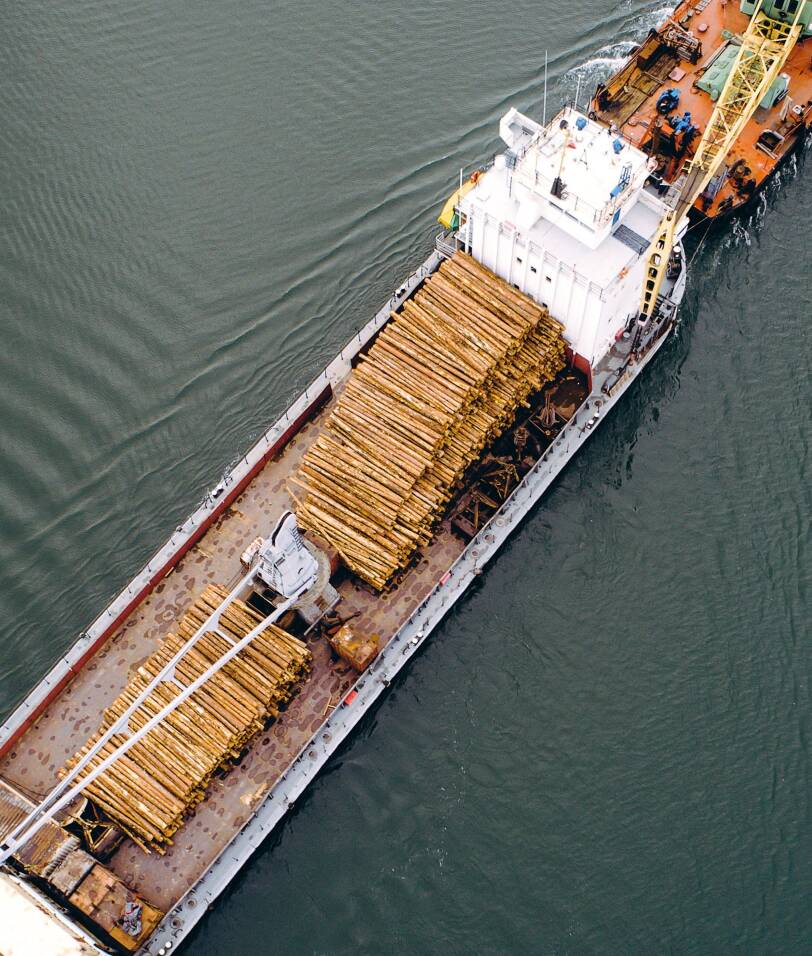
Wood-based housing depends on a network in which each mode plays a different role. Trucks connect forests, mills, transload facilities, fabricators and local customers. Rail provides long-haul capacity for large volumes moving between regions. Ports and marine services connect producers to coastal and offshore markets and, in some regions, are essential to domestic movements as well. Weakness in one mode can cascade through the others.
This is why transportation policy should avoid assuming that one incentive or one mode can solve the full problem. Recent discussions about targeted rail relief have shown the importance of reflecting actual freight patterns, regional differences and potential effects on established truck-based supply chains. Durable improvements should strengthen the system as a whole and avoid shifting costs or traffic in ways that create new distortions.
2
Connecting housing ambition to delivery
Canada’s housing challenge is often discussed as a question of starts, financing or approvals. It is also an industrial and logistics challenge. Scaling wood-based construction requires coordinated policy across housing, procurement, manufacturing, workforce, codes, approvals and transportation. Progress in one area can be undermined if the others do not keep pace.
A stronger domestic market can give Canadian manufacturers more predictable demand and help diversify a sector that remains highly exposed to external trade conditions. But domestic demand is not a substitute for competitive access to export markets, nor can it overcome supply chain constraints on its own. Canada needs both reliable market access and a domestic delivery platform capable of turning proven wood systems into repeatable housing outcomes.
One counterintuitive measure of success in transportation policy is the degree to which our freight supply chains go unnoticed. If Canada can resolve the acute and chronic challenges described here, the freight networks that deliver lumber, building materials, and manufactured goods will remain largely invisible to the people who benefit from them every day. Materials will arrive when expected, factories and job sites will remain productive, builders will have greater confidence in Canadian wood systems, and forest communities will be more closely connected to the housing and infrastructure needs of a growing country. That is the real promise of a forest-to-factory-to-front-door approach—not simply moving more wood but building a supply chain that allows Canadian wood to help deliver more homes, more reliably.
A national opportunity rooted in regional supply chains
Canada’s wood-products manufacturing base is distributed across the country, often in rural and remote communities, far from its largest construction markets. That geography is, on one hand, a significant asset. Canada’s forests produce slow-growing, high-quality timber that is valued globally for its physical properties, and forest-sector facilities support jobs, investment and economic activity in hundreds of communities. However, the vastness of our country also means transportation cannot be an afterthought.
Different products follow different routes. Conventional lumber and panels may move from mills to wholesalers, lumber yards, retailers or directly to builders. Engineered wood products may pass through secondary manufacturers or fabricators. Mass-timber elements and prefabricated wall, floor or roof systems may require carefully sequenced deliveries to match installation schedules. The more construction becomes industrialized, the more important coordination becomes across manufacturers, logistics providers, project teams and sites.
Canadian Wood Council (CWC) analysis identifies more than 500 million board feet in incremental growth potential for wood products across residential and non-residential construction, even without an increase in housing starts. That's enough lumber to build nearly 30,000 additional homes, equivalent to adding the housing stock of a mid-sized Canadian city. Townhouses, mid-rise multi-unit housing, schools, warehouses and standardized public buildings can all support greater use of Canadian wood.But market growth will only be durable if the delivery system is as reliable as the building systems themselves.