
As wood construction continues to evolve and expand through the use of novel mass timber products, advanced manufacturing and other modern methods of construction, the need for accessible, high-quality education has never been greater. Across Canada, educators, students, and industry professionals are looking for new ways to build the technical knowledge and practical skills required in a rapidly changing wood design and construction environment.
ASK AN EXPERT
Teaching Timber:
Inside CWC's National Education Strategy
SH: Thank you for your time today, Blériot. Can you please begin by introducing your role at the Canadian Wood Council?
BF: I lead the Wood Education program at the Canadian Wood Council, where I focus on advancing wood education nationally and supporting capacity building across the built environment sector.
SH: What is the main goal of the Wood Education program, and how are you working to achieve it?
BF: The Canadian Wood Council established the Wood Education program to help ensure that the next generation of architecture, engineering, and construction professionals is equipped with the knowledge and skills needed to design, engineer, manufacture, build, and maintain advanced wood buildings. This includes a broad range of systems and approaches, from mass timber and prefabricated wood buildings to hybrid wood-based construction involving modern methods of construction. The program is structured around three core pillars: student engagement and talent pipeline development; faculty support and curriculum enablement; and national eLearning integration and knowledge scaling. Together, these pillars allow us to address wood education holistically - from early exposure to advanced professional learning.
SH: Student engagement is a major part of the program. What does that look like in practice?
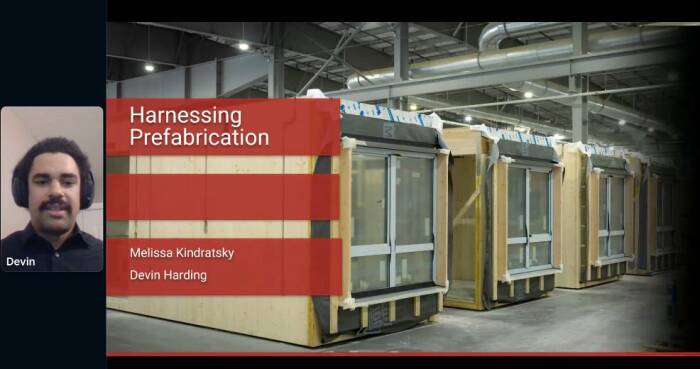
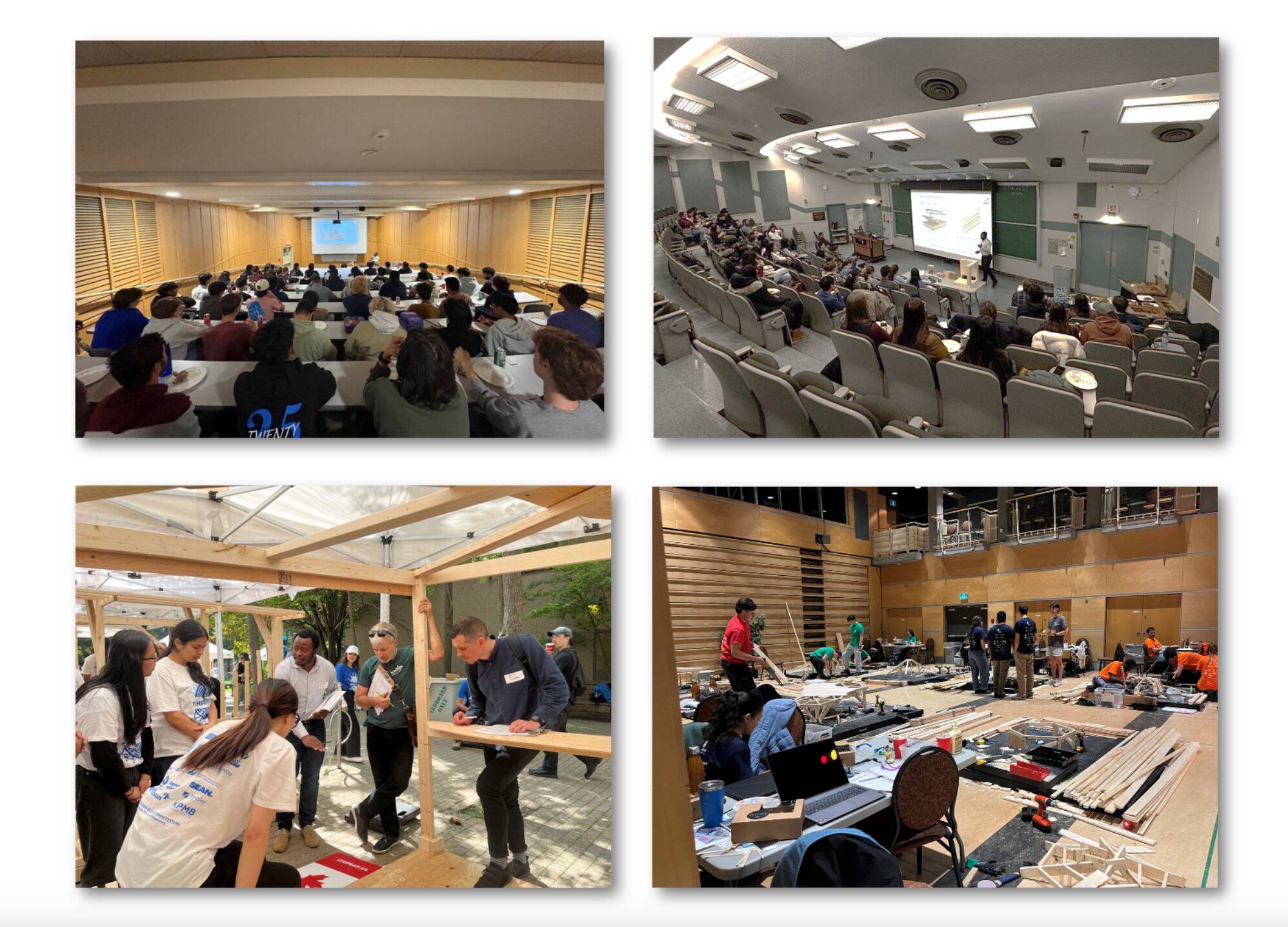
BF: Our objective is to build early and sustained interest in wood construction and modern methods of construction as viable, innovative, and impactful career pathways.We focus on engaging students as early as high school through accessible, adaptable resources that regions can tailor to their needs. This includes hands-on activities, visual content, and teacher ready materials that introduce wood construction concepts. To complement early engagement, we are working on developing a Wood Education Career Pathway Guide, with versions adapted to different education levels. This guide will clearly illustrate education-to-employment pathways across design, manufacturing, construction, and operations, helping address outdated perceptions and highlighting the opportunities offered by modern wood construction.For college and university students, we place strong emphasis on experiential learning through factory tours, site visits, wood design and construction seminars, student chapters deployment, and national design competitions. These activities are highly effective in sparking interest and building long-term engagement.


Wood Education initiatives — and explore available courses, webinars, and micro-credentials — can click here to visit the CWC eLearning Centre
SH: How are you supporting faculty and helping bring more wood education into classrooms across Canada?
BF: Faculty support focuses on removing barriers that prevent wood and modern methods of construction from being fully integrated into mainstream education. We work closely with experienced faculty and industry practitioners through a national advisory group to continuously develop and refine pedagogical resources, which are shared free of charge with educators across Canada.We are also working on launching a junior faculty mentoring program that pairs experienced wood educators with faculty members who are newer to the subject area, helping accelerate knowledge transfer and curriculum integration. This initiative will be complemented by faculty upskilling boot camps focused on wood design and engineering, as well as practical strategies for incorporating wood topics into teaching, research, and outreach activities.
SH: The new CWC eLearning Platform is a big initiative. How does it fit into the broader goals of the program?
BF: The CWC eLearning Platform serves as a national hub for delivering wood education in a consistent, accessible, and scalable way across Canada. Designed to support students, industry professionals, and educators, it brings together courses, webinars, micro-credentials, and pedagogical resources within a single, structured learning environment. The platform enables regional educational initiatives to be shared and expanded nationally, while maintaining a strong framework for quality, consistency, and long-term knowledge development.

Dr. Blériot Feujofack is the Manager of Education at the Canadian Wood Council, where he leads national initiatives to advance wood education through academic partnerships, innovative programming, and advocacy for sustainable wood construction. He holds a Ph.D. in Timber Engineering from the University of British Columbia, where his research focused on resilient connection technologies for mass timber panels, along with graduate degrees in Mechanical and Civil Engineering from the University of Quebec. Through his work at the CWC, he is helping shape the future of wood education and sustainable construction in Canada.
At the Canadian Wood Council, Blériot Feujofack, Ph.D., Manager of Wood Education, is helping lead that effort. Through a national approach to wood education, faculty support, student engagement, and digital learning, the program is working to strengthen the talent pipeline and expand access to wood-focused education across the architecture, engineering, construction, and development sectors. In this interview, Blériot sat down with Sarah Hicks from Wood Design & Building magazine to discuss the goals of the Wood Education program, the importance of experiential learning, and the launch of the CWC’s new eLearning Platform.

Top 3 eLearning Centre Courses
SH: What can users expect to find on the new eLearning Centre? Can you highlight some key features?
BF: The platform is designed to support multiple audiences and learning needs. Key features include flexible, online access to foundational and advanced learning; dedicated resources for students, professionals, and educators; micro-credentials and modular learning for targeted upskilling; and assessment-based certification with instant digital credentials.The eLearning Centre currently hosts more than 140 courses, along with pedagogical resources and micro-credentials, and continues to evolve as a dynamic and expanding national resource for wood education.
SH: Thank you again, Blériot, for sharing your insights and for the important work you’re leading to support wood education across Canada. As the industry continues to evolve, creating accessible, high-quality learning opportunities for students, educators, and professionals will be key to helping grow the next generation of talent and expertise in wood design and construction.
Do you have any final thoughts to share before we wrap up?
BF: Yes, I’d like to invite any educators or industry professionals who are developing educational content related to wood design and construction, and who are interested in sharing that knowledge with a broader audience, to connect with the Canadian Wood Council. We’re always interested in opportunities to collaborate, highlight valuable resources, and help expand access to wood education across the industry. Anyone interested in exploring collaboration opportunities can reach me by email at bfeujofack@cwc.ca


ASK AN EXPERT
Teaching Timber:
Inside CWC's National Education Strategy
As wood construction continues to evolve and expand through the use of novel mass timber products, advanced manufacturing and other modern methods of construction, the need for accessible, high-quality education has never been greater. Across Canada, educators, students, and industry professionals are looking for new ways to build the technical knowledge and practical skills required in a rapidly changing wood design and construction environment.
SH: Thank you for your time today, Blériot. Can you please begin by introducing your role at the Canadian Wood Council?
BF: I lead the Wood Education program at the Canadian Wood Council, where I focus on advancing wood education nationally and supporting capacity building across the built environment sector.
SH: What is the main goal of the Wood Education program, and how are you working to achieve it?
BF: The Canadian Wood Council established the Wood Education program to help ensure that the next generation of architecture, engineering, and construction professionals is equipped with the knowledge and skills needed to design, engineer, manufacture, build, and maintain advanced wood buildings. This includes a broad range of systems and approaches, from mass timber and prefabricated wood buildings to hybrid wood-based construction involving modern methods of construction. The program is structured around three core pillars: student engagement and talent pipeline development; faculty support and curriculum enablement; and national eLearning integration and knowledge scaling. Together, these pillars allow us to address wood education holistically - from early exposure to advanced professional learning.
SH: Student engagement is a major part of the program. What does that look like in practice?
BF: Our objective is to build early and sustained interest in wood construction and modern methods of construction as viable, innovative, and impactful career pathways.We focus on engaging students as early as high school through accessible, adaptable resources that regions can tailor to their needs. This includes hands-on activities, visual content, and teacher ready materials that introduce wood construction concepts. To complement early engagement, we are working on developing a Wood Education Career Pathway Guide, with versions adapted to different education levels. This guide will clearly illustrate education-to-employment pathways across design, manufacturing, construction, and operations, helping address outdated perceptions and highlighting the opportunities offered by modern wood construction.For college and university students, we place strong emphasis on experiential learning through factory tours, site visits, wood design and construction seminars, student chapters deployment, and national design competitions. These activities are highly effective in sparking interest and building long-term engagement.
Dr. Blériot Feujofack is the Manager of Education at the Canadian Wood Council, where he leads national initiatives to advance wood education through academic partnerships, innovative programming, and advocacy for sustainable wood construction. He holds a Ph.D. in Timber Engineering from the University of British Columbia, where his research focused on resilient connection technologies for mass timber panels, along with graduate degrees in Mechanical and Civil Engineering from the University of Quebec. Through his work at the CWC, he is helping shape the future of wood education and sustainable construction in Canada.

Wood Education initiatives — and explore available courses, webinars, and micro-credentials — can click here to visit the CWC eLearning Centre
SH: What can users expect to find on the new eLearning Centre? Can you highlight some key features?
BF: The platform is designed to support multiple audiences and learning needs. Key features include flexible, online access to foundational and advanced learning; dedicated resources for students, professionals, and educators; micro-credentials and modular learning for targeted upskilling; and assessment-based certification with instant digital credentials.The eLearning Centre currently hosts more than 140 courses, along with pedagogical resources and micro-credentials, and continues to evolve as a dynamic and expanding national resource for wood education.
SH: Thank you again, Blériot, for sharing your insights and for the important work you’re leading to support wood education across Canada. As the industry continues to evolve, creating accessible, high-quality learning opportunities for students, educators, and professionals will be key to helping grow the next generation of talent and expertise in wood design and construction.
Do you have any final thoughts to share before we wrap up?
BF: Yes, I’d like to invite any educators or industry professionals who are developing educational content related to wood design and construction, and who are interested in sharing that knowledge with a broader audience, to connect with the Canadian Wood Council. We’re always interested in opportunities to collaborate, highlight valuable resources, and help expand access to wood education across the industry. Anyone interested in exploring collaboration opportunities can reach me by email at bfeujofack@cwc.ca
SH: How are you supporting faculty and helping bring more wood education into classrooms across Canada?
BF: Faculty support focuses on removing barriers that prevent wood and modern methods of construction from being fully integrated into mainstream education. We work closely with experienced faculty and industry practitioners through a national advisory group to continuously develop and refine pedagogical resources, which are shared free of charge with educators across Canada.We are also working on launching a junior faculty mentoring program that pairs experienced wood educators with faculty members who are newer to the subject area, helping accelerate knowledge transfer and curriculum integration. This initiative will be complemented by faculty upskilling boot camps focused on wood design and engineering, as well as practical strategies for incorporating wood topics into teaching, research, and outreach activities.
SH: The new CWC eLearning Platform is a big initiative. How does it fit into the broader goals of the program?
BF: The CWC eLearning Platform serves as a national hub for delivering wood education in a consistent, accessible, and scalable way across Canada. Designed to support students, industry professionals, and educators, it brings together courses, webinars, micro-credentials, and pedagogical resources within a single, structured learning environment. The platform enables regional educational initiatives to be shared and expanded nationally, while maintaining a strong framework for quality, consistency, and long-term knowledge development.
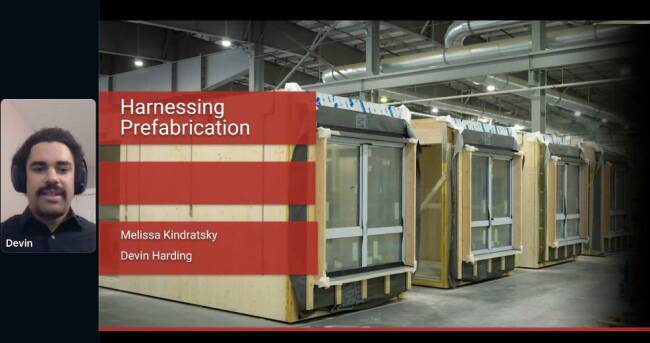


Top 3 eLearning Centre Courses