I spent my summers as a youth at a camp in Algonquin Provincial Park and am deeply attached to it; I still visit it every summer and have a cottage just 30 kilometers from the West Gate. Since the sixties, I have just accepted the mantra that logging in the park should be banned. The Wildlands League has been fighting to end logging since 1968; They still say on their website that “Logging must end in the park. Old growth forests, brook trout lakes and streams must be immediately protected, and 40% of the roads in the park must be shut down and restored.”
So, it was with a degree of trepidation that I accepted an invitation to “an immersive tour of the forest sector—from sustainable woodland management and harvesting through to sawmilling and wood processing” from WoodWorks and the Ontario Forest Industry Association. I may write often about wood design and buildings, but I worried that, to paraphrase Bismarck, forest products are like sausages - it is better not to see them being made. I wasn’t sure how an aging hippie treehugger like me would react to watching them chop trees in my beloved Algonquin Park.
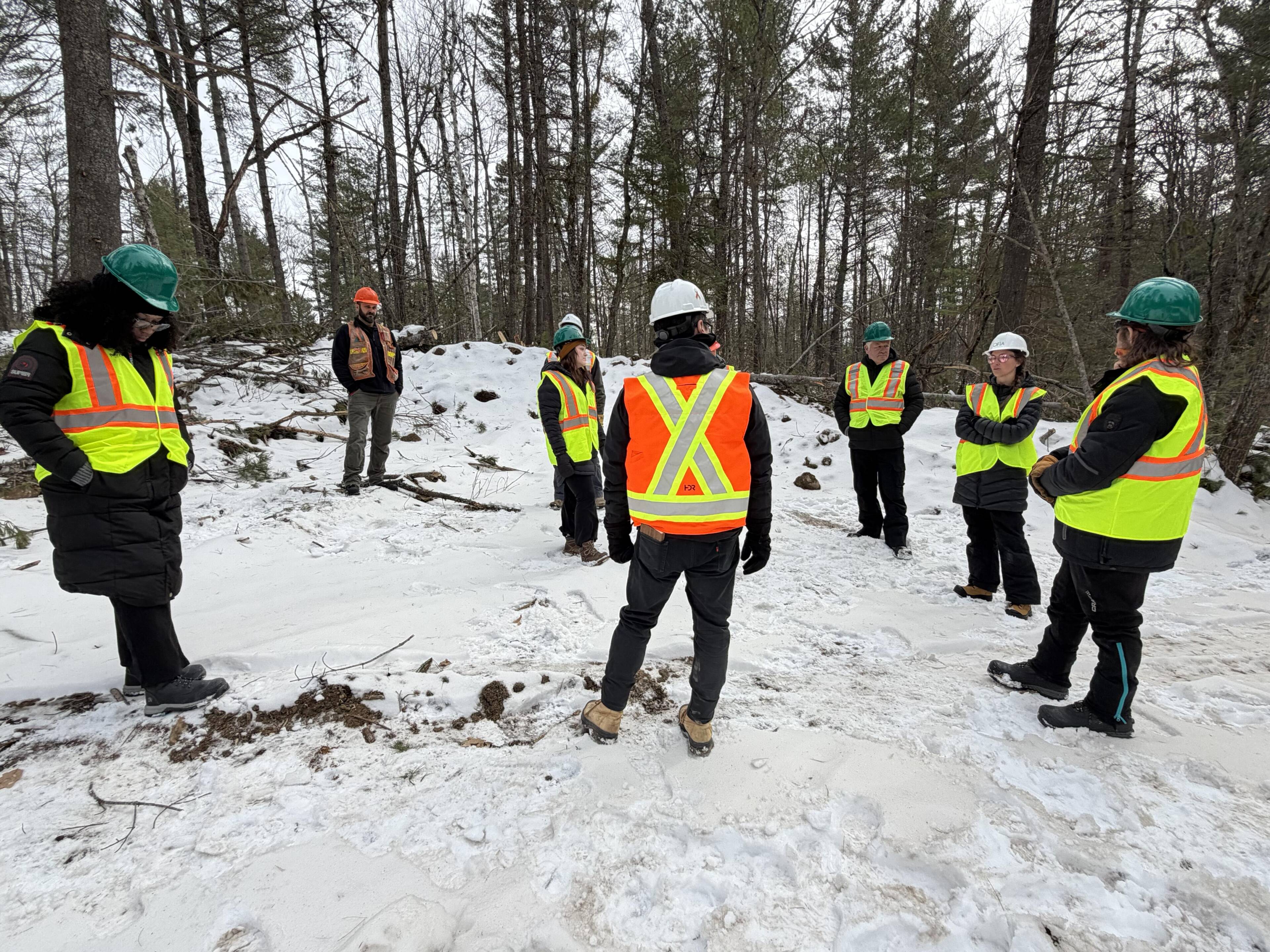
It was an interesting ride from Pembroke to the Park in the back seat of a pickup truck driven by Steve Bursey, manager of operations for the Algonquin Forestry Authority, who radioed his location every time we passed a kilometre marker to let the giant logging trucks know he was coming. We then stopped in a clearing in a part of the park where active logging was taking place.
FEATURE
A Treehugger Goes Logging:
reflections from a working forest
Scroll to Read

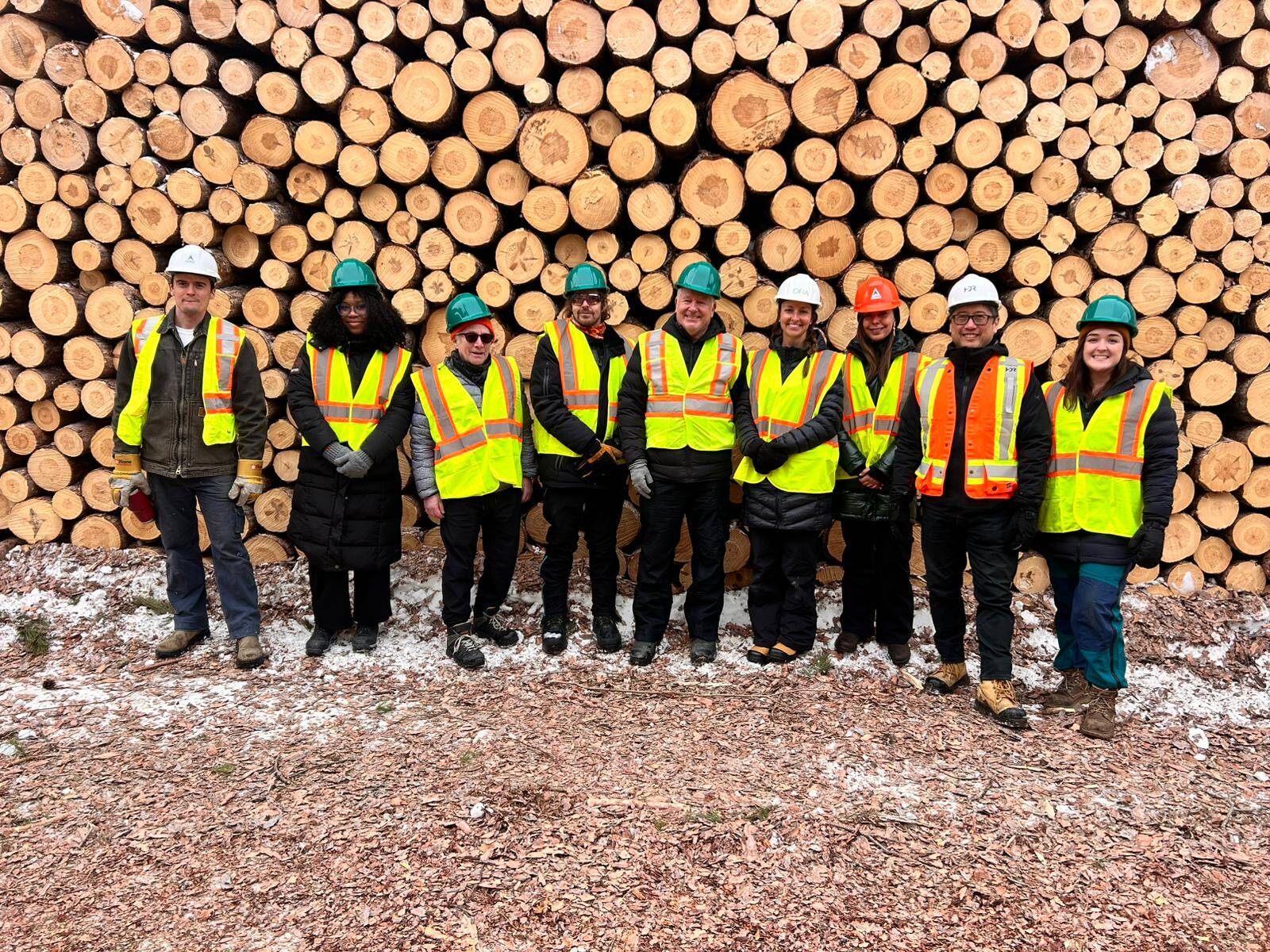
I wish every architect or designer who works with wood could take this trip into the forest and the mill and see the whole value chain. This is not like making steel or concrete; every piece of wood starts in the forest with someone marking a tree as a suitable candidate for harvesting. At the mill, it is like the hog butcher who uses everything but the squeal; they capture every scrap of sawdust to eke out a living.
If everyone could see the skill, care, and generational investment that goes into producing this sustainable, renewable material, we might not undervalue it as we do.
And after a lifetime of hearing that we should stop logging in the park, I have learned that it is as much or more a part of the culture and fabric of Algonquin Park than I am, a poseur with my red Chestnut canoe.
Photo credit: Donald Chong
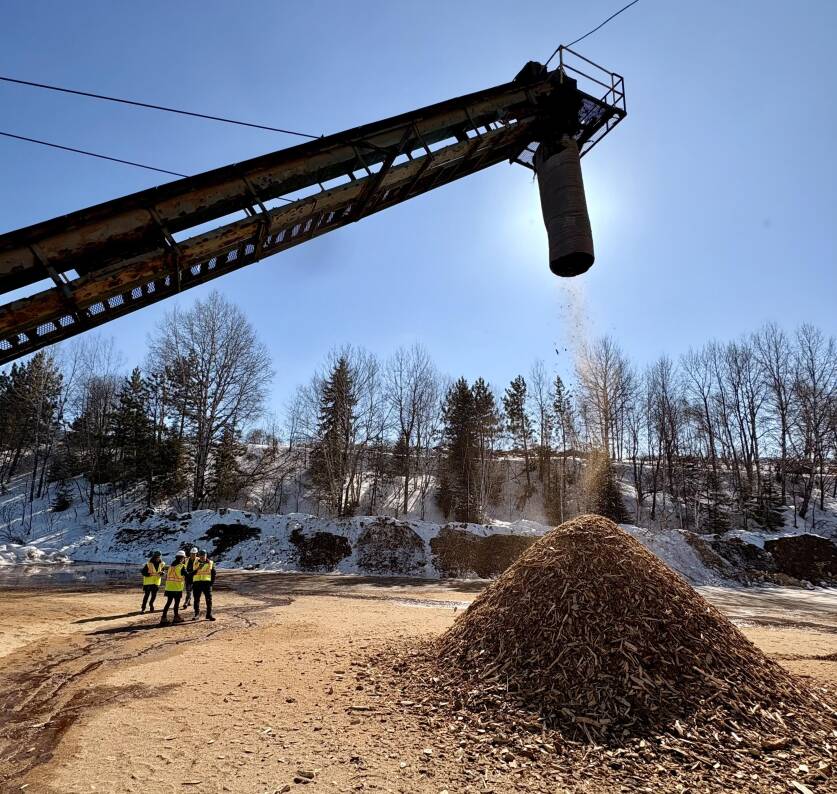
Photo credit: Lloyd Alter
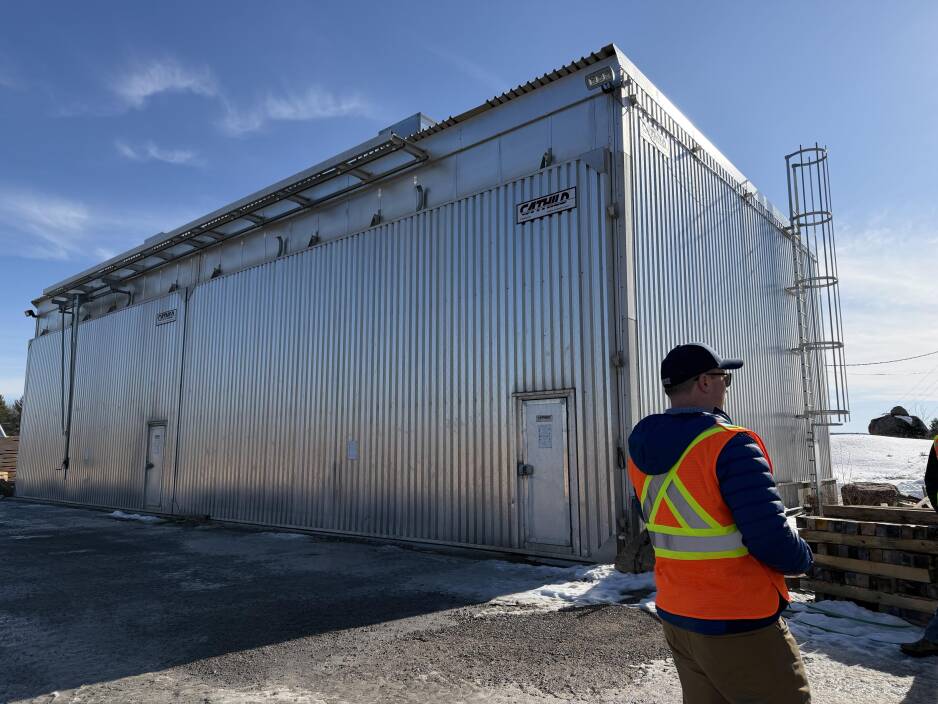
Photo credit: Lloyd Alter
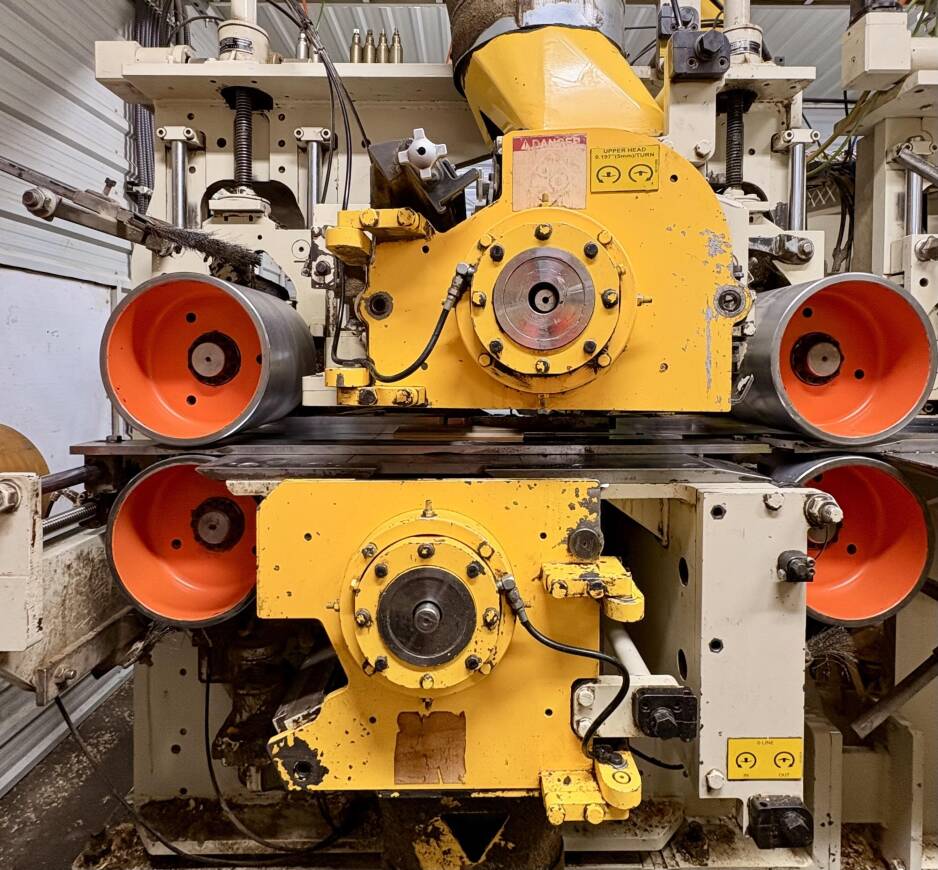
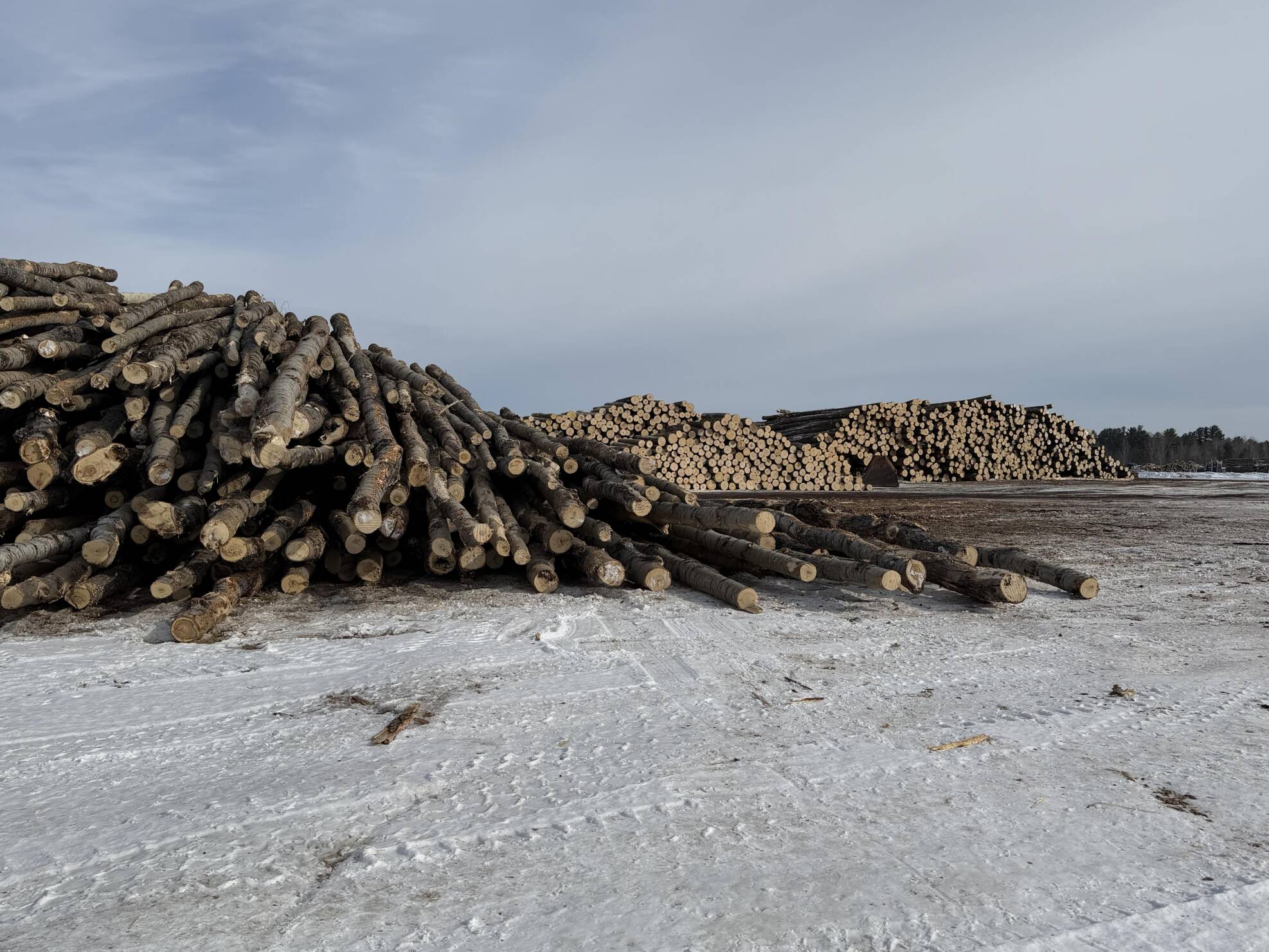
Photo credit: Lloyd Alter
Photo credit: Lloyd Alter
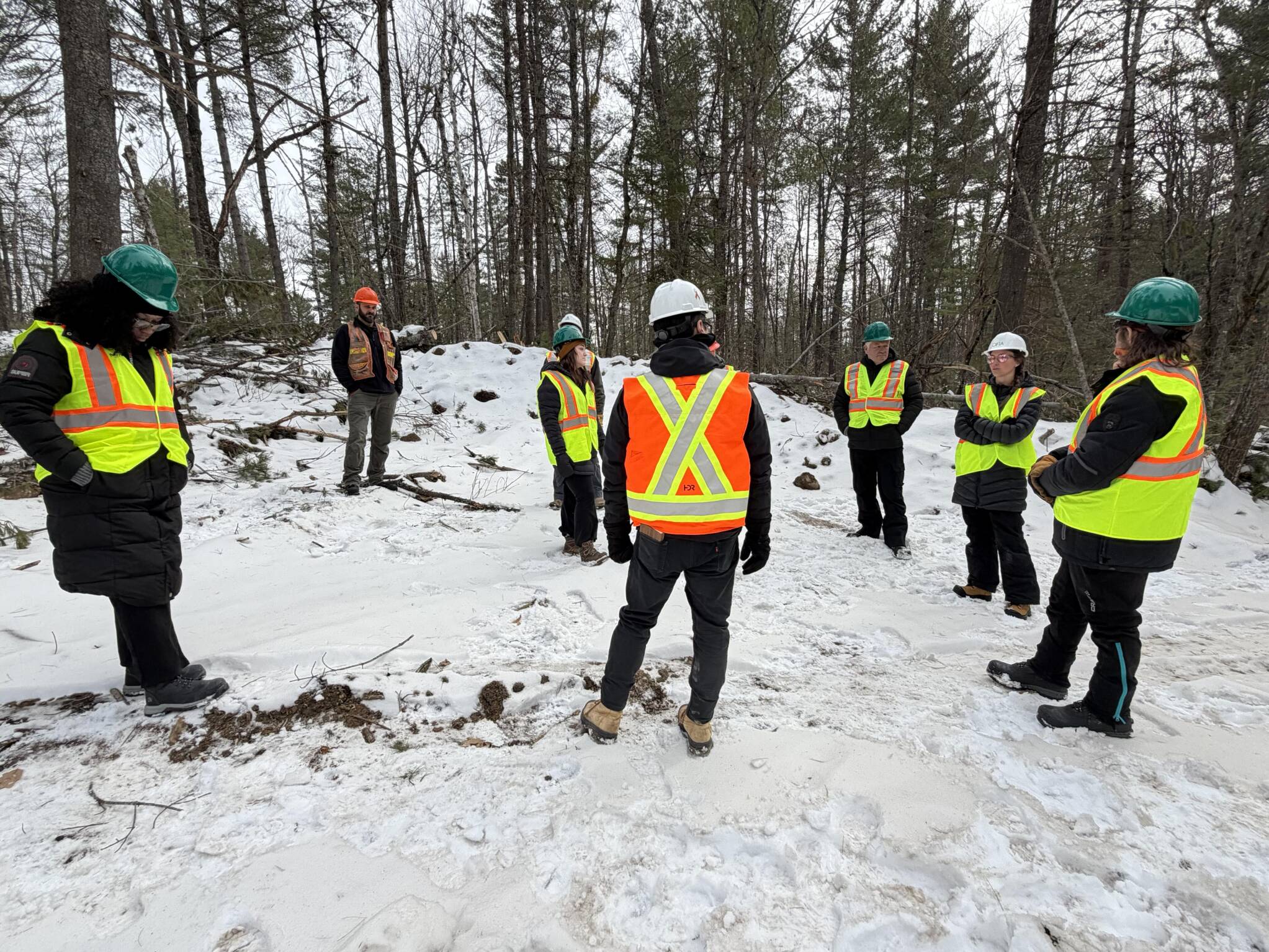
Photo credit: Lloyd Alter
Photo credit: Lloyd Alter
Then there are the aesthetics of the partial cutting, designed to look like a bug infestation, or a fire, or an airburst. Anything but what a camper from the city would think a logging operation looks like. It’s done in the dead of winter when there are no turtles or tourists.
The logs considered saw quality are debarked and moved into the sawmill building, where they go back and forth through a giant band saw that cuts them like a knife through butter.
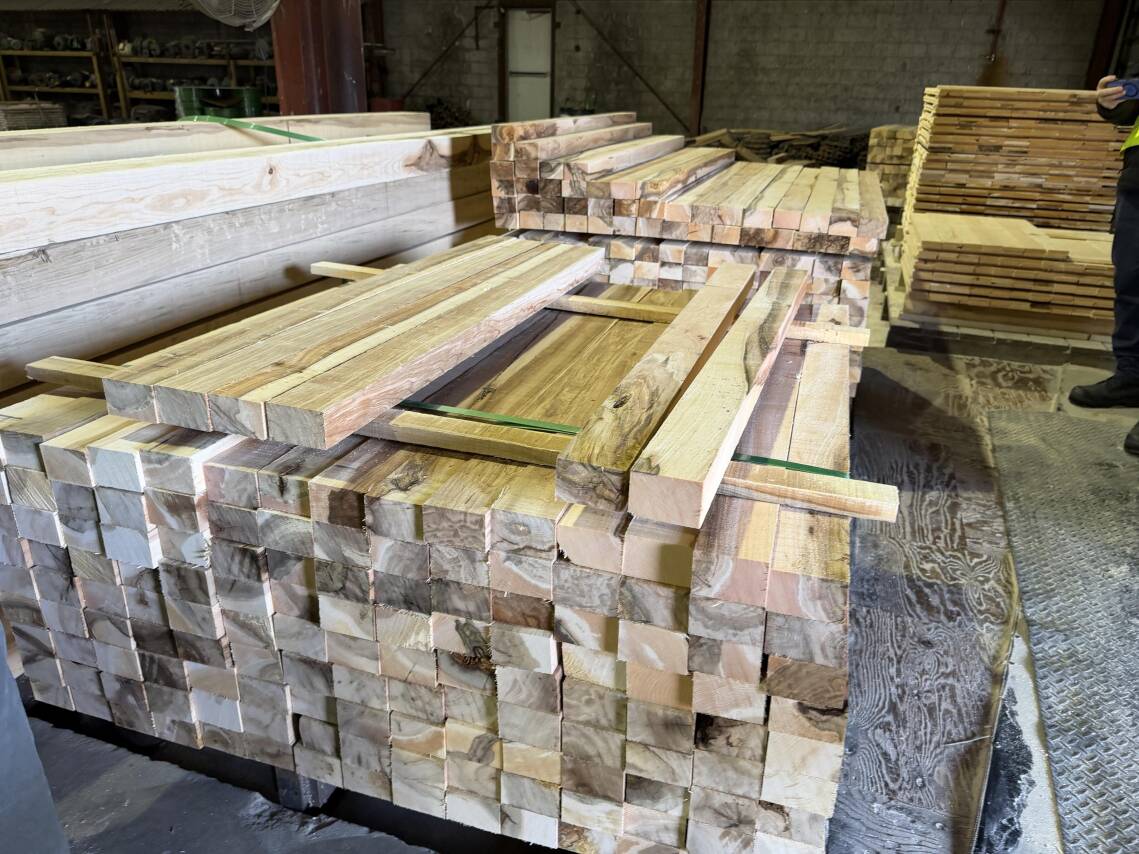
The main use of the maple is industrial - the steel industry uses it as blocking, and the construction industry for shoring. I was shocked by this; maple is hard and has serious compression strength, which is important for blocking. But it just seems to be such a gross underutilization of a valuable resource.
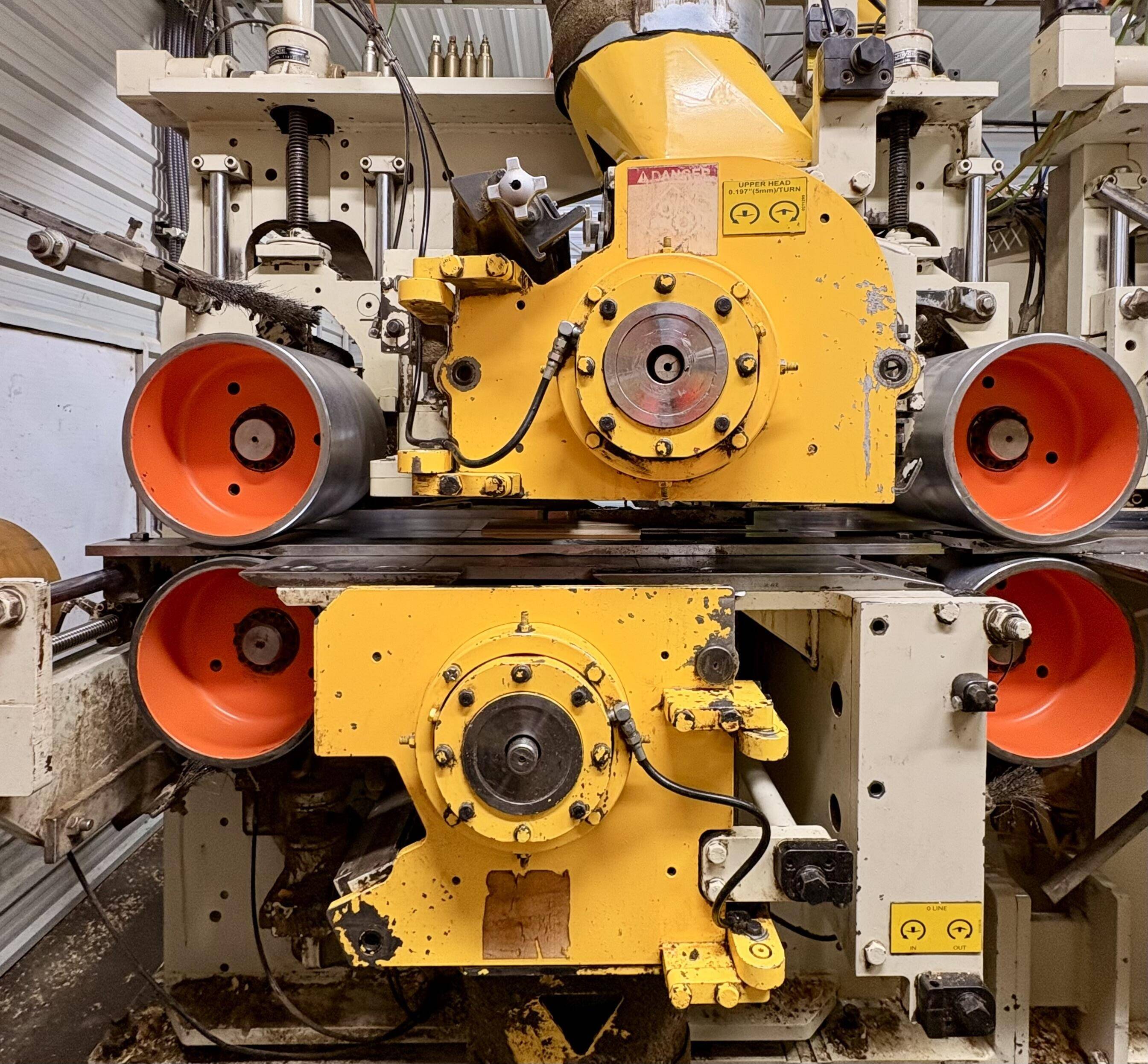
Down the road in Eganville, we visited Laverne Heideman and Sons, a youngster at only three generations old. Their planing mill cranks out standard patterns with computerized tools; their computer room looks like it could handle the space program. The bits for the planer cost $20,000 each. Once again, I am shocked to see how much effort, machinery, and skilled labour go into what I thought was a simple product.
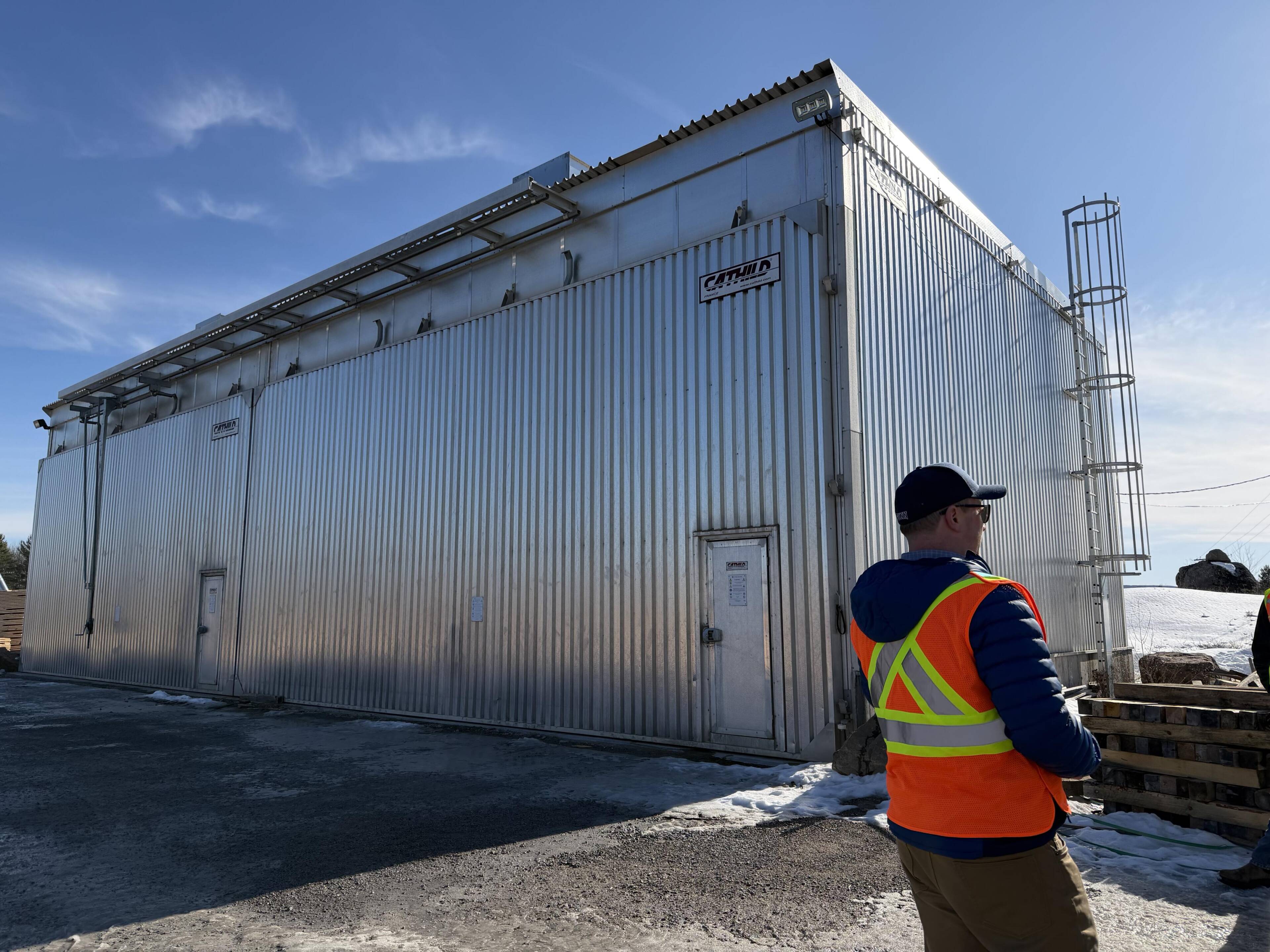
Heideman’s has a giant automated storage building where two men can do the work of forty. It has a shiny building with giant garage doors for kiln-drying the wood. It’s a massive investment in technology and infrastructure. As of this writing, the housing industry is in the tank, and there is not much demand for their products right now, but Kris Heideman says they have been through this before.
They try to squeeze every bit of value out of the log - the bark is sold for landscaping, about half of the wood is chipped and sold for pulp and paper, a quarter is sawdust shipped to Pembroke for MDF board, and just a quarter of it is usable wood, mostly hard maple. The market for residuals is poor, especially with the decline in pulp and paper.
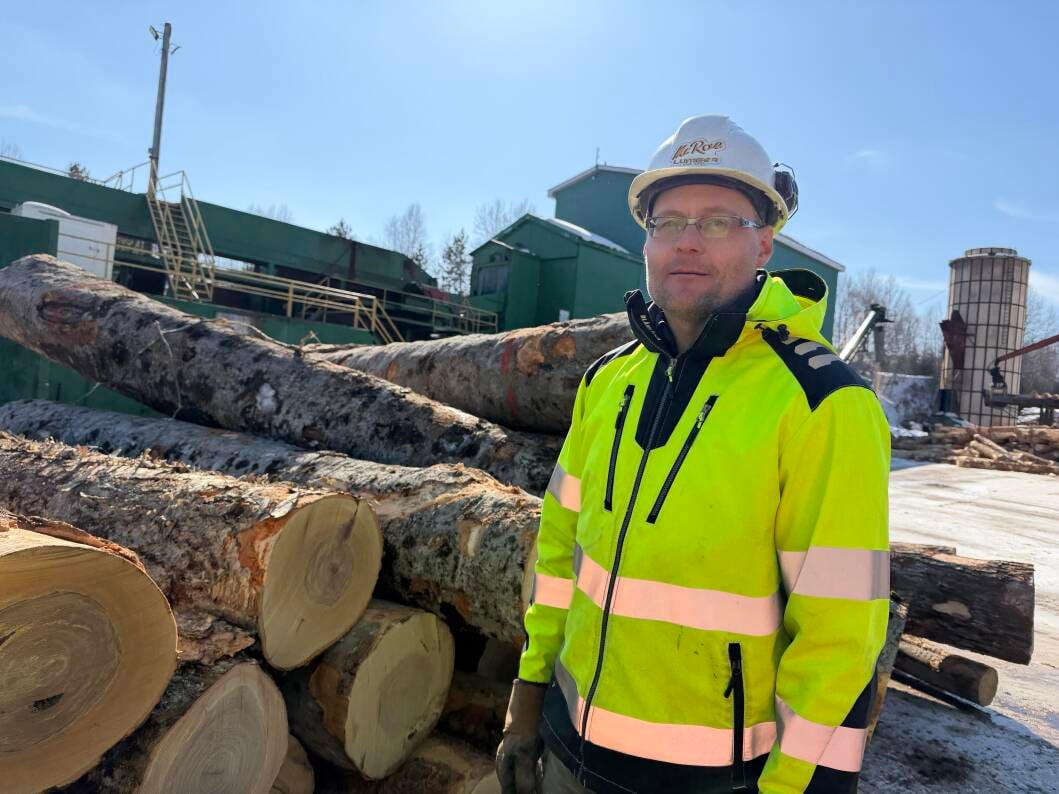
Jamie McRae and his brother John are the fifth generation of McRae’s to run the mill in Whitney, Ontario. Touring their operation was my second big shock of the tour- this is a tough, hardscrabble business.
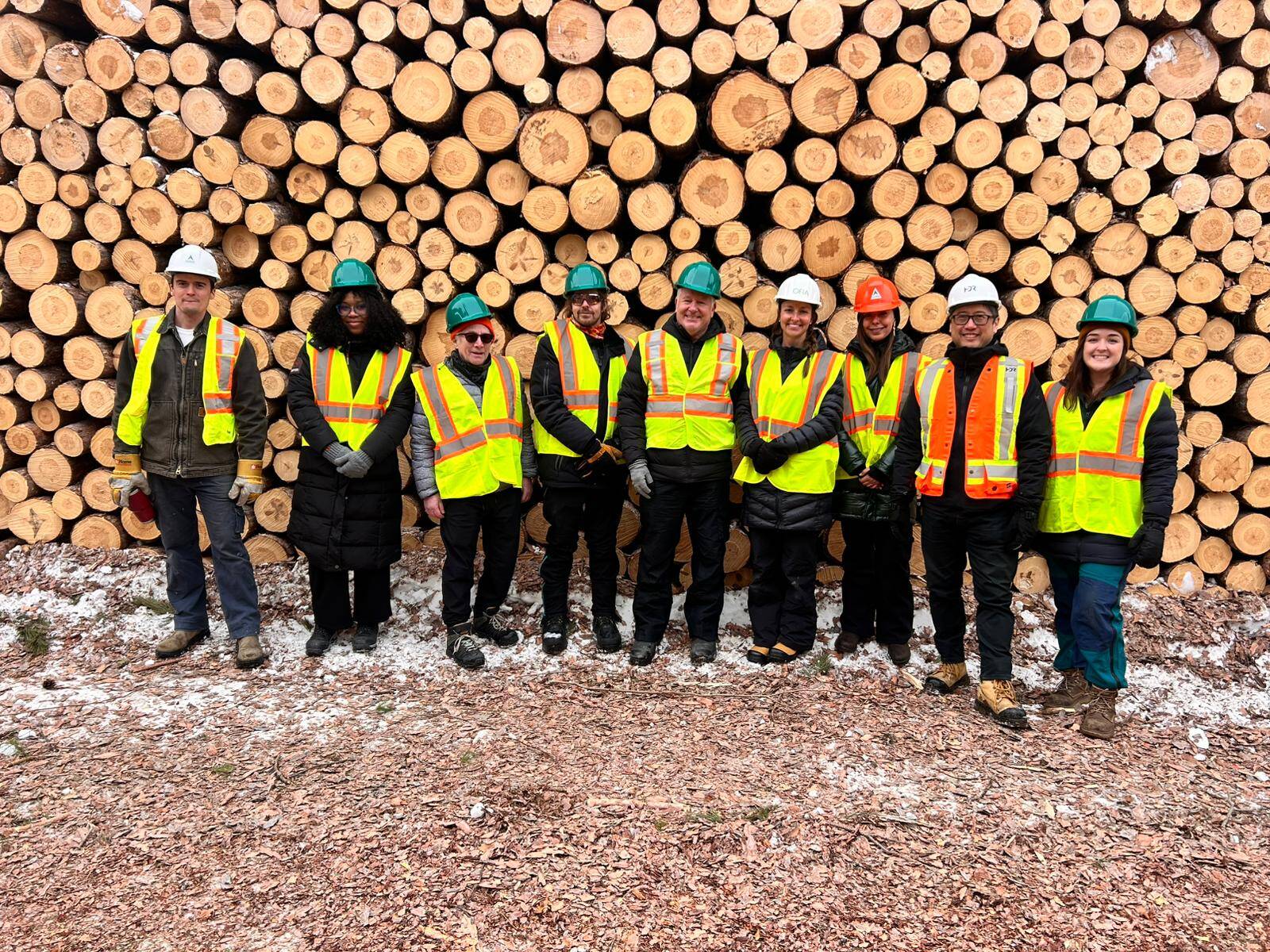
We saw two logging operations; Dombroski and Sons took out long telephone-pole-length trees, while Ben Hokum and Son cut them to shorter lengths, then brought them out of the forest with a monstrous John Deere truck. The operator then stacked them and knocked them into place as if they were toothpicks. It will all be gone by summer when the tourists arrive.
The visit to the park rattled a lifetime of preconceptions about logging. Algonquin was established in 1893 as “a public park, and forest reservation, fish and game preserve, health resort and pleasure ground for the benefit, advantage and enjoyment of the people of the Province.” But it was also intended to protect the interests of the logging industry from encroaching towns, farms, and Muskoka-style cottage ownership.
Donald Lloyd writes:
“The conflict between logger and recreationist in Algonquin, while still present, simmers well beneath the general public’s concern. The Master Plan for Algonquin Provincial Park and the Algonquin Forestry Authority serve as outstanding examples that compromise can be reached and made acceptable to most people. Most importantly, Algonquin continues to work its magic on many people.”
From there, it was back to a yard outside of Pembroke, where the logs are sorted according to species, size, and quality, and from where the Algonquin Forestry Authority sells the wood to the mills; the money they receive pays for their operations. The AFA sometimes is blamed for putting sustainability ahead of economics; as Jamie McRae of the McRae Lumber Company noted, “they make it hard for us to make a living.”
Except it didn’t look like active logging. It looked like… Algonquin Park. This is because of the silvicultural practice of partial cutting, where foresters from the Algonquin Forestry Authority mark the trees that are allowed to be cut. Donald Lloyd writes in Algonquin Harvest - the history of the McRae Lumber Company:
“What is marked is the product of environmentally-sound forest management practices: the blending of silvics, species diversity, fish and wildlife habitat and recreational values rather than the economics of the harvest. Tree markers must consider some or maybe all of the following: tree species diversity, moose calving sites, feeding and nesting cavities, stick nests, fruit and nut trees for birds and mammals, heron rookeries. Additional considerations include wintering requirements for deer and moose, fish habitat, slope percentages, siltation, as well as where canoe routes and campsites are located.”
I spent my summers as a youth at a camp in Algonquin Provincial Park and am deeply attached to it; I still visit it every summer and have a cottage just 30 kilometers from the West Gate. Since the sixties, I have just accepted the mantra that logging in the park should be banned. The Wildlands League has been fighting to end logging since 1968; They still say on their website that “Logging must end in the park. Old growth forests, brook trout lakes and streams must be immediately protected, and 40% of the roads in the park must be shut down and restored.”
So, it was with a degree of trepidation that I accepted an invitation to “an immersive tour of the forest sector—from sustainable woodland management and harvesting through to sawmilling and wood processing” from WoodWorks and the Ontario Forest Industry Association. I may write often about wood design and buildings, but I worried that, to paraphrase Bismarck, forest products are like sausages - it is better not to see them being made. I wasn’t sure how an aging hippie treehugger like me would react to watching them chop trees in my beloved Algonquin Park.
It was an interesting ride from Pembroke to the Park in the back seat of a pickup truck driven by Steve Bursey, manager of operations for the Algonquin Forestry Authority, who radioed his location every time we passed a kilometre marker to let the giant logging trucks know he was coming. We then stopped in a clearing in a part of the park where active logging was taking place.
FEATURE
A Treehugger Goes Logging:
reflections from a working forest
Photo credit: Donald Chong
I wish every architect or designer who works with wood could take this trip into the forest and the mill and see the whole value chain. This is not like making steel or concrete; every piece of wood starts in the forest with someone marking a tree as a suitable candidate for harvesting. At the mill, it is like the hog butcher who uses everything but the squeal; they capture every scrap of sawdust to eke out a living.
If everyone could see the skill, care, and generational investment that goes into producing this sustainable, renewable material, we might not undervalue it as we do.
And after a lifetime of hearing that we should stop logging in the park, I have learned that it is as much or more a part of the culture and fabric of Algonquin Park than I am, a poseur with my red Chestnut canoe.
Photo credit: Lloyd Alter
Photo credit: Lloyd Alter
The logs considered saw quality are debarked and moved into the sawmill building, where they go back and forth through a giant band saw that cuts them like a knife through butter.
The main use of the maple is industrial - the steel industry uses it as blocking, and the construction industry for shoring. I was shocked by this; maple is hard and has serious compression strength, which is important for blocking. But it just seems to be such a gross underutilization of a valuable resource.
Down the road in Eganville, we visited Laverne Heideman and Sons, a youngster at only three generations old. Their planing mill cranks out standard patterns with computerized tools; their computer room looks like it could handle the space program. The bits for the planer cost $20,000 each. Once again, I am shocked to see how much effort, machinery, and skilled labour go into what I thought was a simple product.
Heideman’s has a giant automated storage building where two men can do the work of forty. It has a shiny building with giant garage doors for kiln-drying the wood. It’s a massive investment in technology and infrastructure. As of this writing, the housing industry is in the tank, and there is not much demand for their products right now, but Kris Heideman says they have been through this before.
They try to squeeze every bit of value out of the log - the bark is sold for landscaping, about half of the wood is chipped and sold for pulp and paper, a quarter is sawdust shipped to Pembroke for MDF board, and just a quarter of it is usable wood, mostly hard maple. The market for residuals is poor, especially with the decline in pulp and paper.
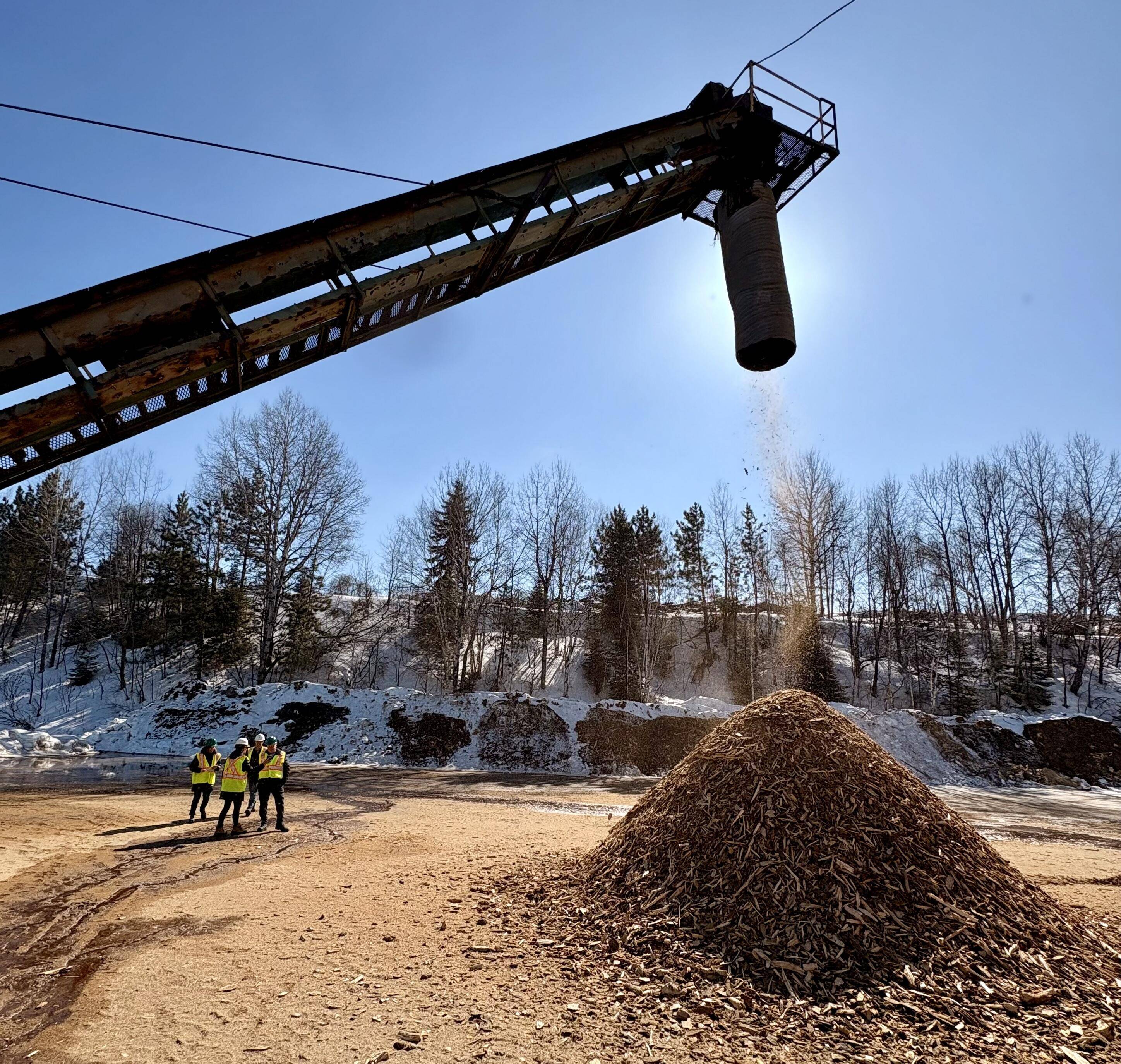
Photo credit: Lloyd Alter
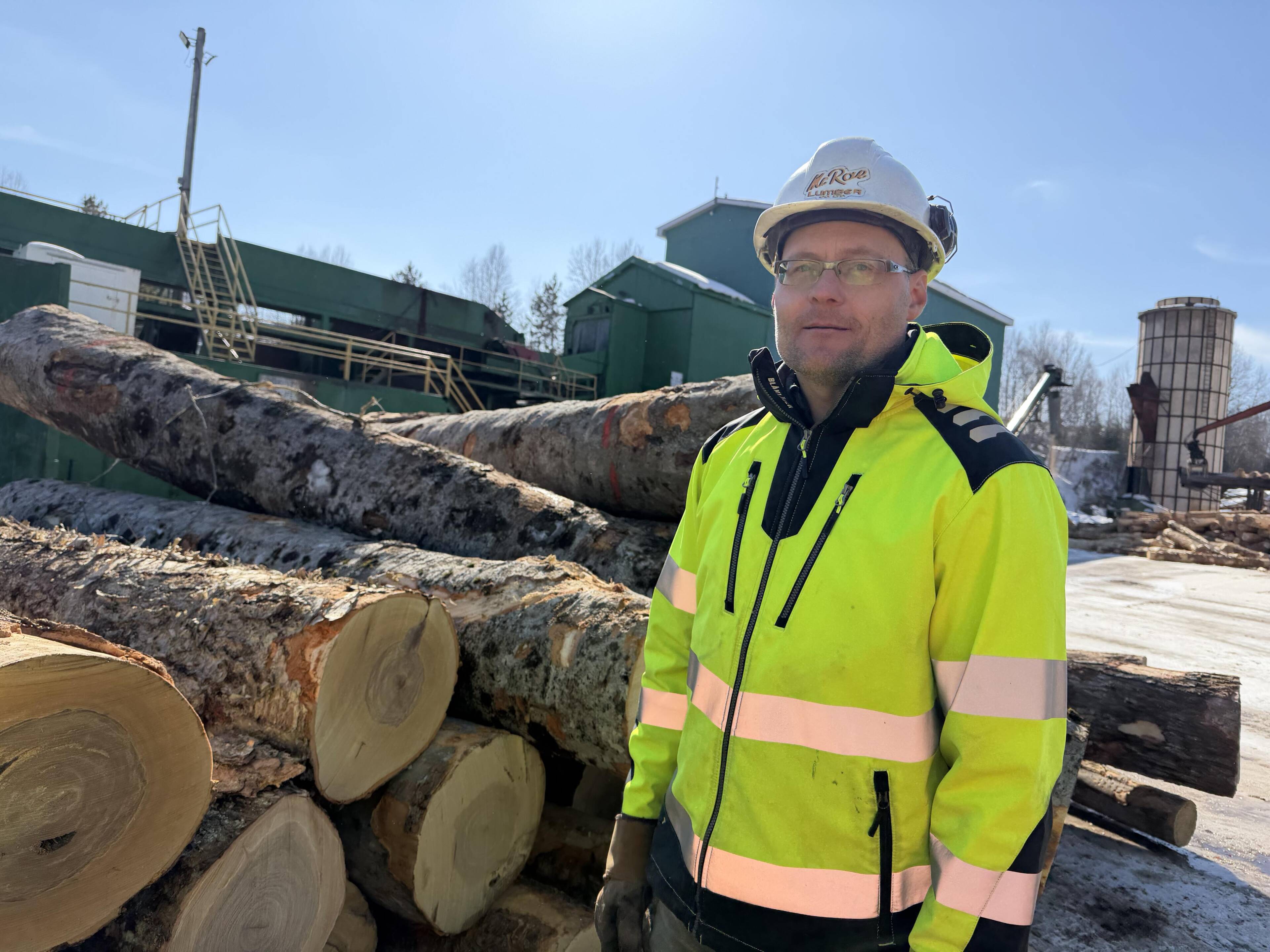
Photo credit: Lloyd Alter
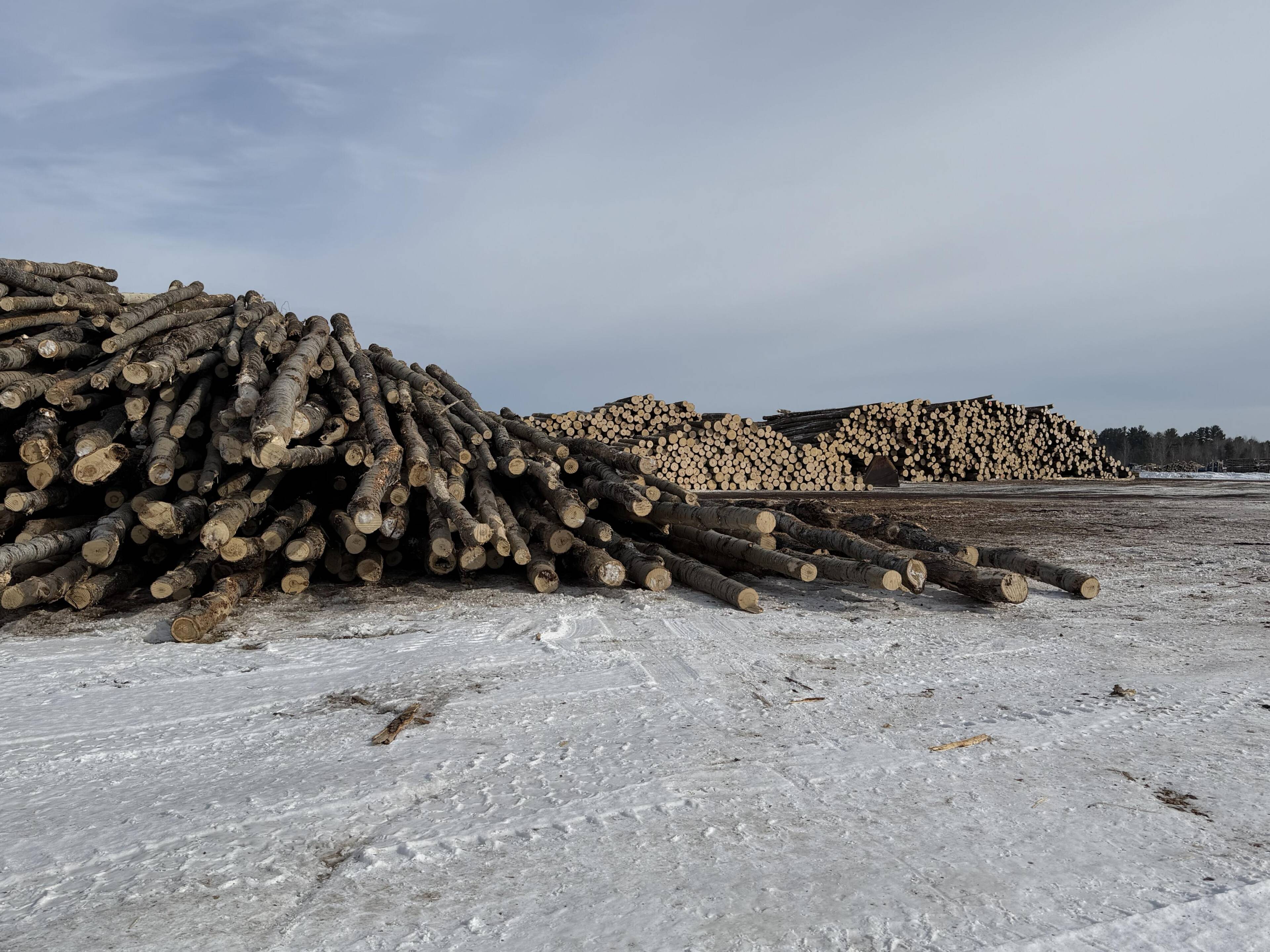
We saw two logging operations; Dombroski and Sons took out long telephone-pole-length trees, while Ben Hokum and Son cut them to shorter lengths, then brought them out of the forest with a monstrous John Deere truck. The operator then stacked them and knocked them into place as if they were toothpicks. It will all be gone by summer when the tourists arrive.
The visit to the park rattled a lifetime of preconceptions about logging. Algonquin was established in 1893 as “a public park, and forest reservation, fish and game preserve, health resort and pleasure ground for the benefit, advantage and enjoyment of the people of the Province.” But it was also intended to protect the interests of the logging industry from encroaching towns, farms, and Muskoka-style cottage ownership.
Donald Lloyd writes:
“The conflict between logger and recreationist in Algonquin, while still present, simmers well beneath the general public’s concern. The Master Plan for Algonquin Provincial Park and the Algonquin Forestry Authority serve as outstanding examples that compromise can be reached and made acceptable to most people. Most importantly, Algonquin continues to work its magic on many people.”
From there, it was back to a yard outside of Pembroke, where the logs are sorted according to species, size, and quality, and from where the Algonquin Forestry Authority sells the wood to the mills; the money they receive pays for their operations. The AFA sometimes is blamed for putting sustainability ahead of economics; as Jamie McRae of the McRae Lumber Company noted, “they make it hard for us to make a living.”
Photo credit: Lloyd Alter
Jamie McRae and his brother John are the fifth generation of McRae’s to run the mill in Whitney, Ontario. Touring their operation was my second big shock of the tour- this is a tough, hardscrabble business.
Photo credit: Lloyd Alter
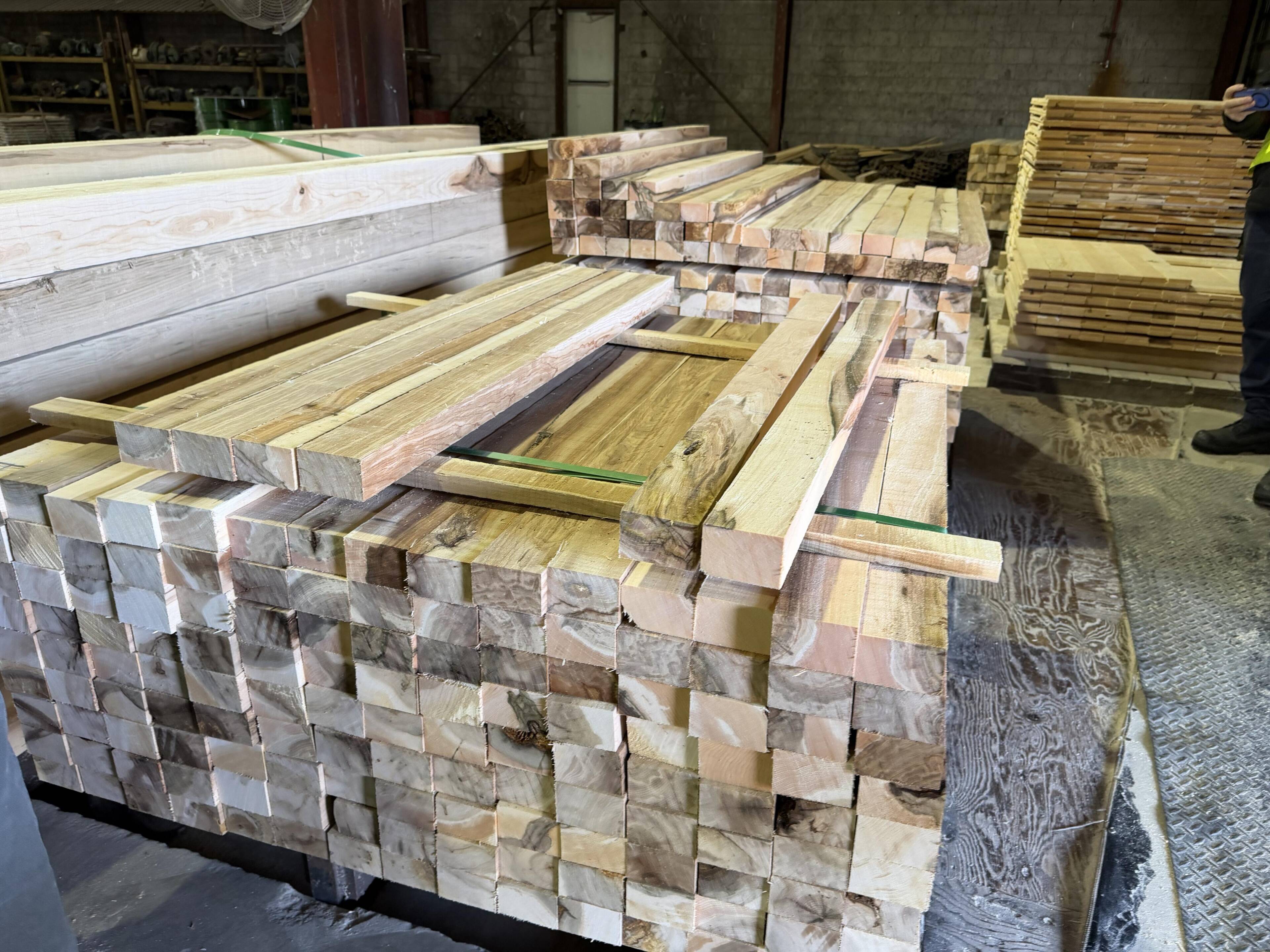
Photo credit: Lloyd Alter
Then there are the aesthetics of the partial cutting, designed to look like a bug infestation, or a fire, or an airburst. Anything but what a camper from the city would think a logging operation looks like. It’s done in the dead of winter when there are no turtles or tourists.
Except it didn’t look like active logging. It looked like… Algonquin Park. This is because of the silvicultural practice of partial cutting, where foresters from the Algonquin Forestry Authority mark the trees that are allowed to be cut. Donald Lloyd writes in Algonquin Harvest - the history of the McRae Lumber Company:
“What is marked is the product of environmentally-sound forest management practices: the blending of silvics, species diversity, fish and wildlife habitat and recreational values rather than the economics of the harvest. Tree markers must consider some or maybe all of the following: tree species diversity, moose calving sites, feeding and nesting cavities, stick nests, fruit and nut trees for birds and mammals, heron rookeries. Additional considerations include wintering requirements for deer and moose, fish habitat, slope percentages, siltation, as well as where canoe routes and campsites are located.”