Read more
Read more
Read more
Read more

Read more
Read more
Read more

Read more
Read more
Read more
To reduce barriers and expand opportunities for wood use in the built environment, the CWC delivered practical tools, technical support, and educational resources that helped project teams apply wood solutions with confidence. Guided by market data to identify and regional expertise, our efforts focused on the building types and opportunities with the greatest potential for growth.
In 2025, CWC published National Building Code 2025-aligned tools, updated Environmental Product Declarations (EPDs), operated a high value technical helpdesk, and delivered 19,599 professional development hours through educational initiatives.
At the same time, WoodWorks programs continued to deliver measurable market impact across Canada. Through technical support, project guidance, and industry education, regional teams helped advance wood construction projects from concept to construction, supporting broader adoption of wood systems despite challenging market conditions. The following initiatives demonstrate the impact of this work in 2025:

CWC and WoodWorks made substantial progress in converting codes and standards outcomes into practical tools and resources for engineers, designers, and builders. Key accomplishments:
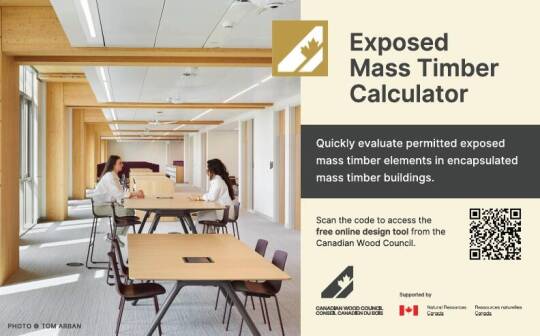
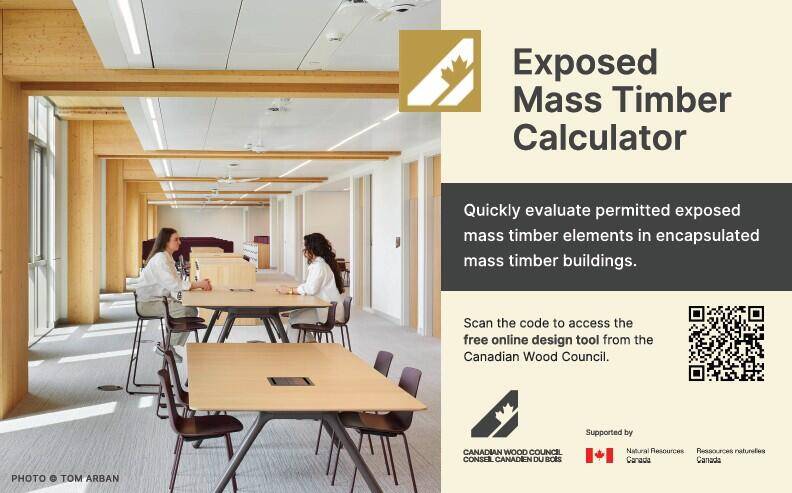
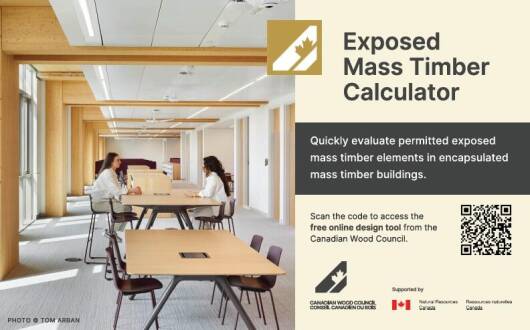
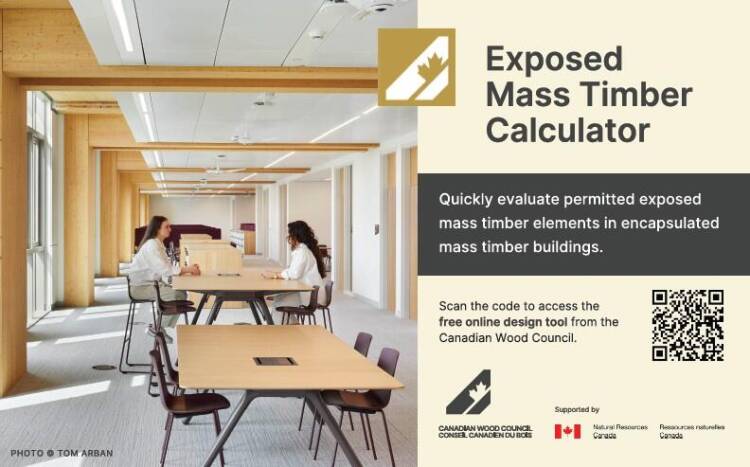
Published and promoted a National Building Code 2025-aligned Exposed Mass Timber Calculator, a practical tool that allows designers to efficiently confirm allowable exposed timber percentages for encapsulated mass timber construction.
Published National Building Code 2025 aligned Part 9 braced wall calculator, supporting immediate uptake of new code provisions by provinces.
Published updated, regionally representative, Environmental Product Declarations (EPDs) for five major wood products, providing consistent and credible embodied carbon data used in policy and whole building life cycle assessment.
Advanced the development of the Wood Design Manual 2025, including improved clarity, improved and detailed design examples, and incorporation of CSA O86:24 and NBC 2025 changes.
Updated WoodWorks® software (Sizer, Shearwalls, Connections) to reflect updated design values, new code requirements, and new seismic design capabilities.
Operated a high‑value technical helpdesk, providing hundreds of hours of direct, expert support to the design and construction community.
The CWC also supported the development of new practitioner resources produced by WoodWorks that provide technical guidance and help apply new code provisions. These resources include:
Guide to Encapsulated Mass Timber Construction in the Ontario Building Code (2ndEdition)
Exploring the Role of Mass Timber – Industrial Buildings and Warehouse Construction
Solutions Paper: Mass Timber Course of Construction Insurance Project Questionnaire + Checklist
Design Example: Innovative Strategies for Light-Frame Mid-Rise Buildings in High Seismic Regions
Top of Section

CWC’s WoodSmart program advanced a national education agenda focused on strengthening knowledge of wood design and construction through research, curriculum development, and student engagement. A major milestone was the planning and coordination of an international Wood Education and Workforce Integration workshop at WoodRise, supported by a global educator survey that identified shared challenges and opportunities related to curriculum, instructional capacity, and workforce development.
Curriculum development and educator support remained a key focus throughout the year. Work progressed on a 10-module wood science and engineered wood products course, while educators gained expanded access to technical resources, WoodWorks software, and discounted publications to support the integration of wood content into post-secondary programs.
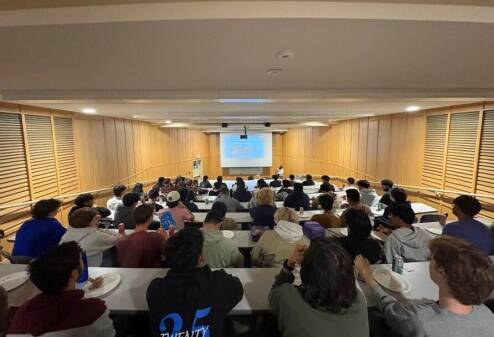
Student engagement continued through competitions, conferences, guest lectures, and outreach activities across Canada. WoodSmart supported initiatives such as TimberFever and the Défis Cecobois challenge, while also expanding engagement with students through presentations, seminars, camps, and STEM-focused programming.
The program also advanced workforce development through the creation of an open-source mass timber installation training curriculum and complementary outreach activities with colleges and training institutions. Together, these efforts strengthened connections between educators, students, and industry while supporting the growth of Canada’s wood education ecosystem.
Top of Section
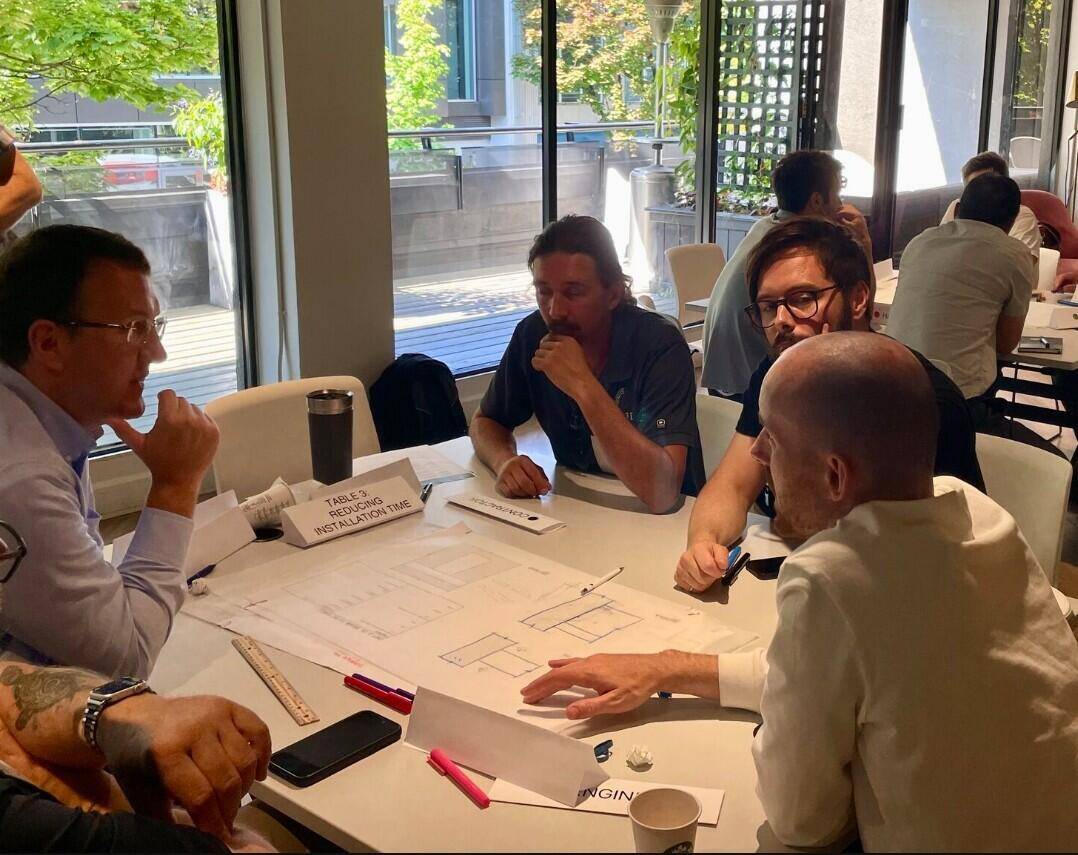
WoodWorks programs provided 3091 technical support interactions to 3623 contacts, which were linked to the support of 567 projects at various stages of construction.
Directly reflecting the diverse expertise of the Technical Advisor teams, these interactions ranged from detailed technical analysis and system-specific education to referrals, relationship building, and guidance on the effective use of various wood construction systems, all aimed at enabling the use of wood as the preferred construction solution.
These efforts led to 324 projects moving to the construction stage, accounting for over 322 million board feet of incremental volume, a +18% increase over last year despite challenging market conditions, particularly around financing rates. Supported projects were 68% light wood frame and 32% mass timber systems.
Top of Section

The National WoodWorks Partnership Program delivered record performance this year, generating $300,000 in revenue to directly advance market development priorities in the regions, including the WoodWorks (WW) program and the Wood Design & Building Awards.
This revenue is not incremental—it is catalytic, driving growth, leveraging CWC member investment, and delivering national impact. Partnership funding significantly enhances our ability to access government investment, expanding the scale and effectiveness of WoodWorks activations across regions.
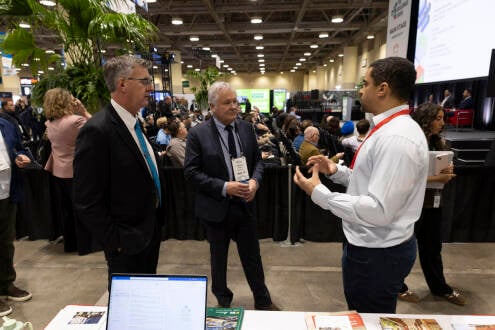
The WW National Partners anchor our flagship educational events and provide the stability and scale required to deliver high-impact outreach. This year, strategic initiatives included major platforms such as the Toronto Building Show and BuildEx Vancouver, as well as 3 Wood Solutions Conferences. These events are central to industry engagement, visibility, and influence, reinforcing CWC’s role as a national convenor.
Three new additions to the national WoodWorks partnership program (Nordic, BarrierTek, Rothoblaas) further strengthened this ecosystem, signaling growing industry confidence and our expanding
reach across the value chain.
The achievements of 2025 reflect the successful transformation of the partnership program into a high-performing strategic asset—one that delivers measurable value to stakeholders and provides a strong, foundation to extend WoodWorks’ national impact
Top of Section

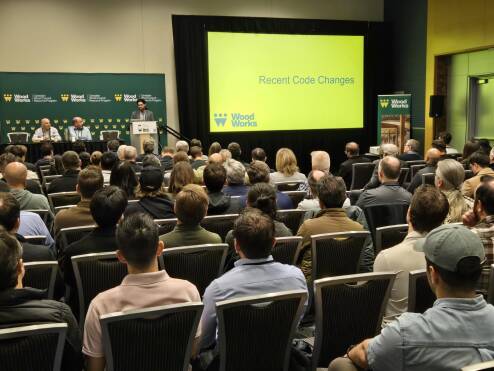
This year the WoodWorks offices delivered 3 Wood Solutions Conferences.
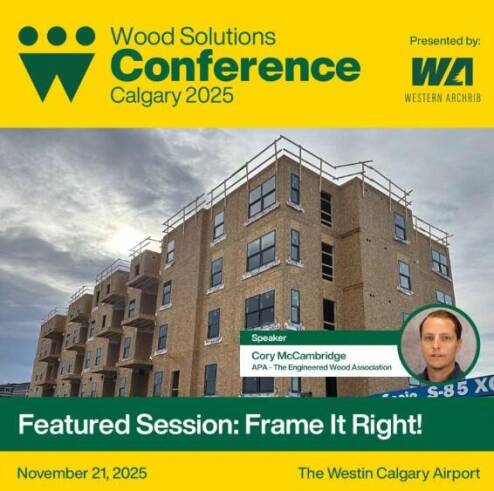
Calgary: The Calgary WSC was held November 20-21st. The event attracted 259 attendees, with 18 sessions and 20 exhibitors in the trade pavilion. Over 1550 hours of education were delivered. The event brought in 108 new contacts, nearly 50% of the audience. The attendees were linked to 108 projects that are actively in the design stages and seeking direct project support. Alberta continues to find meaningful engagement in these in person events, and they have steadily increased in attendance numbers.
Halifax: WoodWorks Atlantic hosted a WSC in Halifax November 19th - 20th. Across the two-day event, the participants had the opportunity to learn from industry experts and network with manufacturers and suppliers. Twenty exhibitors, eight speakers, and four panelists contributed for the success of the event. 215 people attended the conference, the region’s most attended in-person event to date.
Ottawa: The Ottawa WSC was held February 5th at the National Arts Centre. The event drew 19 exhibitors and 207 attendees. The program offered 19 sessions across 3 concurrent educational tracks, with one stream devoted to sessions in French. 11 sessions were recorded for the eLearning Centre. An exclusive educational tour of three new mass timber buildings at Canadian Nuclear Laboratories was hosted as a companion event the day after the conference.
Wood Solutions Conferences are particularly effective in smaller regional markets that cannot attract larger construction events.
Top of Section
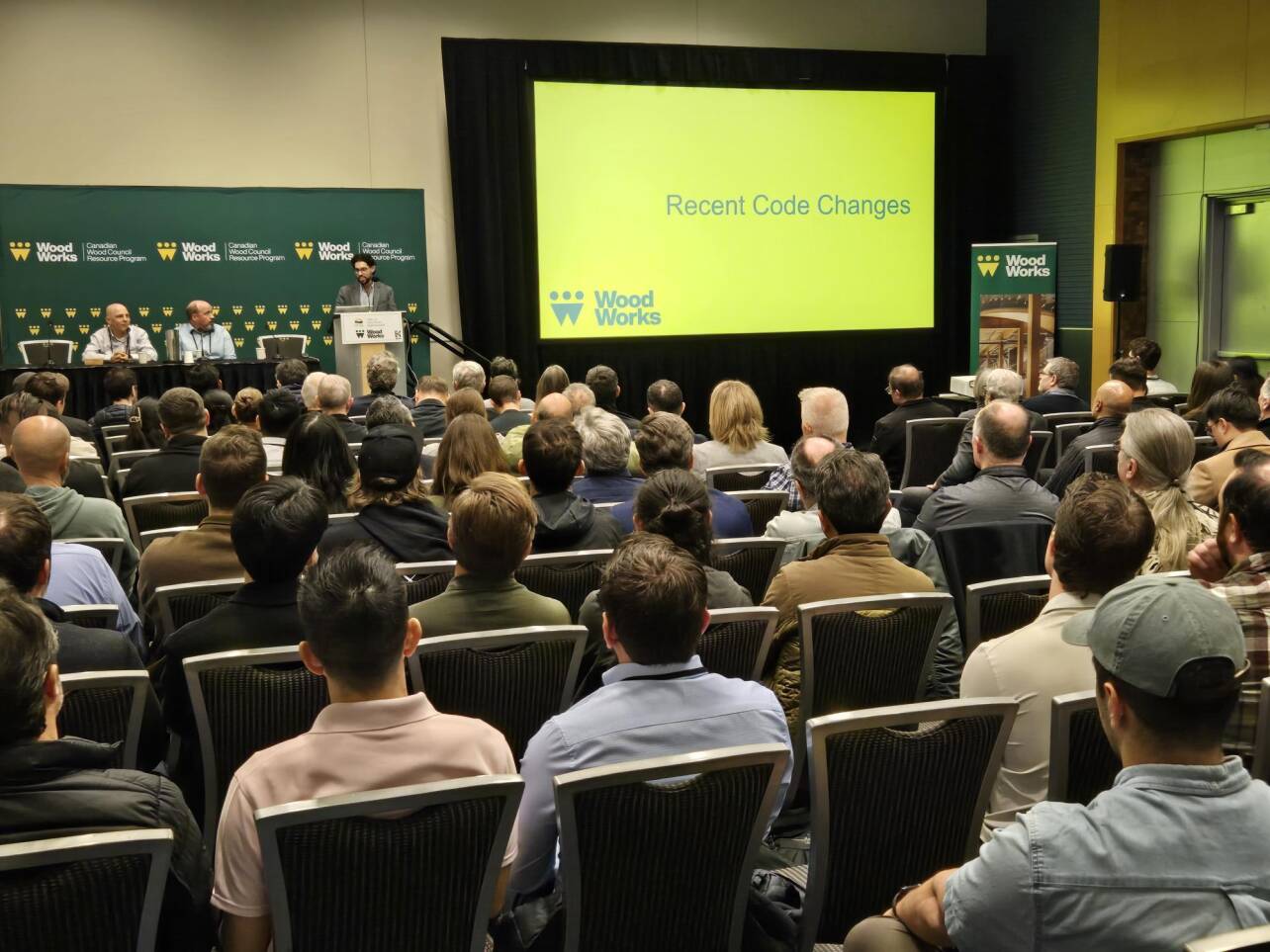
Based on the success of the initial partnership in 2024, WoodWorks BC returned to BUILDEX Vancouver 2025. Woodworks achieved strong communications reach and visibility, successfully amplifying its programming to a broad builtenvironment audience through targeted media partnerships and digital channels. Content associated with the event was prominently featured and distributed through RENX and Sustainable Biz Canada, reaching over 11,000 newsletter subscribers, extending to more than 50,000 LinkedIn followers, and benefiting from placement on a platform with approximately 2 million annual pageviews—demonstrating meaningful penetration into key industry networks.
This performance reflects an effective and efficient promotional strategy, delivering high exposure at a modest investment and reinforcing WoodWorks’ positioning within mainstream construction conversations, while also identifying opportunities to further expand reach in future campaigns through earlier planning and additional partner channels.
Top of Section
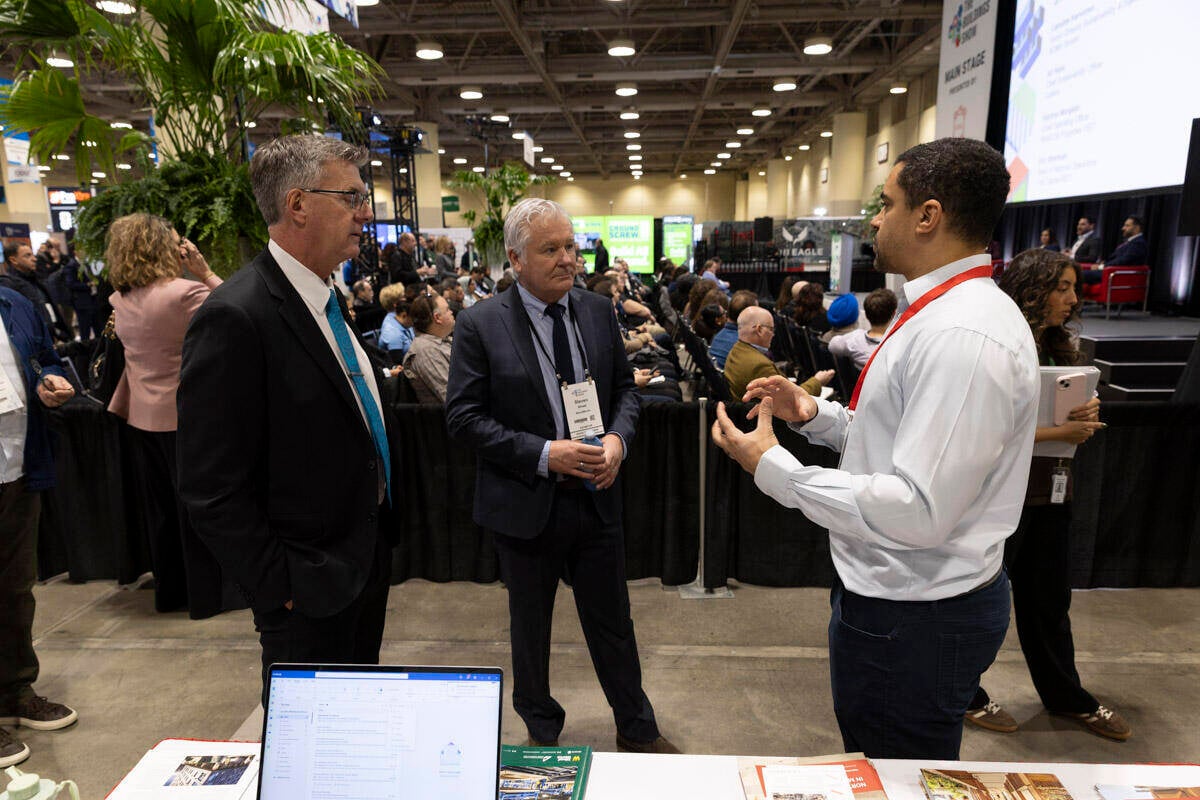
The Buildings Show
In 2025, CWC strengthened its digital ecosystem through the ongoing development of the Digital Resource Hub, bringing together technical resources, project inspiration, software tools, publications, and education under a unified national platform for both the Canadian Wood Council and WoodWorks brands.
The platform recorded 353,854 total page views and engaged 168,548 active users, reflecting growth in visibility, audience reach, and industry engagement. Our highest-performing sections are WoodWorks Software, Design Tools, and the Publications Archive.
Publication downloads were significant , with 25,467 total file downloads in 2025. Top performers were Low-Rise Commercial Construction in Wood, Mass Timber Business Case Studies, and Guide to Encapsulated Mass Timber Construction in the Ontario Building Code.
The WoodWorks Innovation Network (WIN) Canada remained an important component of CWC’s digital strategy, showcasing leading Canadian wood projects to audiences across North America. In 2025, 21 new Canadian projects were added to the platform, generating 25,239 page views over the year. Since launch, WIN Canada has grown to 81 published project profiles with a cumulative 284,111 page views. The platform’s is a valuable business-to-business engagement and project promotion tool.
Looking ahead, the next phase of platform development will focus on enhancements to site performance, infrastructure reliability, and overall user experience. Planned improvements will also strengthen WoodWorks and WoodWorks Software integration and branding, while expanding French-language translation and localization efforts to ensure the platform remains accessible, modern, and responsive to the evolving needs of the organization and Canada’s wood construction community.
Top of Section

The CWC helped design and deliver the Woodrise International Congress in Vancouver through participation on several steering committees. The event provided an important platform to highlight Canada’s leadership in wood construction innovation through tours and presentations. The team planned and delivered 9 technical building tours as part of the conference agenda, gave two presentations in the main program, and moderated a third, reaching hundreds of architecture, engineering, and construction professionals from Canada and around the world. CWC also presented the Wood Design Awards during an evening reception at the international event. Participation in Woodrise strengthened industry connections, supported knowledge sharing, and helped further position Canadian wood expertise on the global stage.
Top of Section
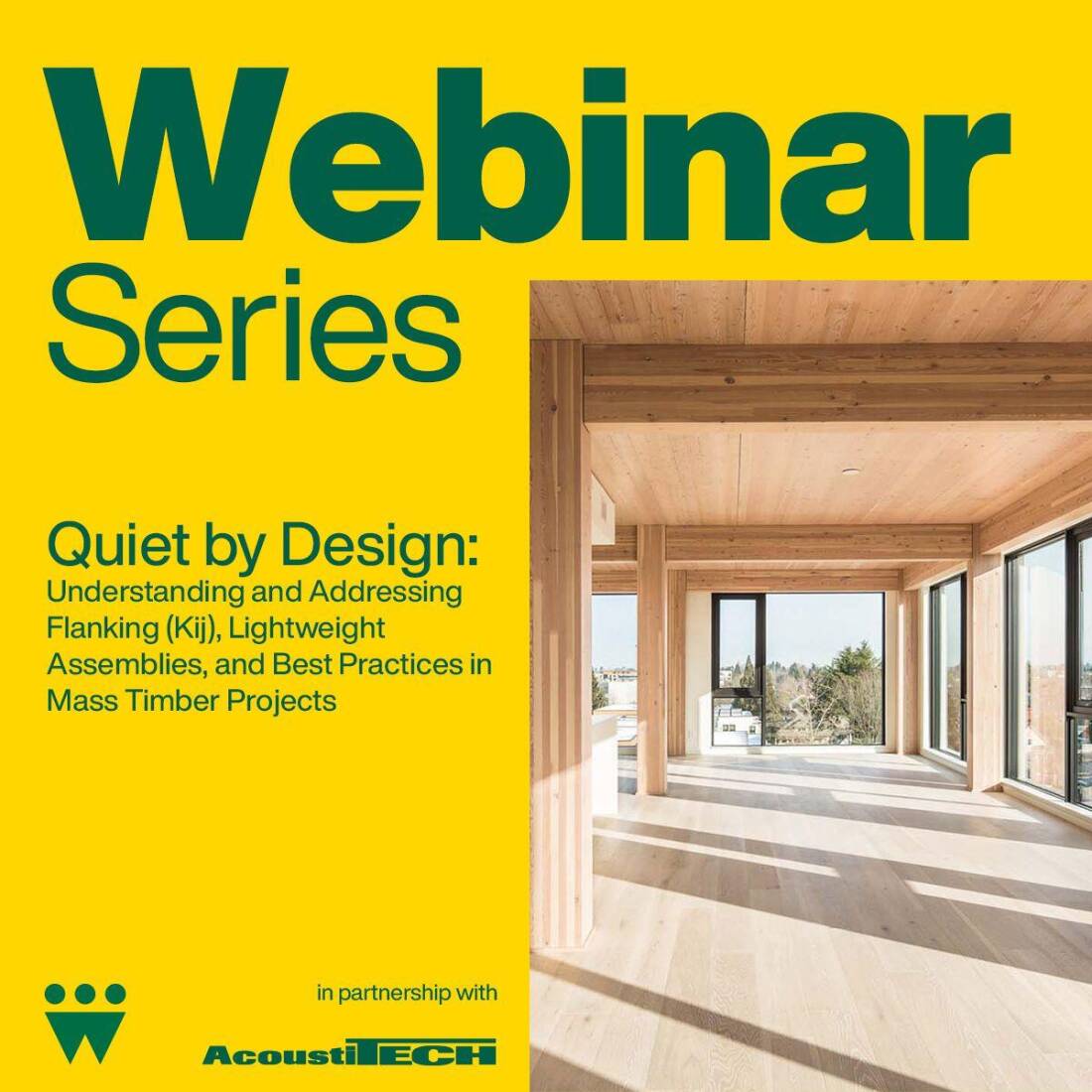
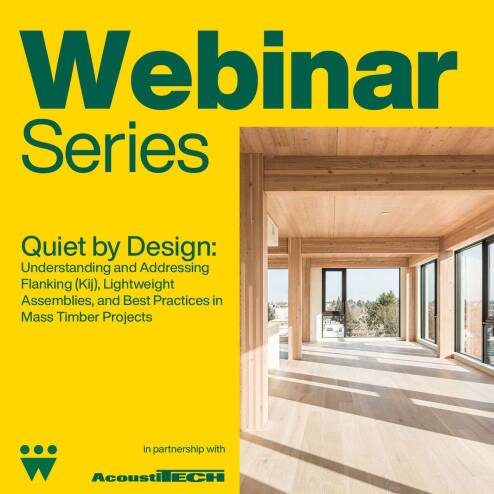
In 2025, the CWC and WoodWorks delivered 15 technical webinars drawing in 9,696 participants as part of an expanding national virtual education and training program supporting broader industry knowledge mobilization efforts. There was significant growth in reach and engagement over the year, with sessions in Q4 attracting nearly 1,000 participants, reinforcing the program’s role as a trusted source of technical education, and continuing professional development. Webinars grew into a core, high-impact channel for industry engagement and knowledge transfer in 2025 and we expect to see this strong demand for webinars continue in 2026. The platform is also a valuable tool for our industry partners, giving them fantastic exposure to their target markets. The webinar recordings also help grow the library of content available in the eLearning Centre, our online, on-demand repository for technical education.
Top of Section

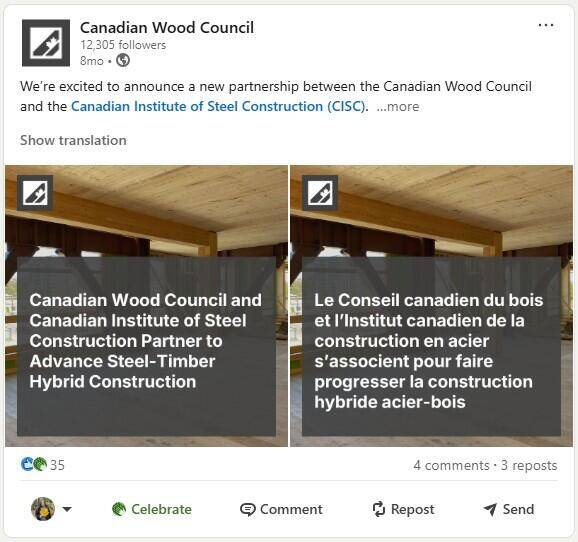
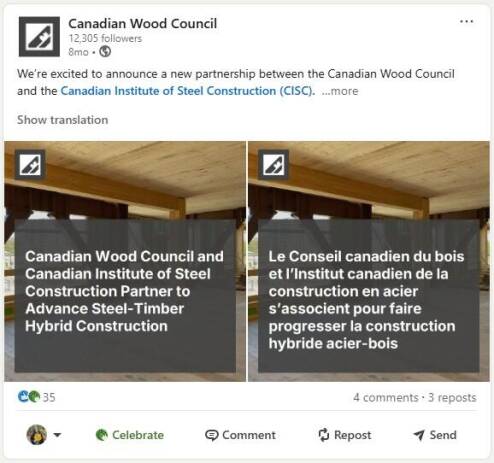
Looking ahead to 2026, the Canadian Wood Council will continue expanding the technical resources, tools, and industry collaborations that support wood design and construction professionals. This includes advancing a new collaboration with the Canadian Institute of Steel Construction to develop a steel–timber hybrid design guide aimed at expanding market opportunities for wood in taller and more complex building types. Key technical initiatives also include publication of a modernized Wood Design Manual featuring enhanced readability, an AI-enabled ePub format, and updated design examples reflecting the 2025 National Building Code of Canada and CSA O86:24. Canadian WoodWorks® software will continue to evolve, incorporating new code provisions, expanded seismic design capabilities, and additional tools for lateral load resistance in small buildings and houses.
Additional resources planned for release include the Handbook for Construction Moisture Management of Mass Timber Buildings, providing practical guidance for managing moisture risks during construction, and the Advanced Wood Design textbook for advanced practitioners and graduate-level engineering students. The Council also expects to complete updates to its Span Book, ensuring alignment with revised Hem-Fir design values and other changes introduced through CSA O86. Together, these initiatives will help industry professionals more effectively apply the latest technical requirements, expand opportunities for wood in a wider range of building types, and support continued growth in wood construction across Canada.
Top of Section
Read more
Read more
Read more
Read more
Read more
Read more
Read more
Read more

To reduce barriers and expand opportunities for wood use in the built environment, the CWC delivered practical tools, technical support, and educational resources that helped project teams apply wood solutions with confidence. Guided by market data to identify and regional expertise, our efforts focused on the building types and opportunities with the greatest potential for growth.
In 2025, CWC published National Building Code 2025-aligned tools, updated Environmental Product Declarations (EPDs), operated a high value technical helpdesk, and delivered 19,599 professional development hours through educational initiatives.
At the same time, WoodWorks programs continued to deliver measurable market impact across Canada. Through technical support, project guidance, and industry education, regional teams helped advance wood construction projects from concept to construction, supporting broader adoption of wood systems despite challenging market conditions. The following initiatives demonstrate the impact of this work in 2025:

CWC and WoodWorks made substantial progress in converting codes and standards outcomes into practical tools and resources for engineers, designers, and builders. Key accomplishments:
Published and promoted a National Building Code 2025-aligned Exposed Mass Timber Calculator, a practical tool that allows designers to efficiently confirm allowable exposed timber percentages for encapsulated mass timber construction.
Published National Building Code 2025 aligned Part 9 braced wall calculator, supporting immediate uptake of new code provisions by provinces.
Published updated, regionally representative, Environmental Product Declarations (EPDs) for five major wood products, providing consistent and credible embodied carbon data used in policy and whole building life cycle assessment.
Advanced the development of the Wood Design Manual 2025, including improved clarity, improved and detailed design examples, and incorporation of CSA O86:24 and NBC 2025 changes.
Updated WoodWorks® software (Sizer, Shearwalls, Connections) to reflect updated design values, new code requirements, and new seismic design capabilities.
Operated a high‑value technical helpdesk, providing hundreds of hours of direct, expert support to the design and construction community.
The CWC also supported the development of new practitioner resources produced by WoodWorks that provide technical guidance and help apply new code provisions. These resources include:
Guide to Encapsulated Mass Timber Construction in the Ontario Building Code (2ndEdition)
Exploring the Role of Mass Timber – Industrial Buildings and Warehouse Construction
Solutions Paper: Mass Timber Course of Construction Insurance Project Questionnaire + Checklist
Design Example: Innovative Strategies for Light-Frame Mid-Rise Buildings in High Seismic Regions

CWC’s WoodSmart program advanced a national education agenda focused on strengthening knowledge of wood design and construction through research, curriculum development, and student engagement. A major milestone was the planning and coordination of an international Wood Education and Workforce Integration workshop at WoodRise, supported by a global educator survey that identified shared challenges and opportunities related to curriculum, instructional capacity, and workforce development.
Curriculum development and educator support remained a key focus throughout the year. Work progressed on a 10-module wood science and engineered wood products course, while educators gained expanded access to technical resources, WoodWorks software, and discounted publications to support the integration of wood content into post-secondary programs.
Student engagement continued through competitions, conferences, guest lectures, and outreach activities across Canada. WoodSmart supported initiatives such as TimberFever and the Défis Cecobois challenge, while also expanding engagement with students through presentations, seminars, camps, and STEM-focused programming.
The program also advanced workforce development through the creation of an open-source mass timber installation training curriculum and complementary outreach activities with colleges and training institutions. Together, these efforts strengthened connections between educators, students, and industry while supporting the growth of Canada’s wood education ecosystem.
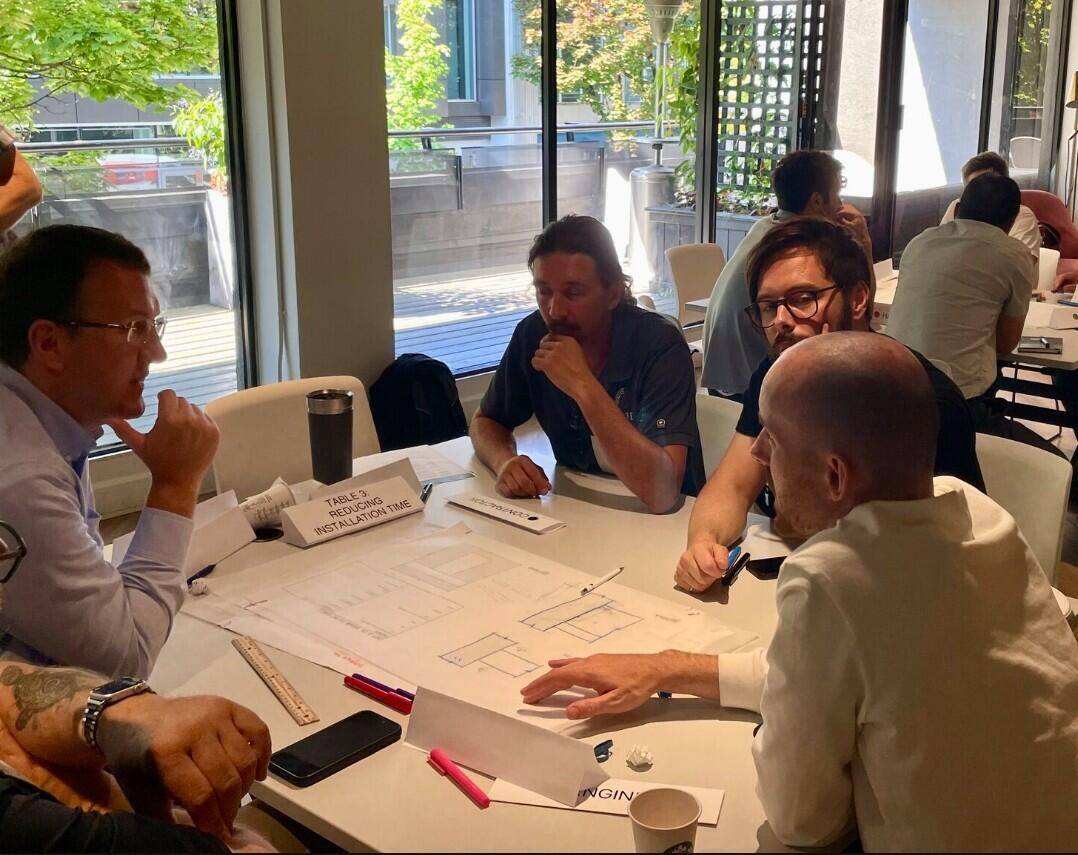
WoodWorks programs provided 3091 technical support interactions to 3623 contacts, which were linked to the support of 567 projects at various stages of construction.
Directly reflecting the diverse expertise of the Technical Advisor teams, these interactions ranged from detailed technical analysis and system-specific education to referrals, relationship building, and guidance on the effective use of various wood construction systems, all aimed at enabling the use of wood as the preferred construction solution.
These efforts led to 324 projects moving to the construction stage, accounting for over 322 million board feet of incremental volume, a +18% increase over last year despite challenging market conditions, particularly around financing rates. Supported projects were 68% light wood frame and 32% mass timber systems.

The National WoodWorks Partnership Program delivered record performance this year, generating $300,000 in revenue to directly advance market development priorities in the regions, including the WoodWorks (WW) program and the Wood Design & Building Awards.
This revenue is not incremental—it is catalytic, driving growth, leveraging CWC member investment, and delivering national impact. Partnership funding significantly enhances our ability to access government investment, expanding the scale and effectiveness of WoodWorks activations across regions.
The WW National Partners anchor our flagship educational events and provide the stability and scale required to deliver high-impact outreach. This year, strategic initiatives included major platforms such as the Toronto Building Show and BuildEx Vancouver, as well as 3 Wood Solutions Conferences. These events are central to industry engagement, visibility, and influence, reinforcing CWC’s role as a national convenor.
Three new additions to the national WoodWorks partnership program (Nordic, BarrierTek, Rothoblaas) further strengthened this ecosystem, signaling growing industry confidence and our expanding
reach across the value chain.
The achievements of 2025 reflect the successful transformation of the partnership program into a high-performing strategic asset—one that delivers measurable value to stakeholders and provides a strong, foundation to extend WoodWorks’ national impact

This year the WoodWorks offices delivered 3 Wood Solutions Conferences.
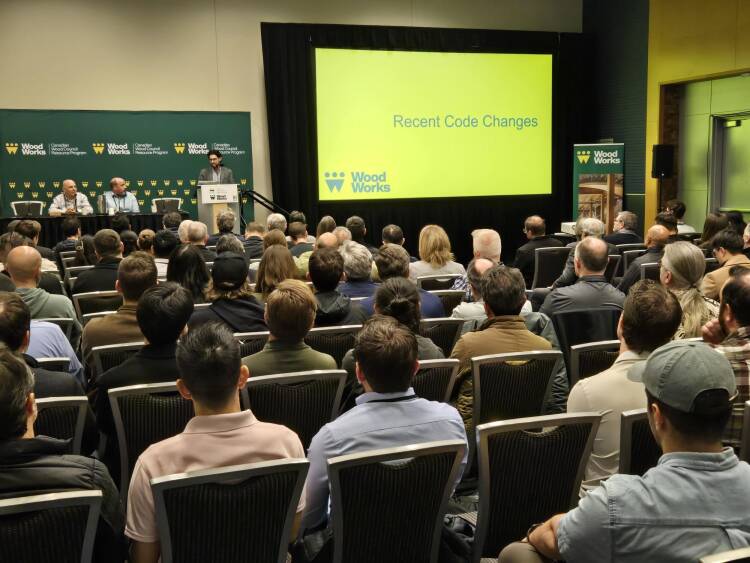
Calgary: The Calgary WSC was held November 20-21st. The event attracted 259 attendees, with 18 sessions and 20 exhibitors in the trade pavilion. Over 1550 hours of education were delivered. The event brought in 108 new contacts, nearly 50% of the audience. The attendees were linked to 108 projects that are actively in the design stages and seeking direct project support. Alberta continues to find meaningful engagement in these in person events, and they have steadily increased in attendance numbers.
Halifax: WoodWorks Atlantic hosted a WSC in Halifax November 19th - 20th. Across the two-day event, the participants had the opportunity to learn from industry experts and network with manufacturers and suppliers. Twenty exhibitors, eight speakers, and four panelists contributed for the success of the event. 215 people attended the conference, the region’s most attended in-person event to date.
Ottawa: The Ottawa WSC was held February 5th at the National Arts Centre. The event drew 19 exhibitors and 207 attendees. The program offered 19 sessions across 3 concurrent educational tracks, with one stream devoted to sessions in French. 11 sessions were recorded for the eLearning Centre. An exclusive educational tour of three new mass timber buildings at Canadian Nuclear Laboratories was hosted as a companion event the day after the conference.
Wood Solutions Conferences are particularly effective in smaller regional markets that cannot attract larger construction events.
Based on the success of the initial partnership in 2024, WoodWorks BC returned to BUILDEX Vancouver 2025. Woodworks achieved strong communications reach and visibility, successfully amplifying its programming to a broad builtenvironment audience through targeted media partnerships and digital channels. Content associated with the event was prominently featured and distributed through RENX and Sustainable Biz Canada, reaching over 11,000 newsletter subscribers, extending to more than 50,000 LinkedIn followers, and benefiting from placement on a platform with approximately 2 million annual pageviews—demonstrating meaningful penetration into key industry networks.
This performance reflects an effective and efficient promotional strategy, delivering high exposure at a modest investment and reinforcing WoodWorks’ positioning within mainstream construction conversations, while also identifying opportunities to further expand reach in future campaigns through earlier planning and additional partner channels.
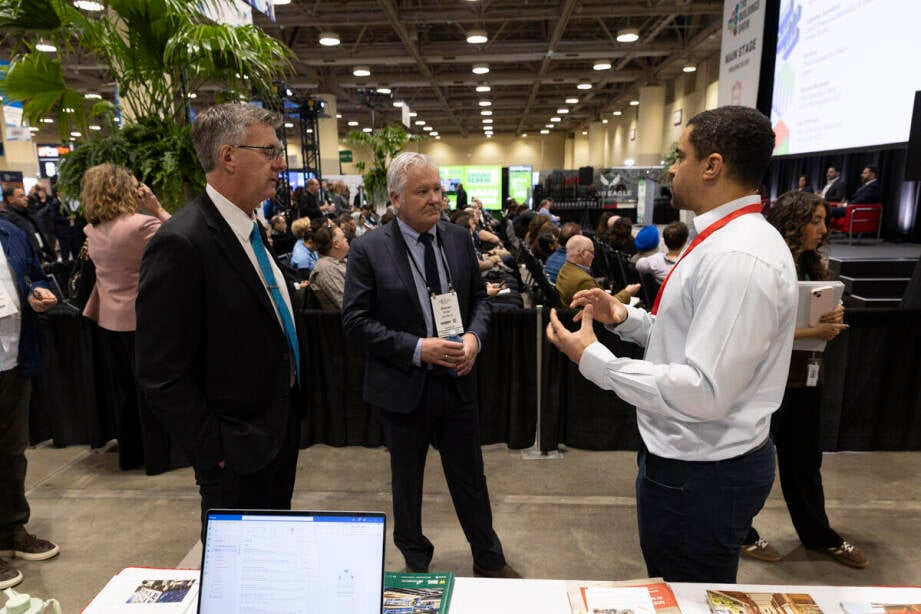
In 2025, CWC strengthened its digital ecosystem through the ongoing development of the Digital Resource Hub, bringing together technical resources, project inspiration, software tools, publications, and education under a unified national platform for both the Canadian Wood Council and WoodWorks brands.
The platform recorded 353,854 total page views and engaged 168,548 active users, reflecting growth in visibility, audience reach, and industry engagement. Our highest-performing sections are WoodWorks Software, Design Tools, and the Publications Archive.
Publication downloads were significant , with 25,467 total file downloads in 2025. Top performers were Low-Rise Commercial Construction in Wood, Mass Timber Business Case Studies, and Guide to Encapsulated Mass Timber Construction in the Ontario Building Code.
The WoodWorks Innovation Network (WIN) Canada remained an important component of CWC’s digital strategy, showcasing leading Canadian wood projects to audiences across North America. In 2025, 21 new Canadian projects were added to the platform, generating 25,239 page views over the year. Since launch, WIN Canada has grown to 81 published project profiles with a cumulative 284,111 page views. The platform’s is a valuable business-to-business engagement and project promotion tool.
Looking ahead, the next phase of platform development will focus on enhancements to site performance, infrastructure reliability, and overall user experience. Planned improvements will also strengthen WoodWorks and WoodWorks Software integration and branding, while expanding French-language translation and localization efforts to ensure the platform remains accessible, modern, and responsive to the evolving needs of the organization and Canada’s wood construction community.
The Buildings Show

The CWC helped design and deliver the Woodrise International Congress in Vancouver through participation on several steering committees. The event provided an important platform to highlight Canada’s leadership in wood construction innovation through tours and presentations. The team planned and delivered 9 technical building tours as part of the conference agenda, gave two presentations in the main program, and moderated a third, reaching hundreds of architecture, engineering, and construction professionals from Canada and around the world. CWC also presented the Wood Design Awards during an evening reception at the international event. Participation in Woodrise strengthened industry connections, supported knowledge sharing, and helped further position Canadian wood expertise on the global stage.
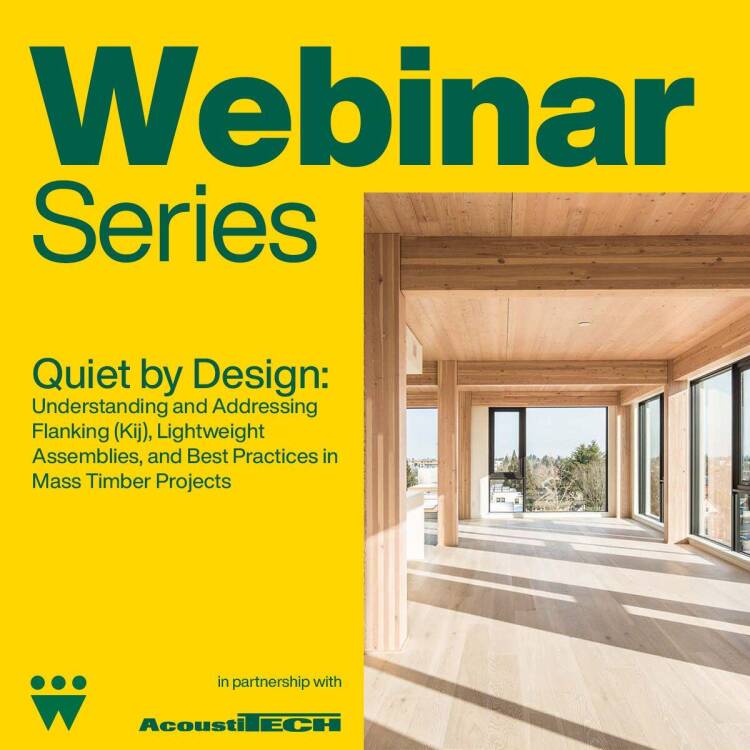
In 2025, the CWC and WoodWorks delivered 15 technical webinars drawing in 9,696 participants as part of an expanding national virtual education and training program supporting broader industry knowledge mobilization efforts. There was significant growth in reach and engagement over the year, with sessions in Q4 attracting nearly 1,000 participants, reinforcing the program’s role as a trusted source of technical education, and continuing professional development. Webinars grew into a core, high-impact channel for industry engagement and knowledge transfer in 2025 and we expect to see this strong demand for webinars continue in 2026. The platform is also a valuable tool for our industry partners, giving them fantastic exposure to their target markets. The webinar recordings also help grow the library of content available in the eLearning Centre, our online, on-demand repository for technical education.
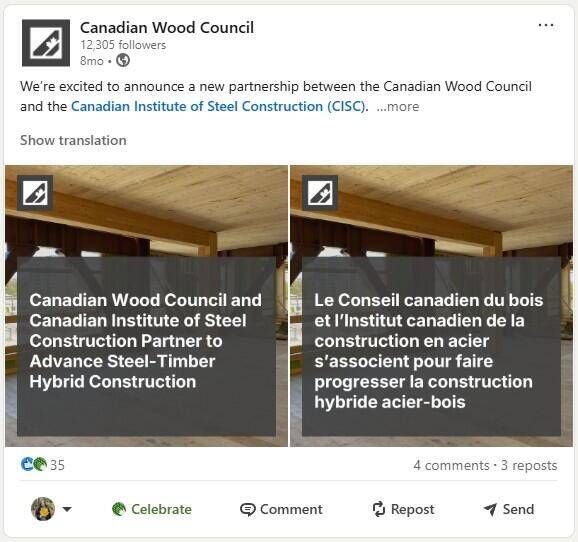
Looking ahead to 2026, the Canadian Wood Council will continue expanding the technical resources, tools, and industry collaborations that support wood design and construction professionals. This includes advancing a new collaboration with the Canadian Institute of Steel Construction to develop a steel–timber hybrid design guide aimed at expanding market opportunities for wood in taller and more complex building types. Key technical initiatives also include publication of a modernized Wood Design Manual featuring enhanced readability, an AI-enabled ePub format, and updated design examples reflecting the 2025 National Building Code of Canada and CSA O86:24. Canadian WoodWorks® software will continue to evolve, incorporating new code provisions, expanded seismic design capabilities, and additional tools for lateral load resistance in small buildings and houses.
Additional resources planned for release include the Handbook for Construction Moisture Management of Mass Timber Buildings, providing practical guidance for managing moisture risks during construction, and the Advanced Wood Design textbook for advanced practitioners and graduate-level engineering students. The Council also expects to complete updates to its Span Book, ensuring alignment with revised Hem-Fir design values and other changes introduced through CSA O86. Together, these initiatives will help industry professionals more effectively apply the latest technical requirements, expand opportunities for wood in a wider range of building types, and support continued growth in wood construction across Canada.