Monitoring in mass timber is not about collecting more alerts. It is about understanding what the data means and enabling better decisions across the life of the building.
Moisture management in mass timber does not end when a building is enclosed. Conditions can change during transportation, storage, construction and long-term operation, while areas can become difficult to inspect once finishes are in place.
The challenge is not simply detecting moisture but understanding what a reading means.
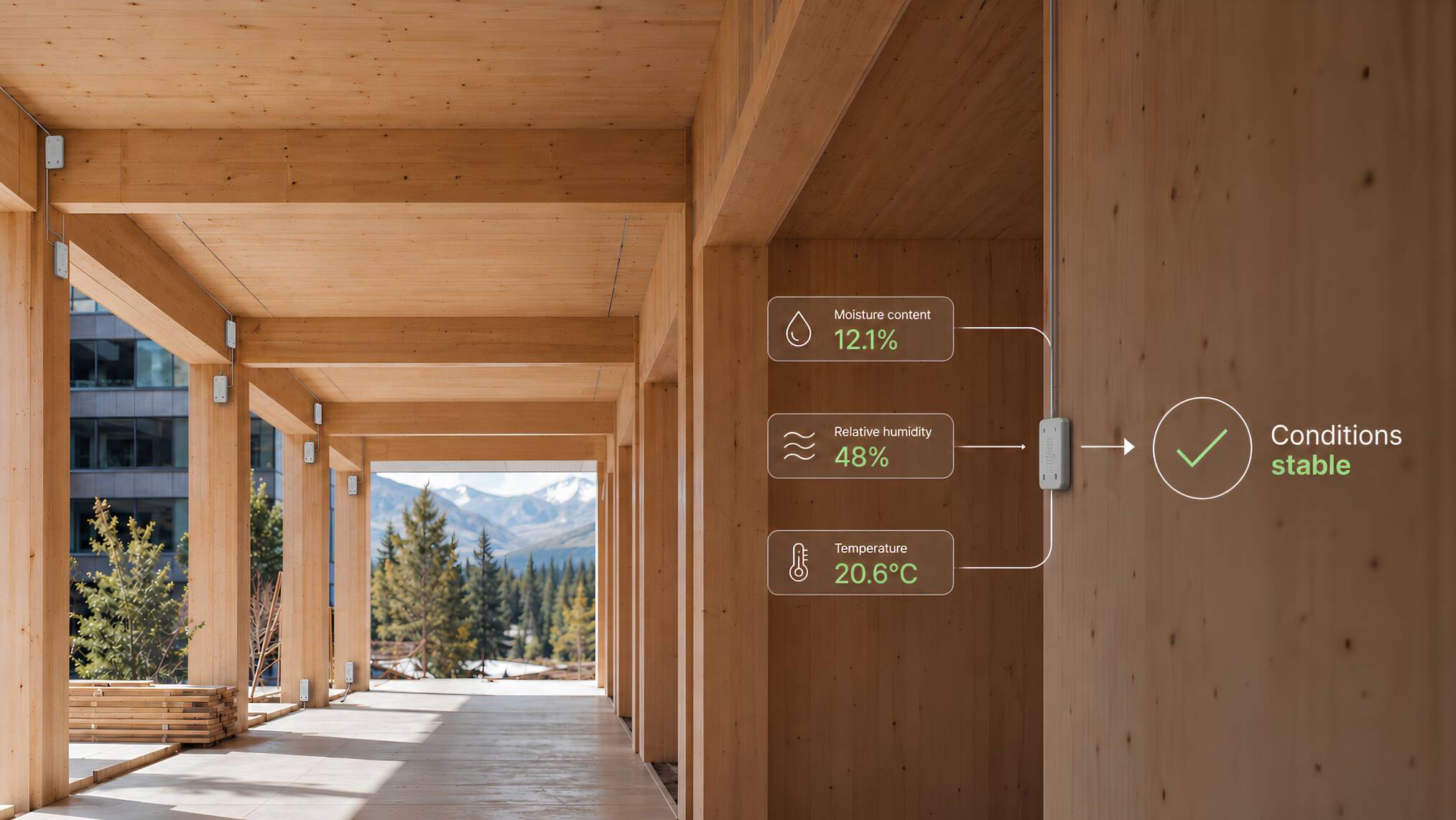
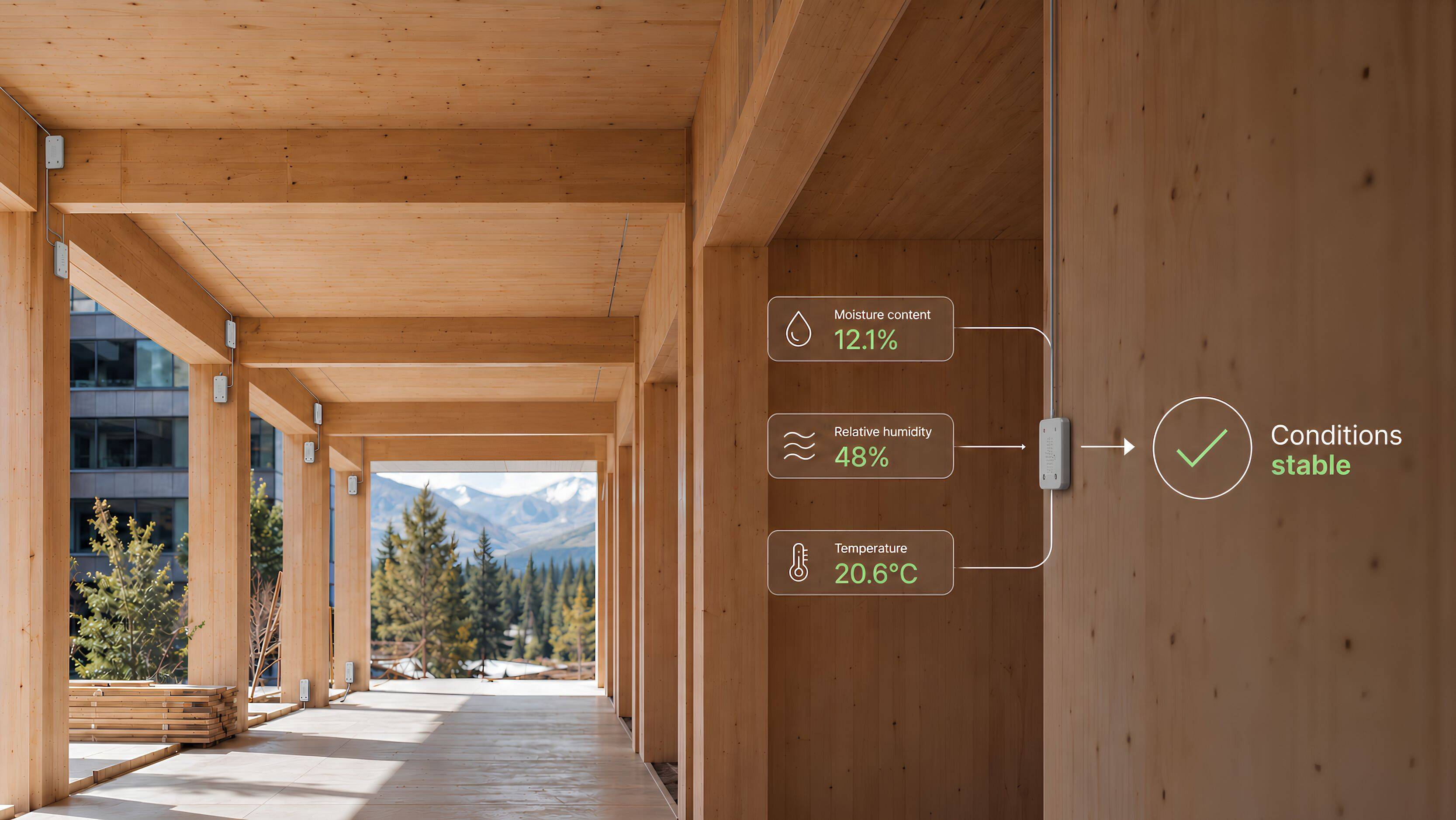
A single measurement provides a snapshot. Continuous monitoring provides context. By tracking moisture content in wood alongside relative humidity and temperature over time, teams can see whether conditions are improving, stable or developing into a risk that requires attention.
More measurements do not automatically create better decisions. Useful monitoring should help filter normal variation from meaningful change, reduce unnecessary alarms and give architects, engineers, contractors and owners information they can act on.
At SENZOMATIC, this is the principle behind our approach: combining continuous monitoring with interpretation to help teams understand not only that conditions have changed, but whether that change matters and what requires attention.
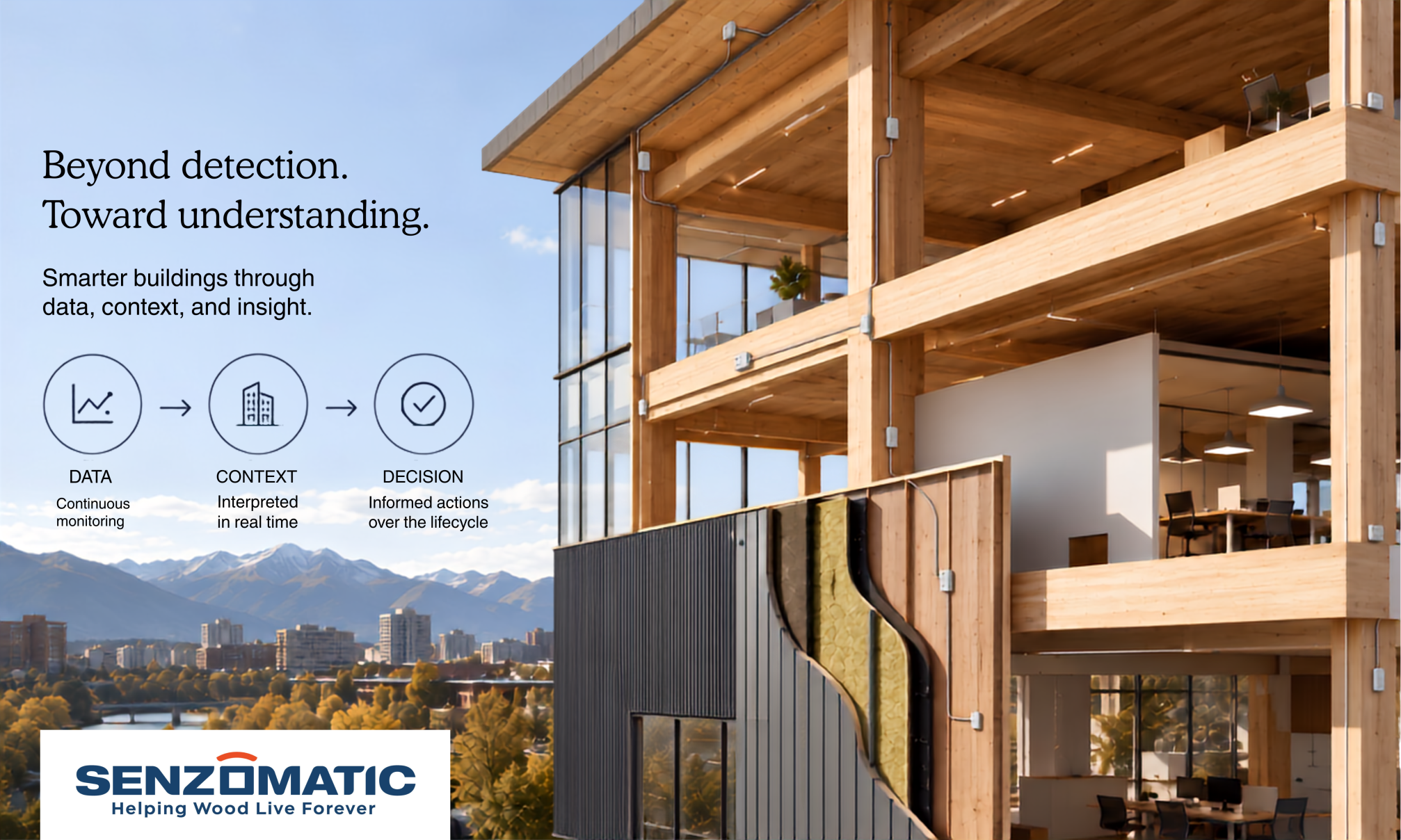
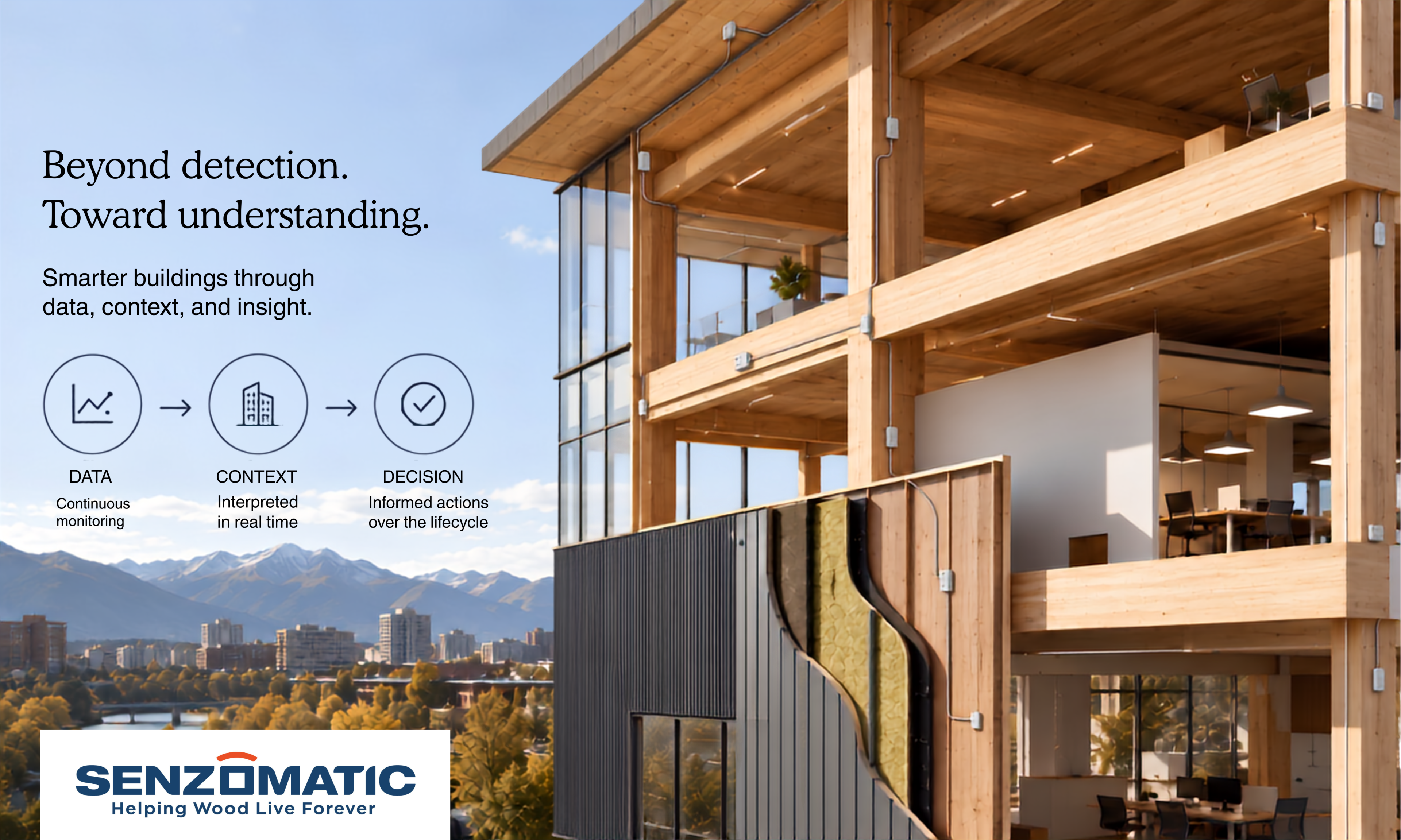
It also creates continuity across the lifecycle of a timber asset. Data gathered during construction can establish a baseline, while long-term monitoring can identify changes that may otherwise remain hidden until visible signs appear.
The technology behind this can be sophisticated, but the objective is practical: earlier insight and better-informed intervention.
For the timber sector, continuous monitoring should be viewed less as a collection of sensors and more as part of a risk-management approach, turning data into an understandable picture of what is happening within the structure and enabling better decisions throughout the life of the building.
industry spotlight
The alert is not the insight SENZOMATIC
Brought to you by SENZOMATIC
The alert is not the insight
Monitoring in mass timber is not about collecting more alerts. It is about understanding what the data means and enabling better decisions across the life of the building.
Moisture management in mass timber does not end when a building is enclosed. Conditions can change during transportation, storage, construction and long-term operation, while areas can become difficult to inspect once finishes are in place.
The challenge is not simply detecting moisture but understanding what a reading means.
A single measurement provides a snapshot. Continuous monitoring provides context. By tracking moisture content in wood alongside relative humidity and temperature over time, teams can see whether conditions are improving, stable or developing into a risk that requires attention.
More measurements do not automatically create better decisions. Useful monitoring should help filter normal variation from meaningful change, reduce unnecessary alarms and give architects, engineers, contractors and owners information they can act on.
At SENZOMATIC, this is the principle behind our approach: combining continuous monitoring with interpretation to help teams understand not only that conditions have changed, but whether that change matters and what requires attention.
It also creates continuity across the lifecycle of a timber asset. Data gathered during construction can establish a baseline, while long-term monitoring can identify changes that may otherwise remain hidden until visible signs appear.
The technology behind this can be sophisticated, but the objective is practical: earlier insight and better-informed intervention.
For the timber sector, continuous monitoring should be viewed less as a collection of sensors and more as part of a risk-management approach, turning data into an understandable picture of what is happening within the structure and enabling better decisions throughout the life of the building.