buildings We Love

Buildings We Love
the chief leonard george building
Scroll to Read

Weaving Indigenous Culture and Sustainability into Passive House Construction
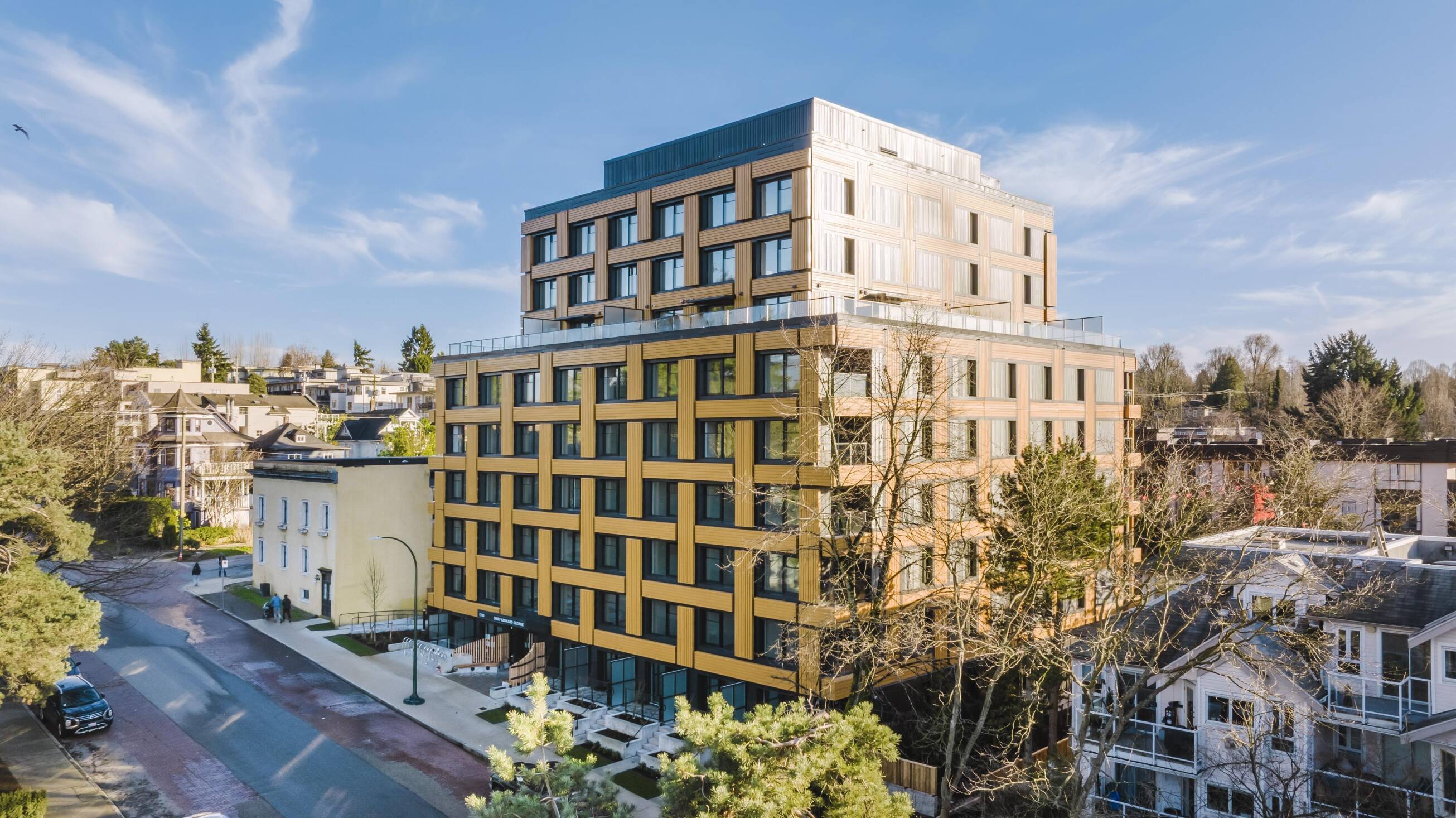
In Vancouver’s Grandview–Woodland neighbourhood, a new residential building celebrates an architectural language rooted in tradition and community. The Chief Leonard George Building, designed by GBL Architects for the BC Indigenous Housing Society (BCIHS), is Canada’s first tall timber Passive House building. The nine-storey project delivers 81 purpose-built rental homes while weaving together cultural identity, environmental performance, and community-oriented programming.

Carrying Culture Forward
By referencing Coast Salish basketry, the Chief Leonard George Building positions architecture as a vessel for cultural continuity. The woven façade evokes the craft and symbolism of cedar baskets, translating this tradition into a contemporary urban form.
Historically, these baskets carried food, medicines, and children. Here, that idea is reinterpreted at the scale of a building, conceived as a container for families, knowledge, and community life.
Through the integration of mass timber construction, Passive House performance, and culturally grounded design, the project demonstrates that housing can be both environmentally responsible and socially meaningful. In Vancouver, a new kind of building takes shape, one designed to hold generations, inspired by Coast Salish cedar baskets.
Tall Timber Meets Passive House
While the cultural narrative is central to the design, the project also sets a new benchmark for environmental performance in affordable housing.
The building achieves a 75 percent reduction in embodied carbon and greenhouse gas emissions, made possible through the use of mass timber and incorporating the Passive House Standard. The structure incorporates locally sourced mass timber floor panels along with pre-manufactured cross-laminated timber (CLT) envelope panels, combining structural efficiency with precision fabrication.
Mass timber construction significantly reduces embodied carbon, while the building’s Passive House certification addresses operational energy performance. Together, these strategies dramatically reduce the building’s overall carbon footprint.
The result is a fully electric building that demonstrates how high-performance sustainable design can be successfully integrated into affordable housing.
Housing Designed for Community
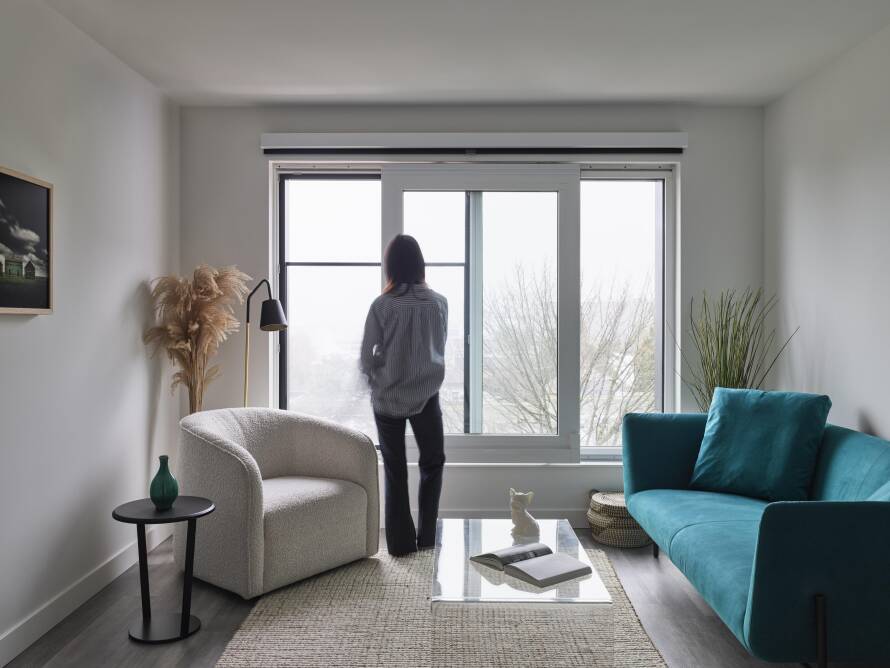
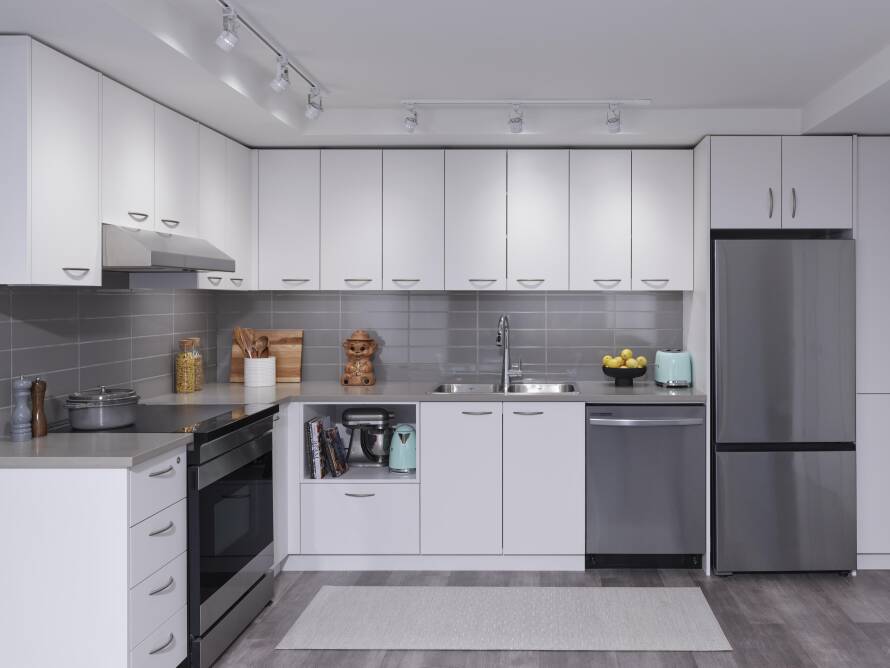
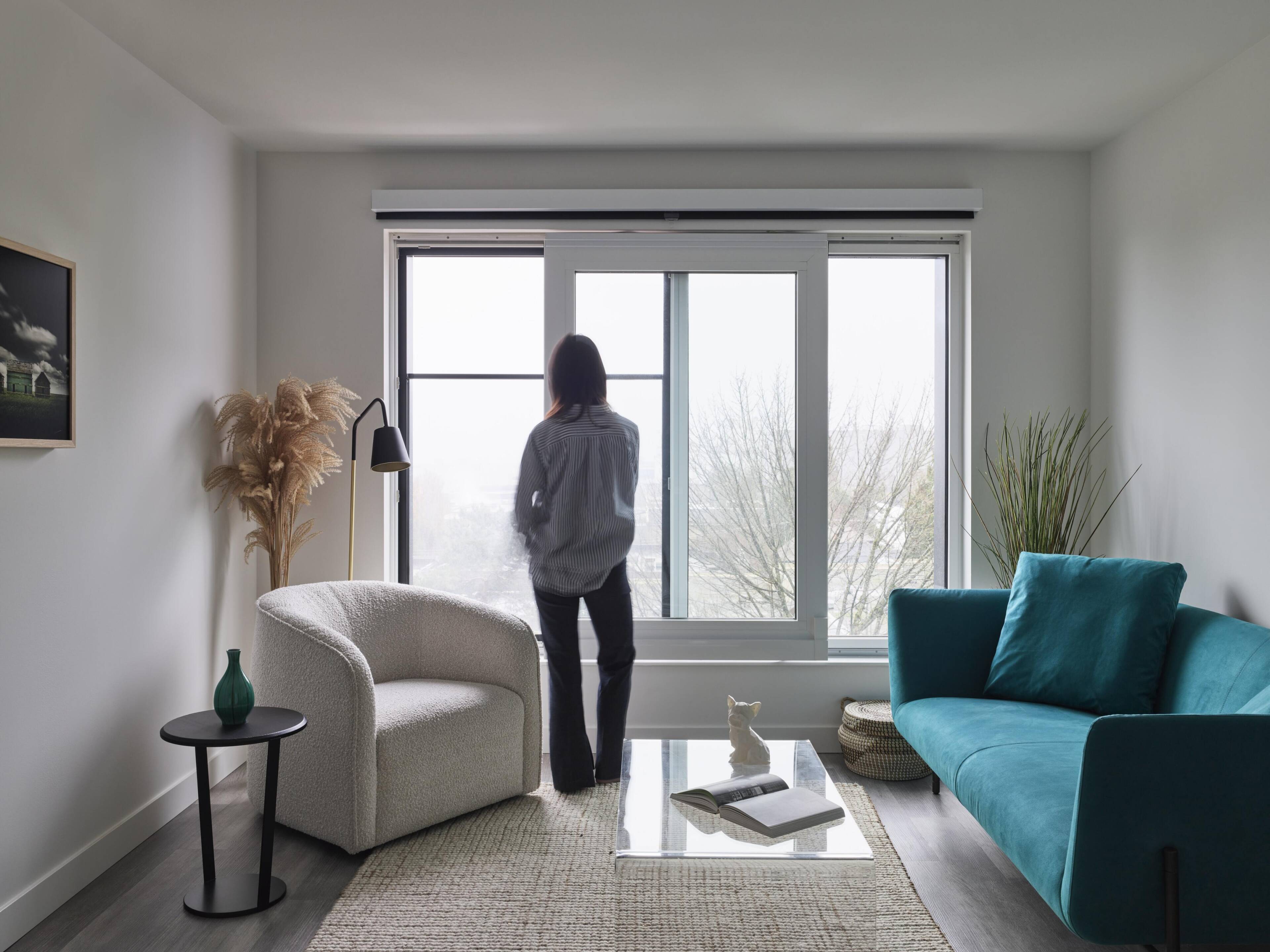
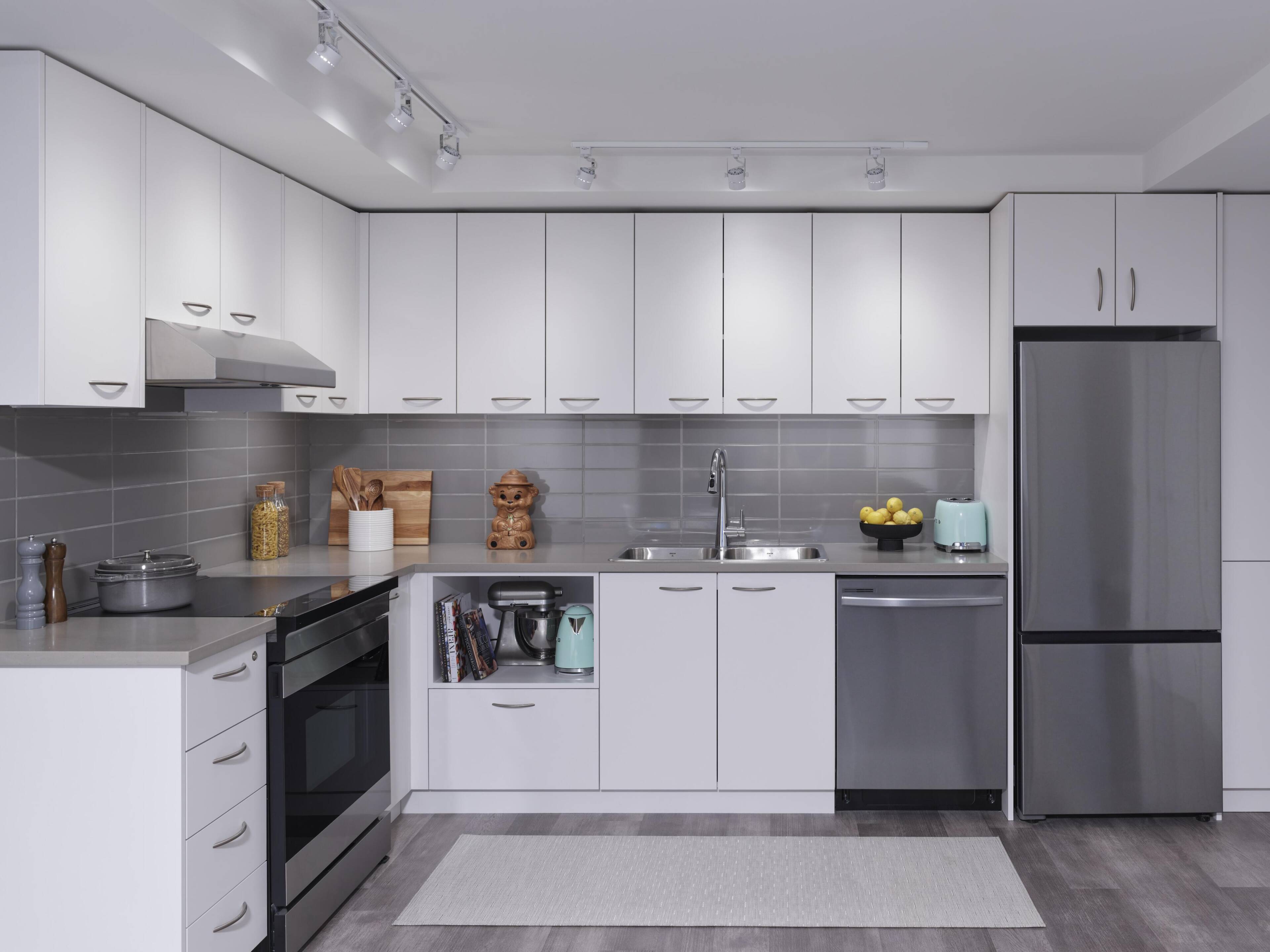
The Chief Leonard George Building is conceived as a place for connection and intergenerational living, providing purpose-built rental housing for Indigenous people living in Vancouver. This mixed-use development includes 81 residential units, ranging from studios to three- and four-bedroom suites, along with a childcare facility that supports families within the community. The range of unit types accommodates diverse households and age groups, reinforcing the project’s focus on family life and long-term community continuity.
Located east of historic Chinatown and Strathcona, the site sits within Vancouver’s vibrant Grandview–Woodland neighbourhood, an area known for its diversity and its proximity to Commercial Drive, one of the city’s most dynamic cultural corridors.
A Building Inspired by Basketry
At the heart of the project’s architectural concept is the form of a woven cedar basket—an object deeply embedded in Coast Salish culture. The façade translates this idea into a highly expressive architectural surface that celebrates traditional craftsmanship while creating a recognizable identity for the building.
Coast Salish baskets are among the oldest art forms on the Northwest Coast. They embody cultural identity, women’s leadership, knowledge of local ecologies, and teachings passed between generations. Referencing these woven forms in the building’s design establishes a direct connection between contemporary construction and long-standing cultural traditions.
“For generations, these cedar baskets have carried food, medicines and children,” explains Achim Charisius, Associate Principal at GBL Architects and a certified Passive House designer. “This building follows that teaching as a contemporary basket that holds families, culture and community in an urban setting.”
The metaphor resonates strongly with the mission of the BC Indigenous Housing Society.
“We often use the basket as a metaphor for the weaving of generations in our families,” says Brenda Knights, Chief Executive Officer of BCIHS. “The basket is also a metaphor for how we used to live together. Its symbolism is meaningful to our organization as we seek to bring back traditional ways of living together.”
Buildings We Love
60 bowden
Mass Timber Meets Adaptive Reuse
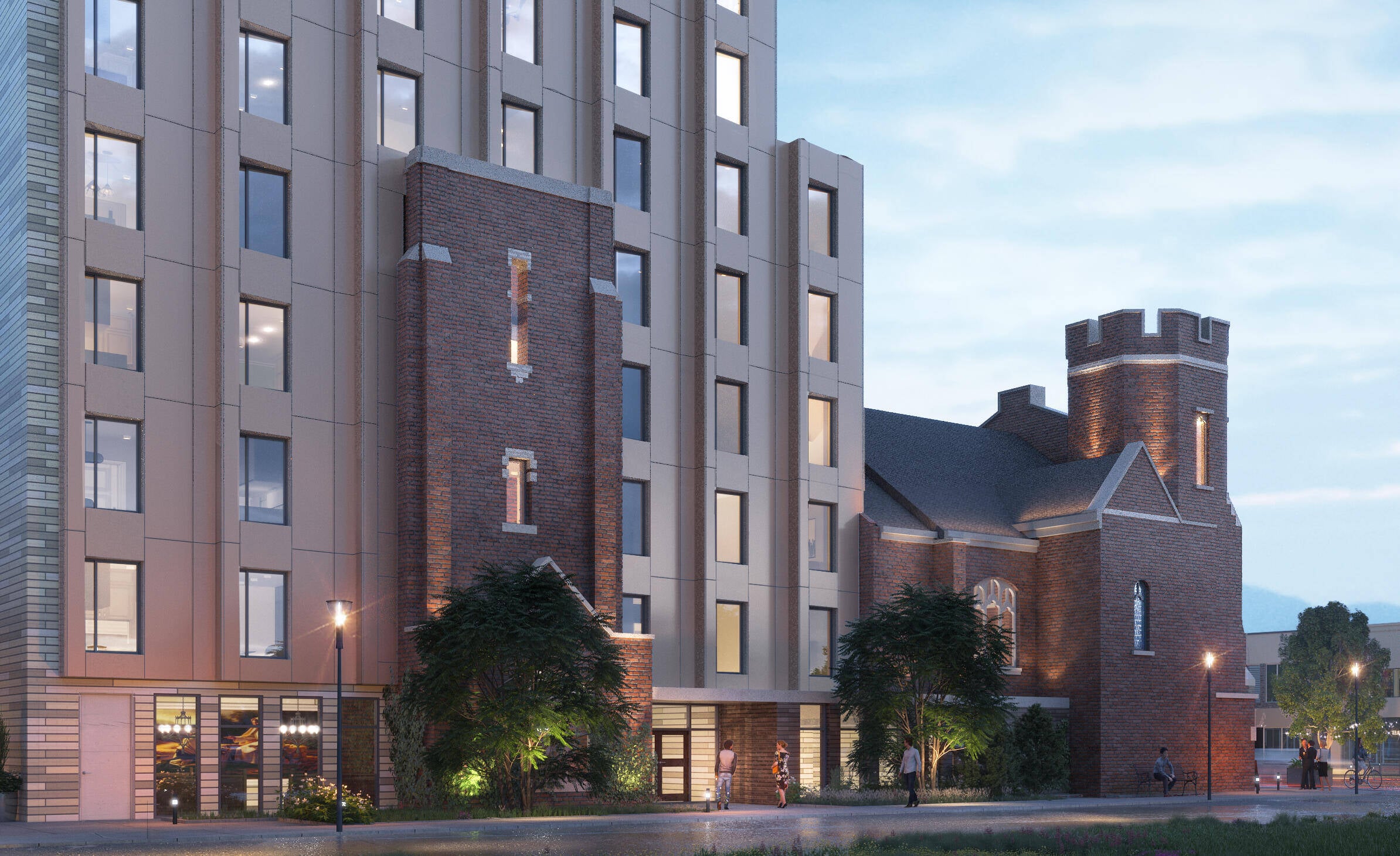
In Toronto’s Riverdale neighbourhood, the transformation of an historic church into an eight-storey, 50-unit affordable housing development demonstrates how thoughtful and strategic mass timber construction can balance heritage preservation with speed and sustainability to address urgent housing needs. The unique project also signals a broader opportunity: across Canada, aging church properties are valuable, underutilized assets with huge potential already embedded in established neighbourhoods.
Originally built in 1931, Danforth Baptist Church is a significant community landmark whose historic features were all carefully preserved as part of the project. Conceived as a partnership between Danforth Baptist Church and WoodGreen Community Housing, the initiative was driven by a desire to deliver a meaningful response to the housing crisis.
The building will provide affordable studio and one-bedroom apartments exclusively for residents aged 59 and older— one of the fastest-growing populations in need of affordable housing. Upon completion, the project will be operated by WoodGreen Community Services and provide wraparound services that include personal support workers, social workers, recreational programs, and shared amenity spaces designed to foster well-being and community connection.
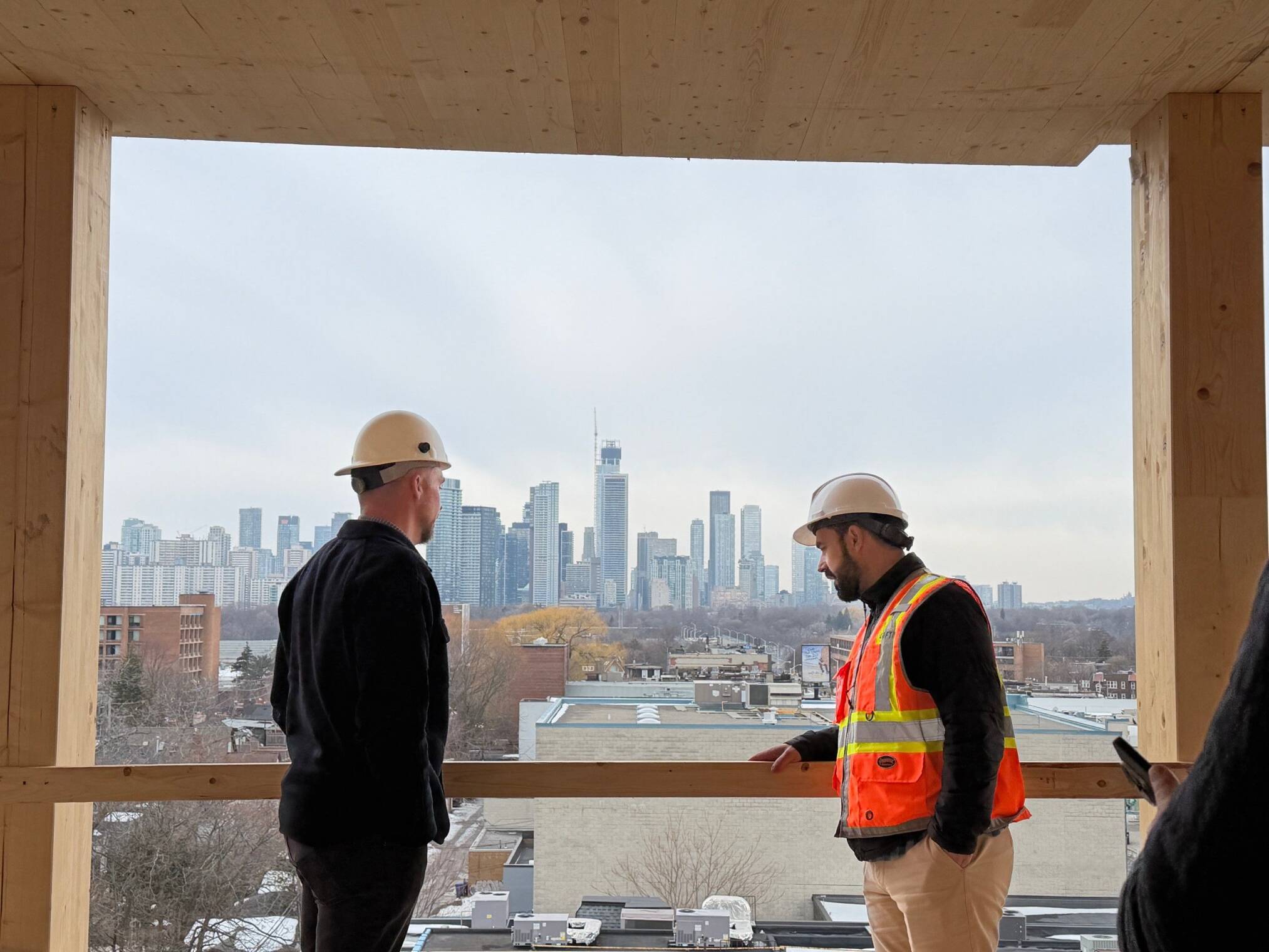
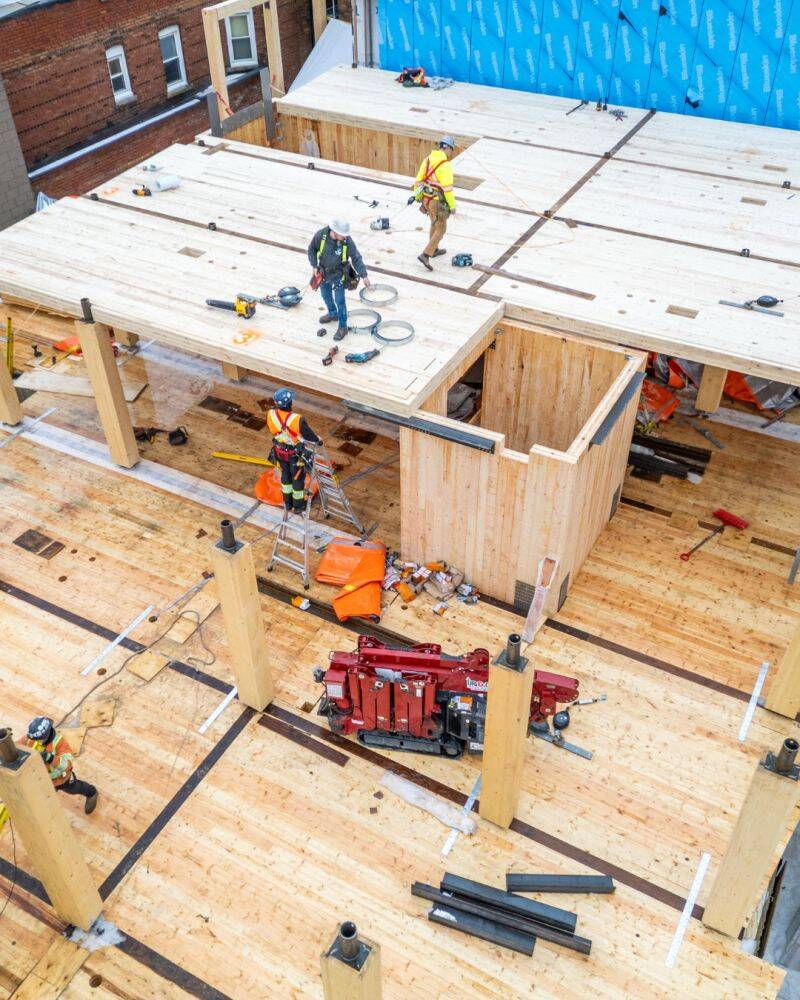
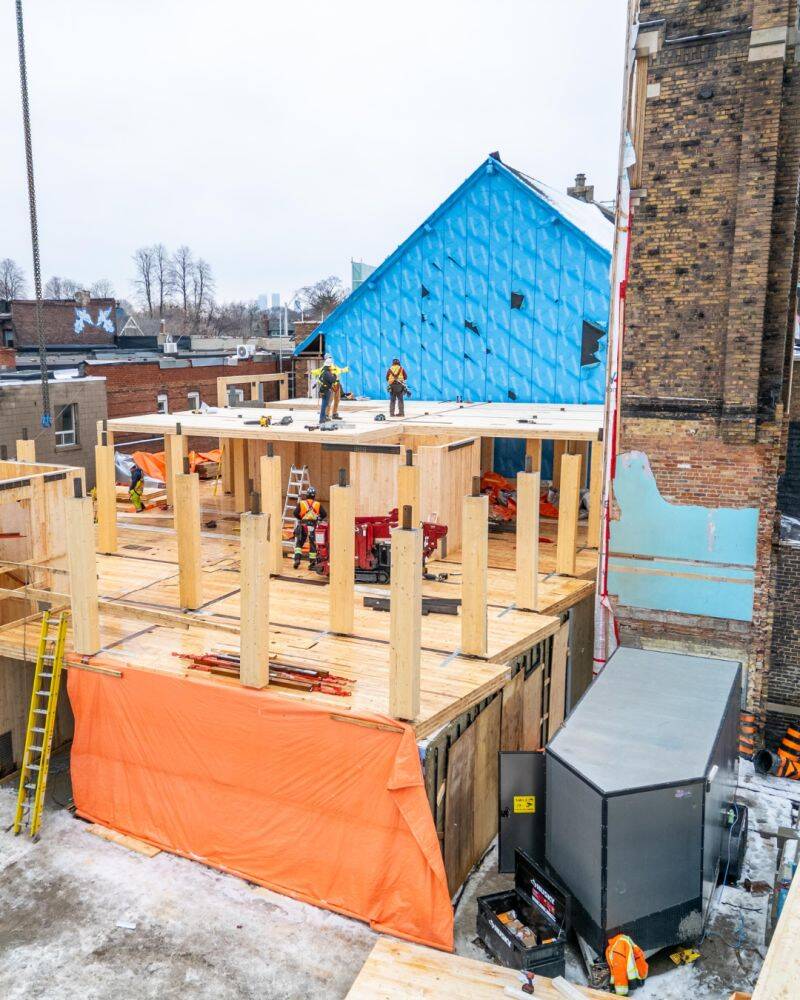
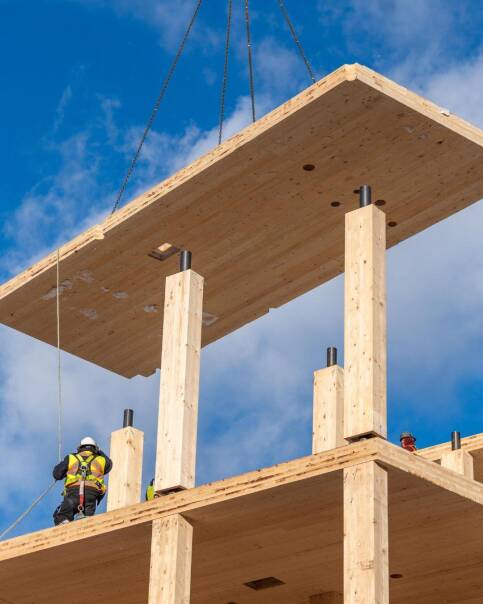
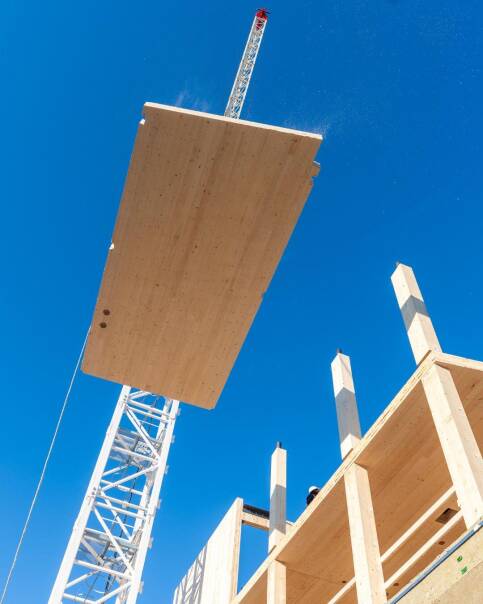
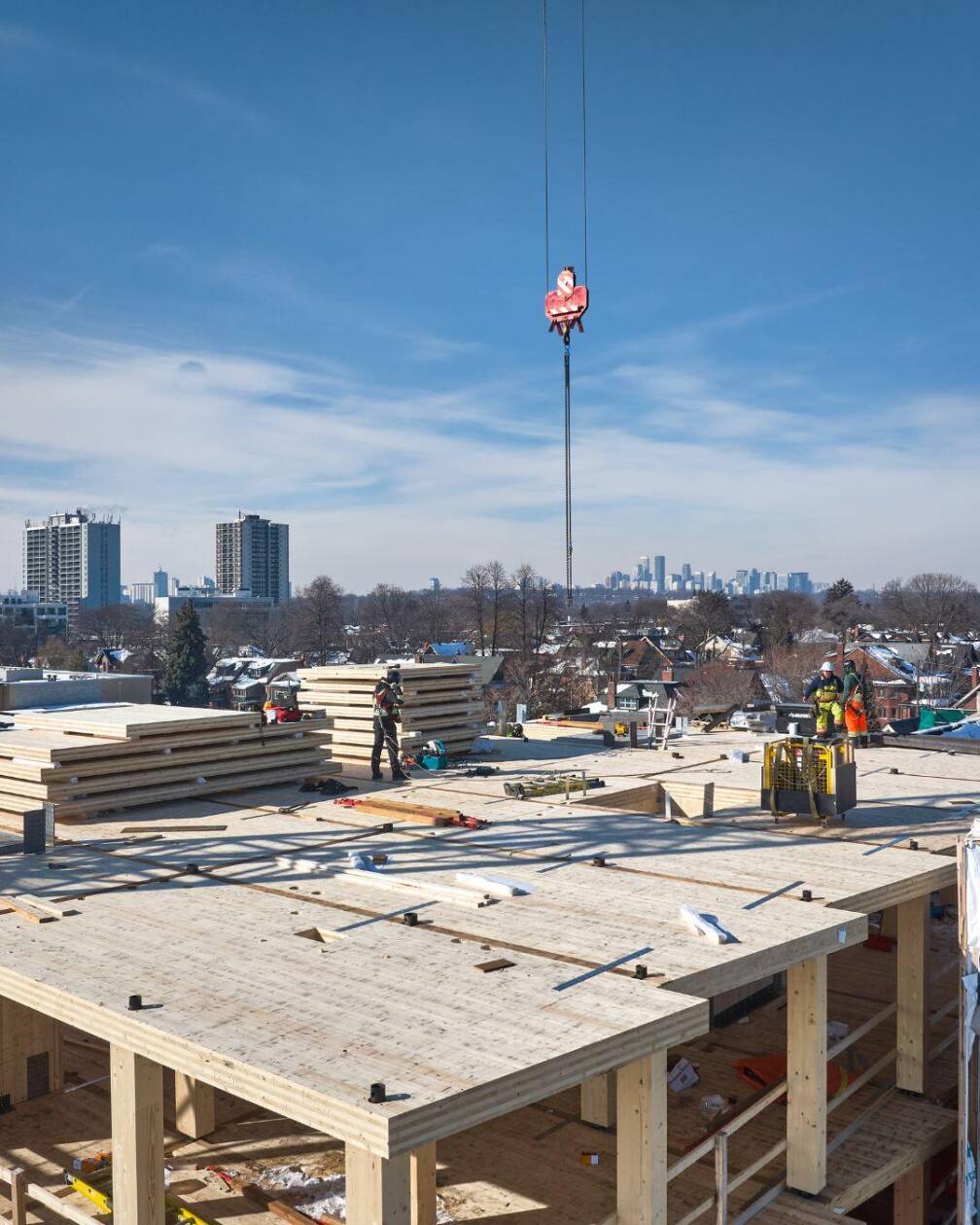
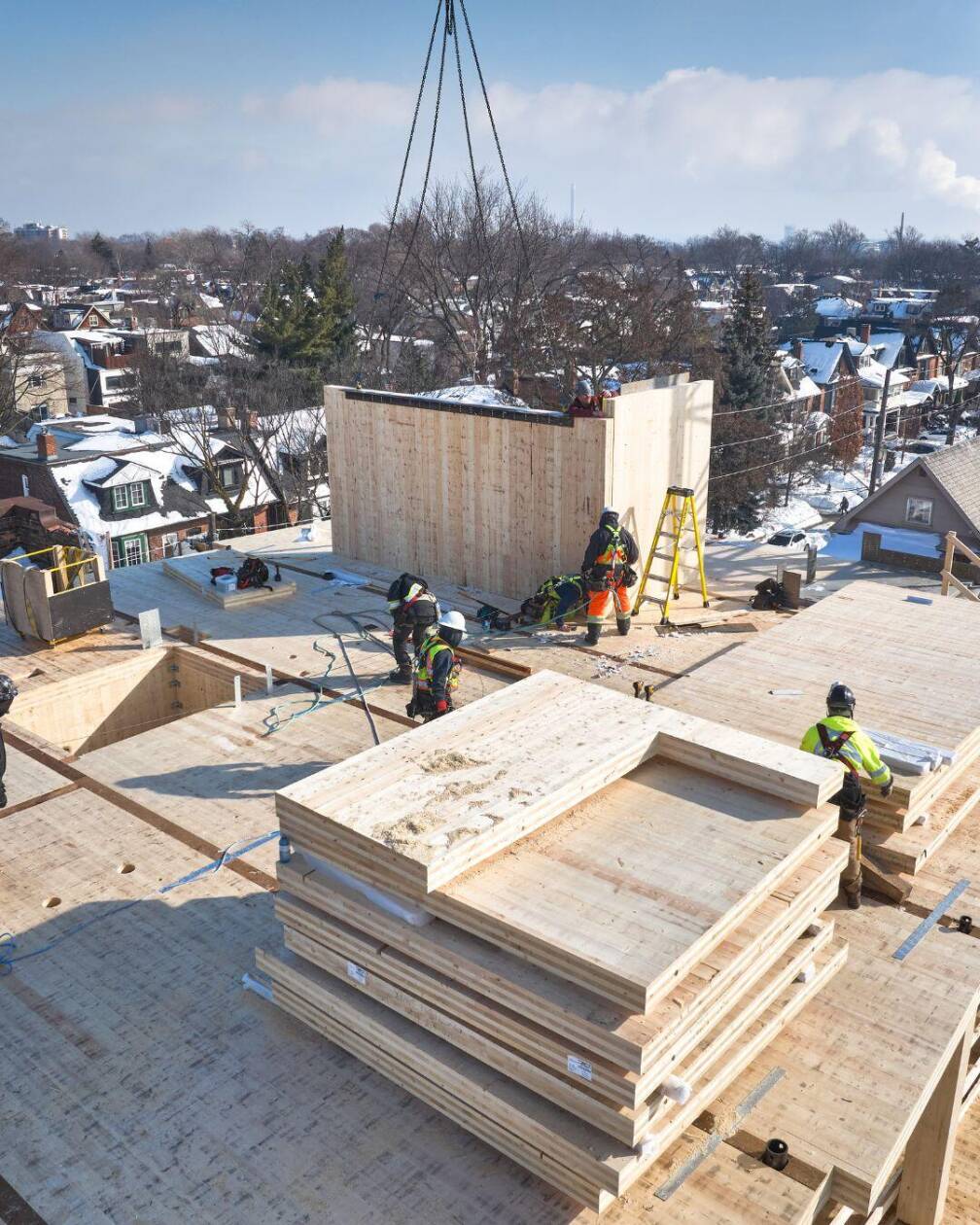

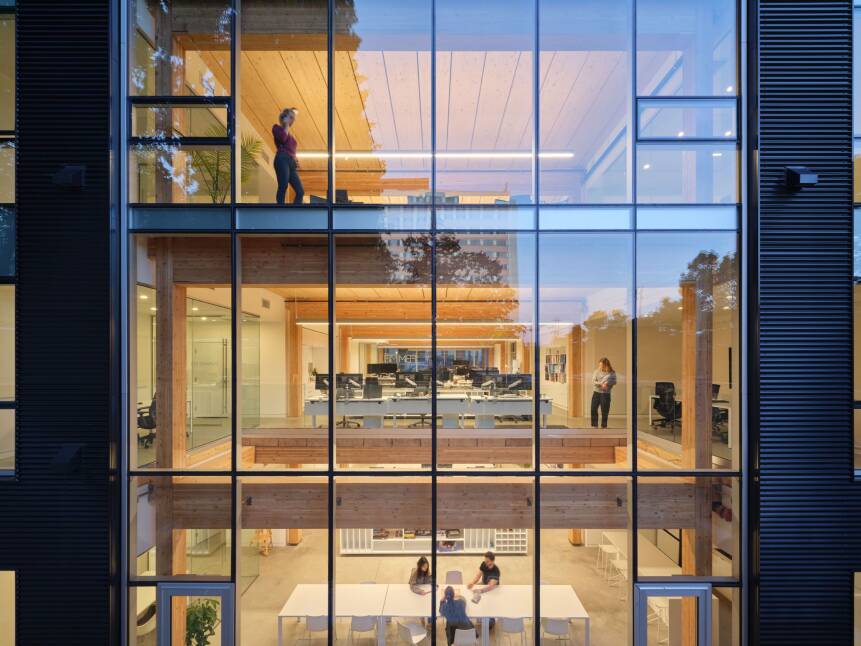
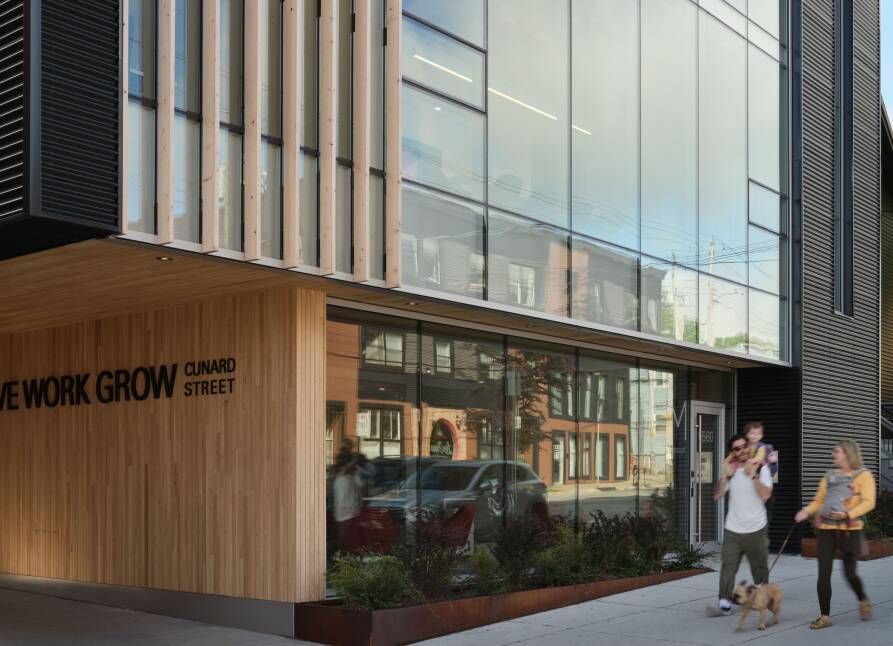
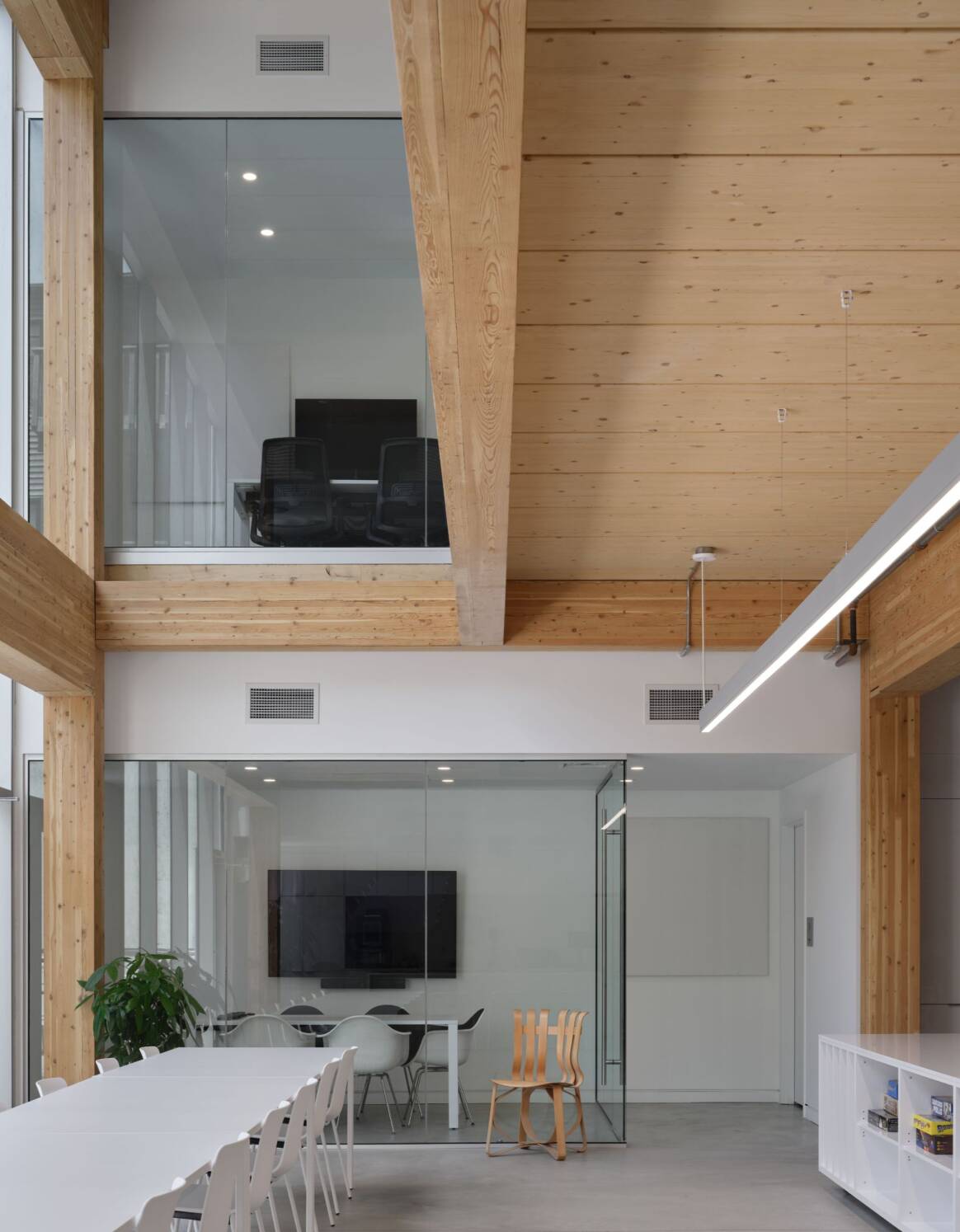
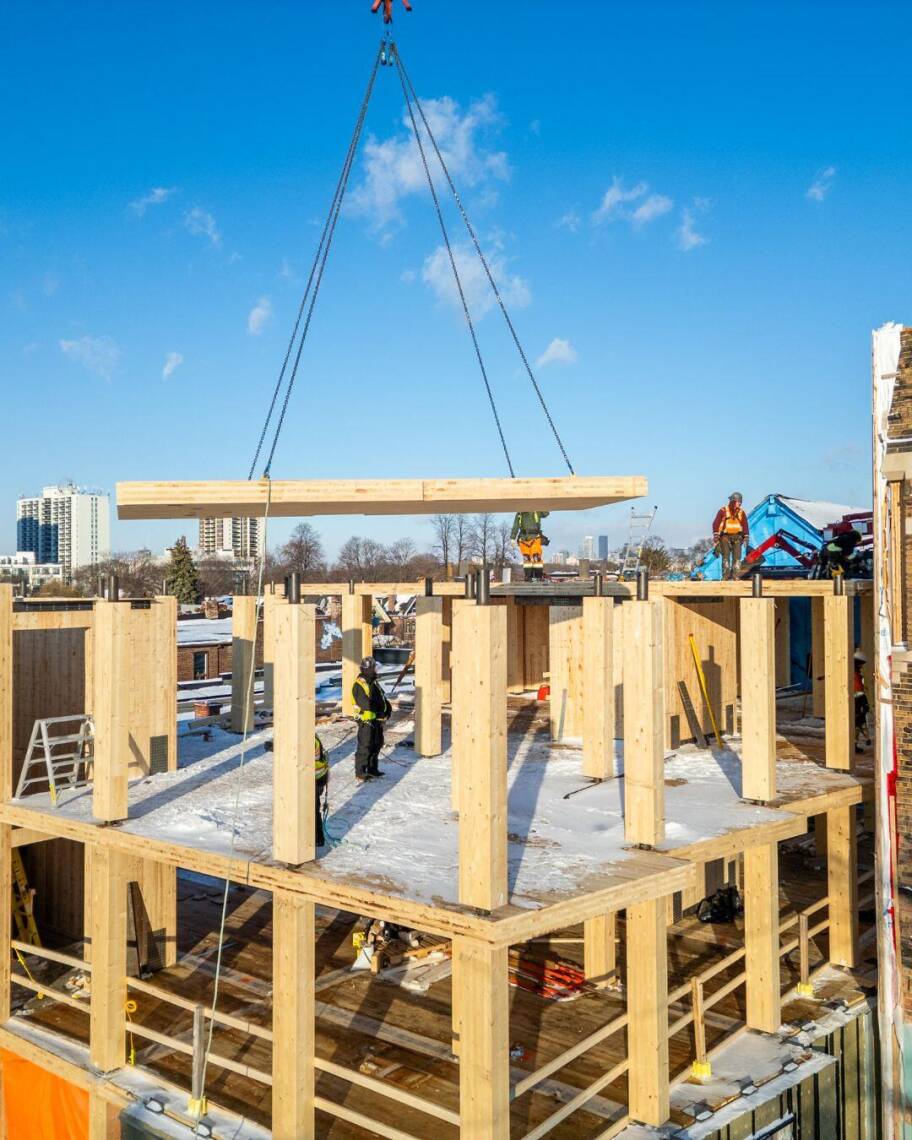

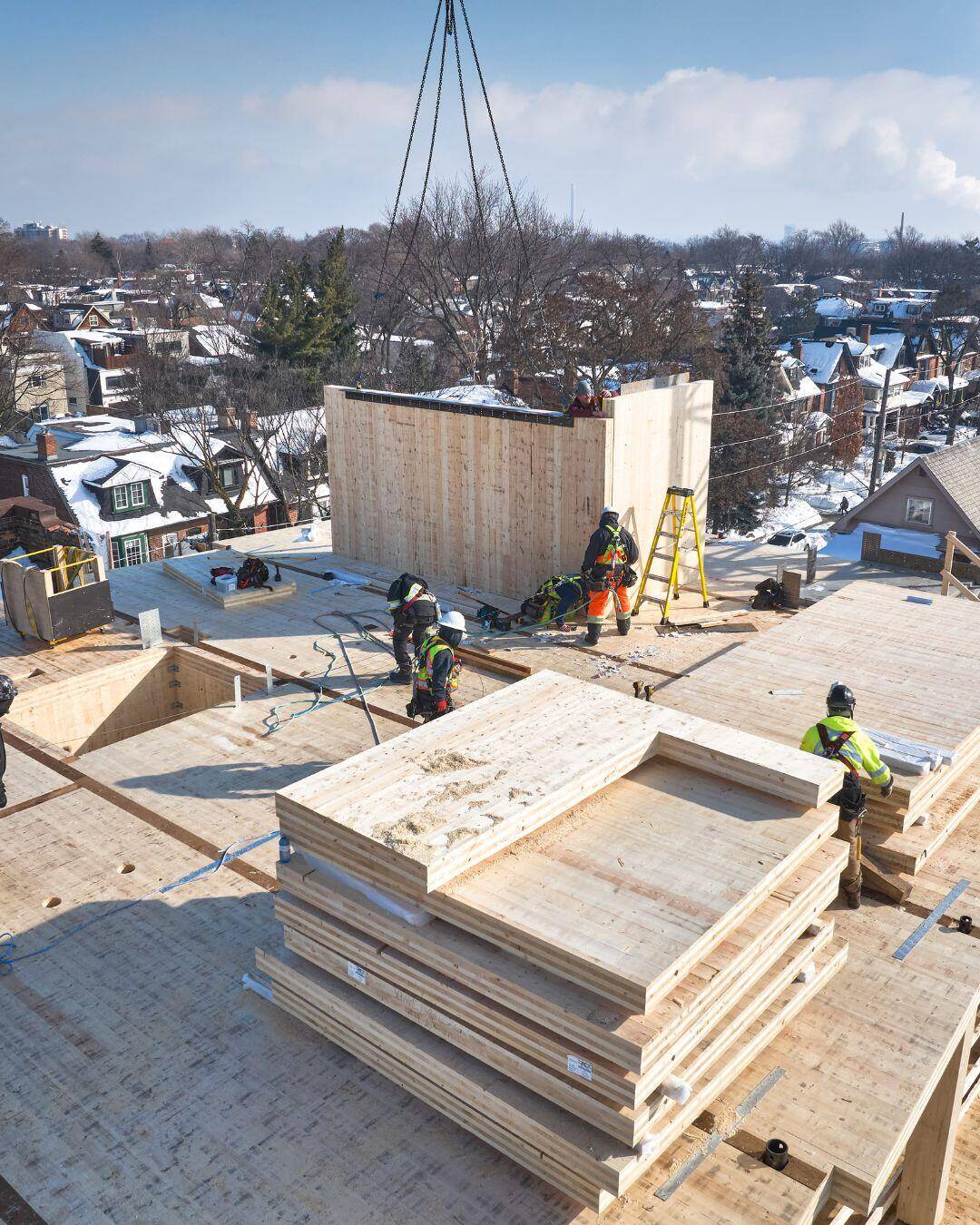
Construction took place in January and February during a particularly tough winter season in Toronto. Despite the inclement weather, the structure went up in just nine weeks. Crews carefully lifted and installed hundreds of CLT panels and Glulam columns, and thousands of metal connectors and fasteners to bring the project to life.
FAB Structures’ prefabricated wall assemblies form the building envelope and demonstrate how lightweight prefabricated systems can integrate seamlessly with existing heritage elements without overburdening them.
Supported by the City of Toronto and the Government of Canada’s Rapid Housing Initiative (RHI), 60 Bowden demonstrates how prefabricated mass timber construction can deliver high-quality, low-carbon housing on dense urban sites—quickly and efficiently—while proving that rapid delivery does not have to come at the expense of heritage preservation.
Preserving the Past, Building the Future
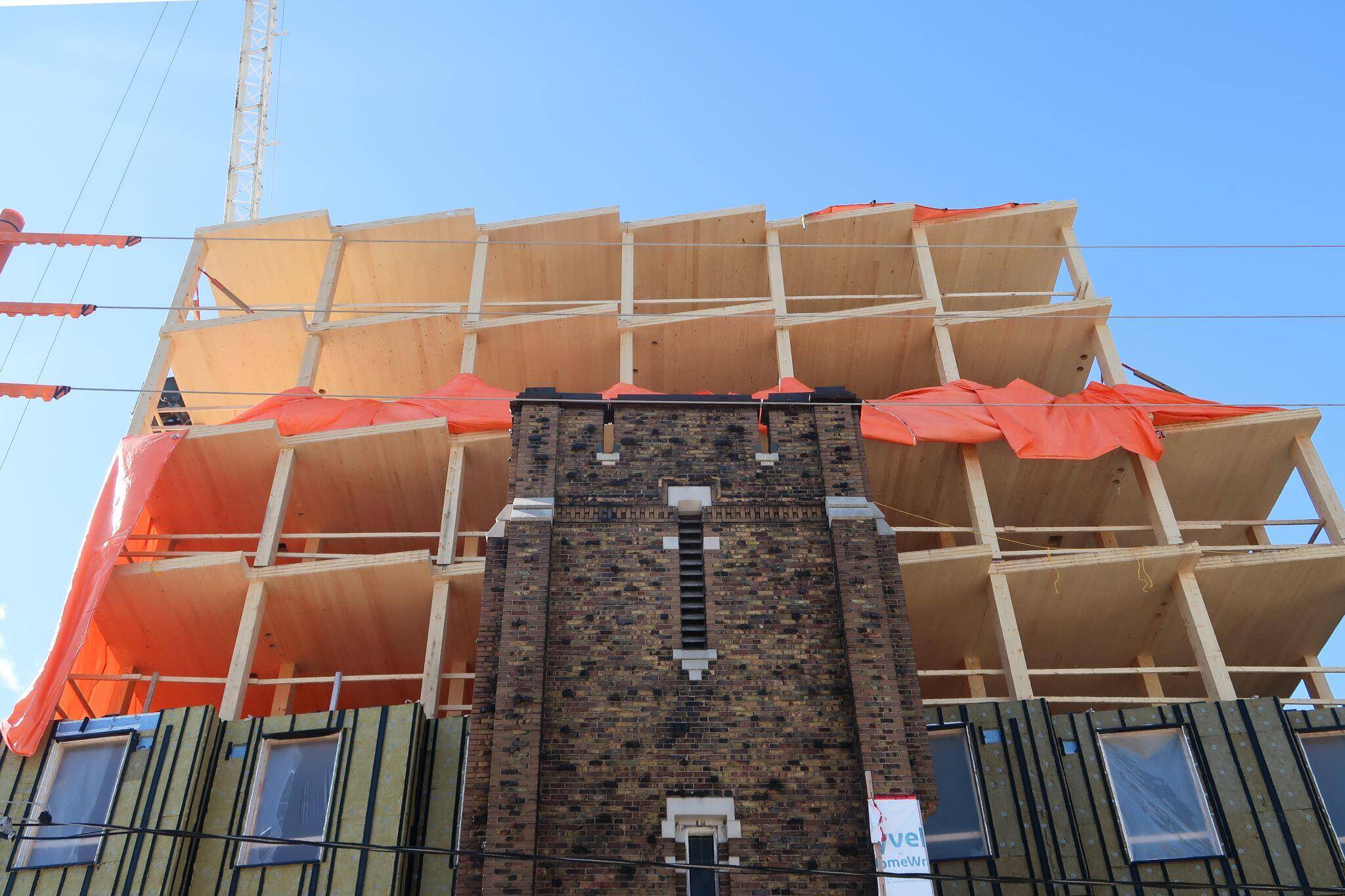
One of the greatest challenges of the transformation was honouring the congregation’s vision for integrated affordable housing while retaining meaningful elements of the existing structure. The solution emerged through the project’s adaptive reuse strategy and pursuit of prefabricated mass timber construction. The new mass timber structure rises above the carefully preserved façade, twin towers, and stained-glass windows of the historic church.
Element5 supplied the mass timber superstructure which features point-supported 7-ply cross-laminated timber (CLT) floor panels on glulam columns. This flat-pack, modular approach enabled rapid assembly while maintaining the precision required for a complex urban infill site.
by Diana Tamblyn
Client: WoodGreen Community Services
Design-Builder: Assembly Corp. Inc
Architect: mcCallumSather Heritage Architect: ERA Architects Inc.
General Contractor:
Loftin Management
Engineering Consulting: Thornton Tomasetti
Builder Materials: Fab Structures
Mass Timber Supplier: Element5

buildings We Love

Buildings We Love
the chief leonard george building
Carrying Culture Forward
By referencing Coast Salish basketry, the Chief Leonard George Building positions architecture as a vessel for cultural continuity. The woven façade evokes the craft and symbolism of cedar baskets, translating this tradition into a contemporary urban form.
Historically, these baskets carried food, medicines, and children. Here, that idea is reinterpreted at the scale of a building, conceived as a container for families, knowledge, and community life.
Through the integration of mass timber construction, Passive House performance, and culturally grounded design, the project demonstrates that housing can be both environmentally responsible and socially meaningful. In Vancouver, a new kind of building takes shape, one designed to hold generations, inspired by Coast Salish cedar baskets.
Tall Timber Meets Passive House
While the cultural narrative is central to the design, the project also sets a new benchmark for environmental performance in affordable housing.
The building achieves a 75 percent reduction in embodied carbon and greenhouse gas emissions, made possible through the use of mass timber and incorporating the Passive House Standard. The structure incorporates locally sourced mass timber floor panels along with pre-manufactured cross-laminated timber (CLT) envelope panels, combining structural efficiency with precision fabrication.
Mass timber construction significantly reduces embodied carbon, while the building’s Passive House certification addresses operational energy performance. Together, these strategies dramatically reduce the building’s overall carbon footprint.
The result is a fully electric building that demonstrates how high-performance sustainable design can be successfully integrated into affordable housing.
Housing Designed for Community
The Chief Leonard George Building is conceived as a place for connection and intergenerational living, providing purpose-built rental housing for Indigenous people living in Vancouver. This mixed-use development includes 81 residential units, ranging from studios to three- and four-bedroom suites, along with a childcare facility that supports families within the community. The range of unit types accommodates diverse households and age groups, reinforcing the project’s focus on family life and long-term community continuity.
Located east of historic Chinatown and Strathcona, the site sits within Vancouver’s vibrant Grandview–Woodland neighbourhood, an area known for its diversity and its proximity to Commercial Drive, one of the city’s most dynamic cultural corridors.


A Building Inspired by Basketry
At the heart of the project’s architectural concept is the form of a woven cedar basket—an object deeply embedded in Coast Salish culture. The façade translates this idea into a highly expressive architectural surface that celebrates traditional craftsmanship while creating a recognizable identity for the building.
Coast Salish baskets are among the oldest art forms on the Northwest Coast. They embody cultural identity, women’s leadership, knowledge of local ecologies, and teachings passed between generations. Referencing these woven forms in the building’s design establishes a direct connection between contemporary construction and long-standing cultural traditions.
“For generations, these cedar baskets have carried food, medicines and children,” explains Achim Charisius, Associate Principal at GBL Architects and a certified Passive House designer. “This building follows that teaching as a contemporary basket that holds families, culture and community in an urban setting.”
The metaphor resonates strongly with the mission of the BC Indigenous Housing Society.
“We often use the basket as a metaphor for the weaving of generations in our families,” says Brenda Knights, Chief Executive Officer of BCIHS. “The basket is also a metaphor for how we used to live together. Its symbolism is meaningful to our organization as we seek to bring back traditional ways of living together.”
Weaving Indigenous Culture and Sustainability into Passive House Construction
In Vancouver’s Grandview–Woodland neighbourhood, a new residential building celebrates an architectural language rooted in tradition and community. The Chief Leonard George Building, designed by GBL Architects for the BC Indigenous Housing Society (BCIHS), is Canada’s first tall timber Passive House building. The nine-storey project delivers 81 purpose-built rental homes while weaving together cultural identity, environmental performance, and community-oriented programming.
Buildings We Love
60 bowden



Client: WoodGreen Community Services
Design-Builder: Assembly Corp. Inc
Architect: mcCallumSather Heritage Architect: ERA Architects Inc.
General Contractor:
Loftin Management
Engineering Consulting: Thornton Tomasetti
Builder Materials: Fab Structures
Mass Timber Supplier: Element5

Construction took place in January and February during a particularly tough winter season in Toronto. Despite the inclement weather, the structure went up in just nine weeks. Crews carefully lifted and installed hundreds of CLT panels and Glulam columns, and thousands of metal connectors and fasteners to bring the project to life.
FAB Structures’ prefabricated wall assemblies form the building envelope and demonstrate how lightweight prefabricated systems can integrate seamlessly with existing heritage elements without overburdening them.
Supported by the City of Toronto and the Government of Canada’s Rapid Housing Initiative (RHI), 60 Bowden demonstrates how prefabricated mass timber construction can deliver high-quality, low-carbon housing on dense urban sites—quickly and efficiently—while proving that rapid delivery does not have to come at the expense of heritage preservation.


Preserving the Past, Building the Future
One of the greatest challenges of the transformation was honouring the congregation’s vision for integrated affordable housing while retaining meaningful elements of the existing structure. The solution emerged through the project’s adaptive reuse strategy and pursuit of prefabricated mass timber construction. The new mass timber structure rises above the carefully preserved façade, twin towers, and stained-glass windows of the historic church.
Element5 supplied the mass timber superstructure which features point-supported 7-ply cross-laminated timber (CLT) floor panels on glulam columns. This flat-pack, modular approach enabled rapid assembly while maintaining the precision required for a complex urban infill site.
Mass Timber Meets Adaptive Reuse
In Toronto’s Riverdale neighbourhood, the transformation of an historic church into an eight-storey, 50-unit affordable housing development demonstrates how thoughtful and strategic mass timber construction can balance heritage preservation with speed and sustainability to address urgent housing needs. The unique project also signals a broader opportunity: across Canada, aging church properties are valuable, underutilized assets with huge potential already embedded in established neighbourhoods.
Originally built in 1931, Danforth Baptist Church is a significant community landmark whose historic features were all carefully preserved as part of the project. Conceived as a partnership between Danforth Baptist Church and WoodGreen Community Housing, the initiative was driven by a desire to deliver a meaningful response to the housing crisis.
The building will provide affordable studio and one-bedroom apartments exclusively for residents aged 59 and older— one of the fastest-growing populations in need of affordable housing. Upon completion, the project will be operated by WoodGreen Community Services and provide wraparound services that include personal support workers, social workers, recreational programs, and shared amenity spaces designed to foster well-being and community connection.
