Reliable cost data has long been a barrier to wider adoption of mass timber construction. While factors such as construction efficiency, tenant appeal, and the potential for lower embodied carbon have made mass timber increasingly attractive to some project teams, owners and developers have consistently asked a more pragmatic question: How does mass timber pencil out? Uncertainty around cost has remained the most persistent hesitation point.
A new Mass Timber Business Case Studies published by WoodWorks BC, a market development program of the Canadian Wood Council, begins to answer this question by presenting three real projects where developers shared detailed cost, schedule, and design information.
Collectively, these studies illuminate how mass timber performs under real market conditions, comparing each project to conventional construction materials and demonstrating how strategic design choices and risk management can bring mass timber into cost parity across multiple building types.
FEATURE
Unlocking the Economics
of Mass Timber:
Insights from Three New Business Case Studies
Scroll to Read

Market Rate Rental Housing
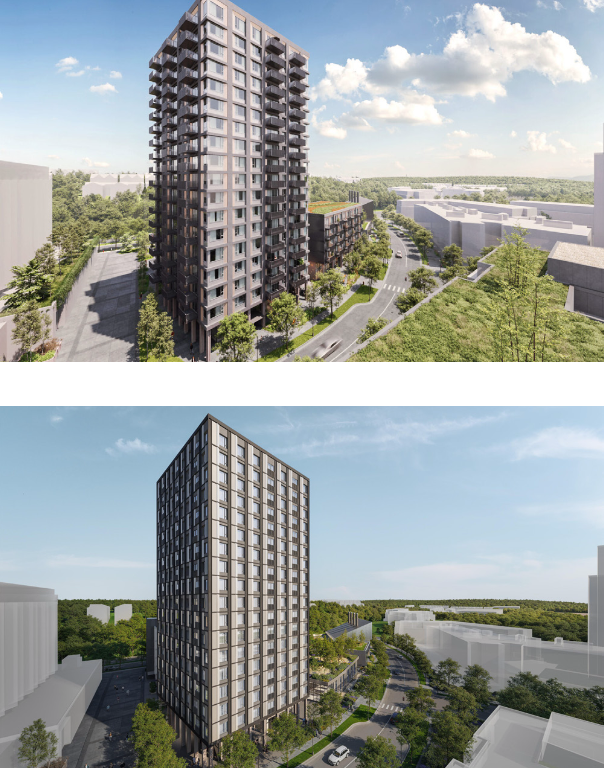
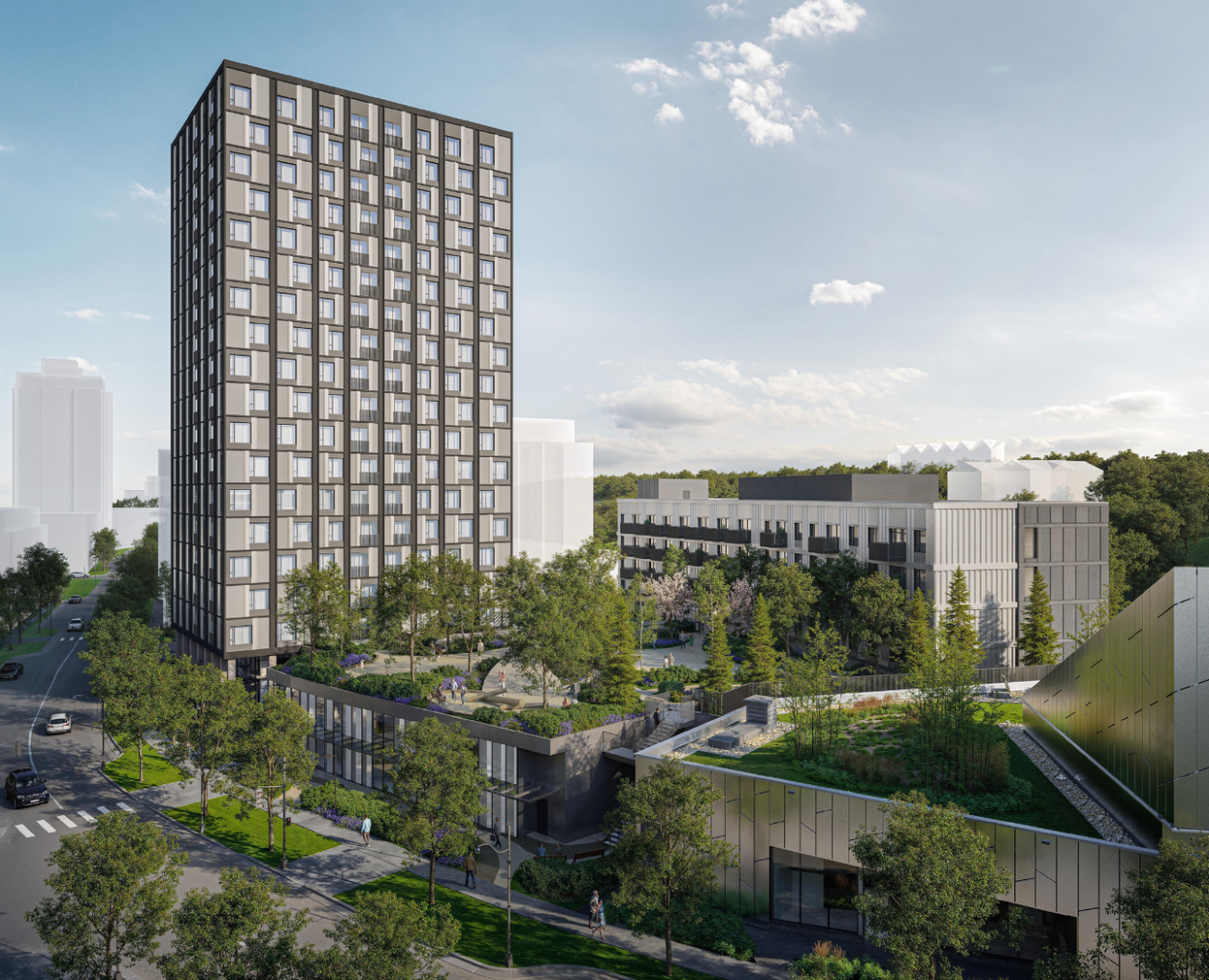
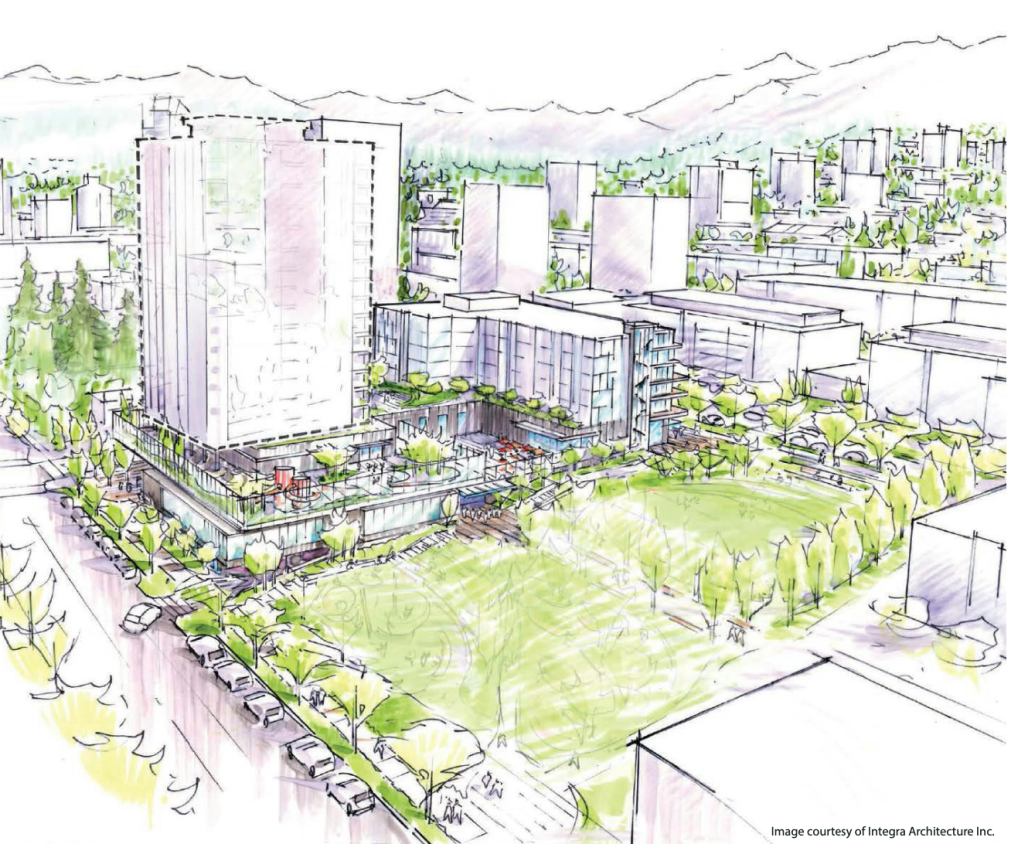
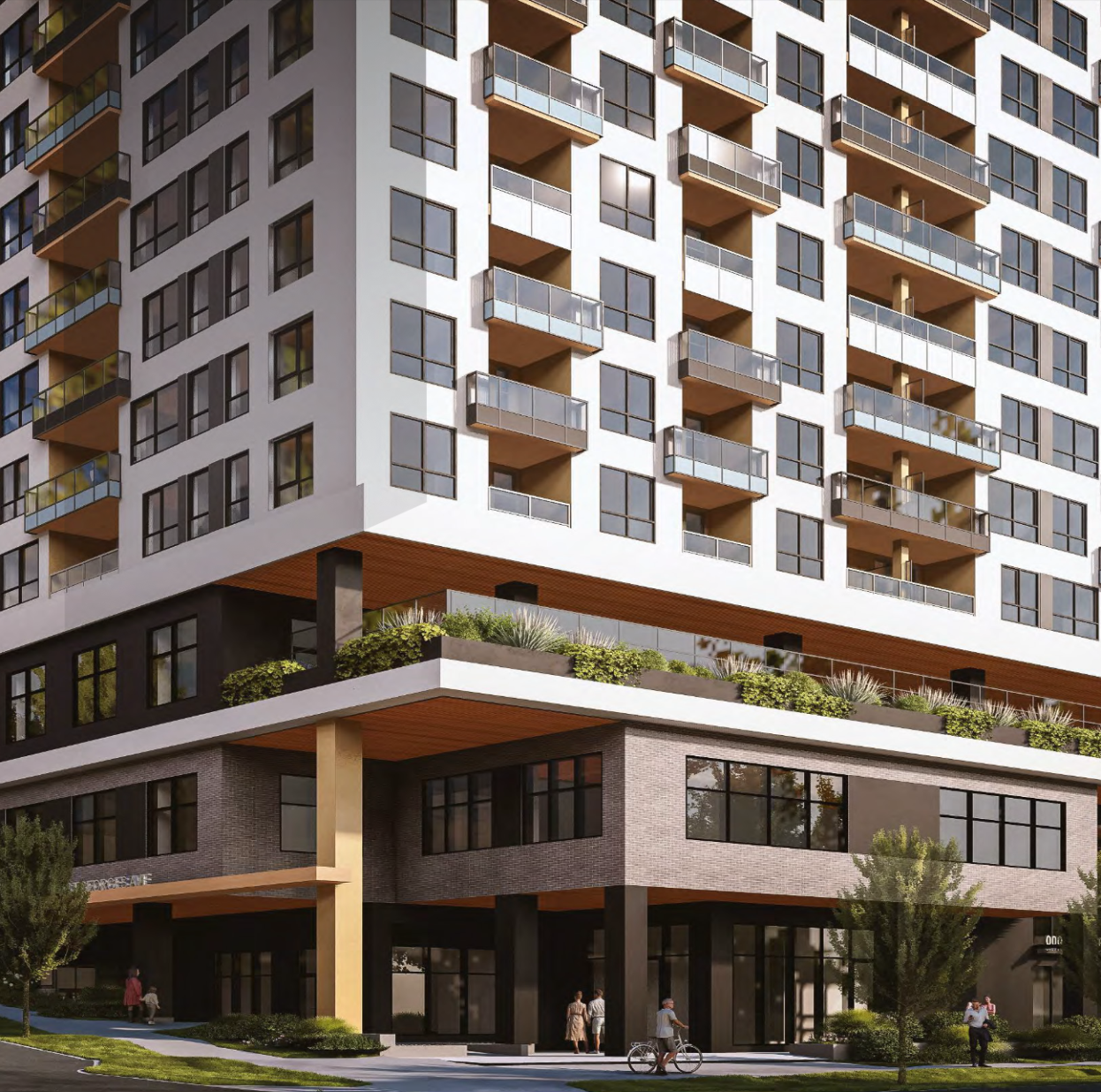
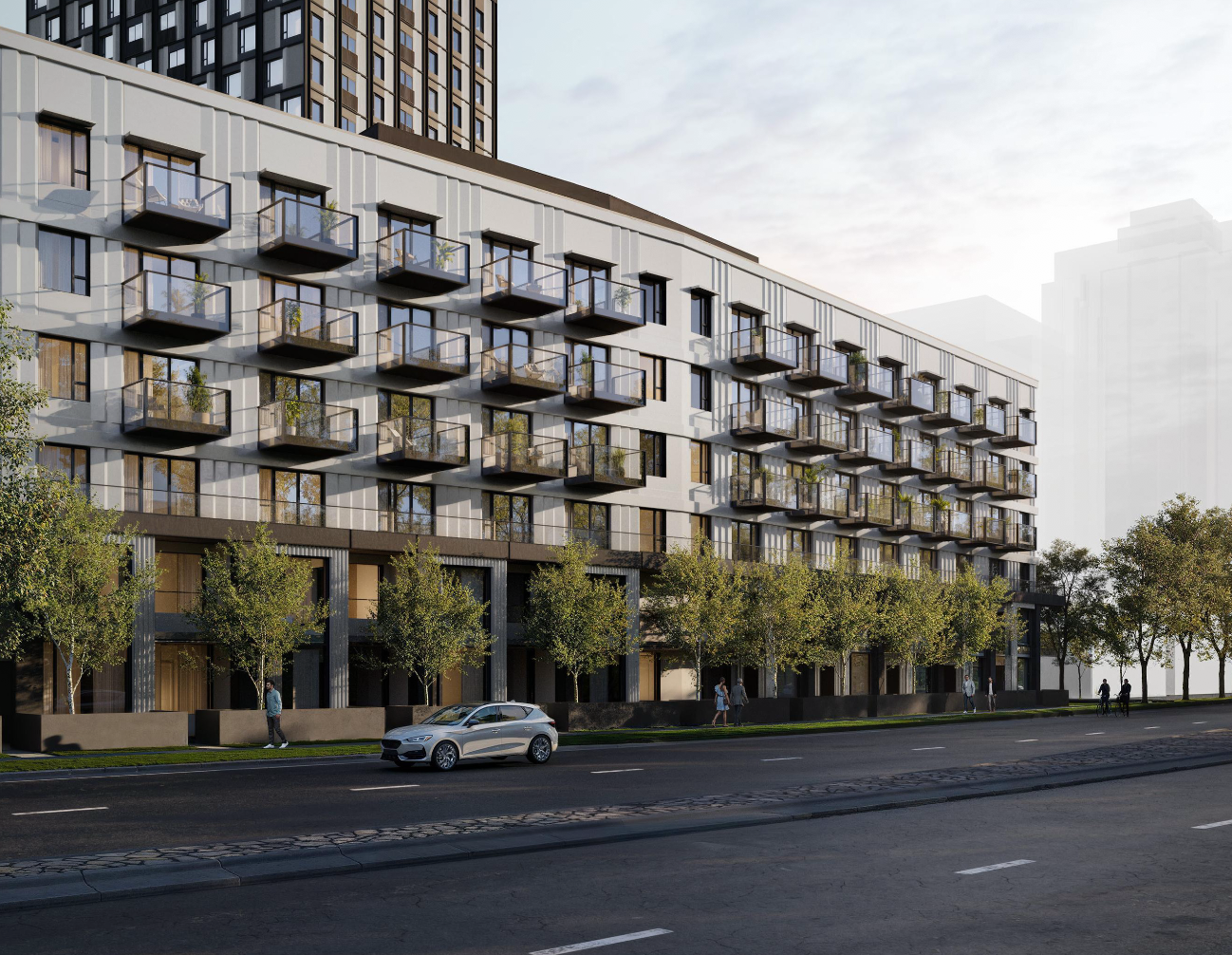
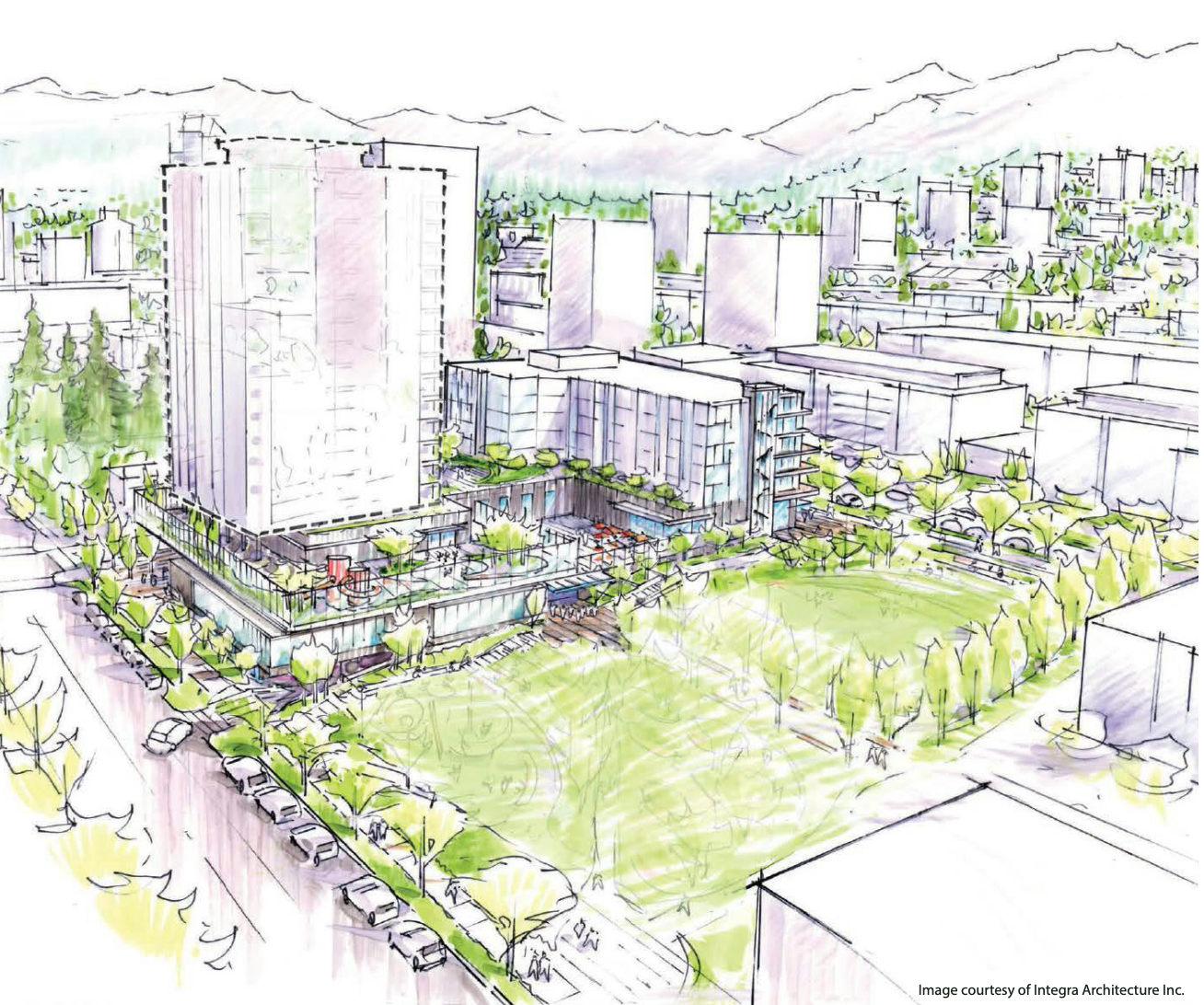
Parcel 19.1, proposed by Wesgroup Properties for the River District in Vancouver, is a 19-storey hybrid mass timber tower containing 17 storeys of mass timber over a two-storey concrete podium. Supported by a large master-planned context, the project includes approximately 240 strata and rental homes, plus an urgent care centre at grade.
Wesgroup saw mass timber as an investment in the future of sustainable construction. The strategy emphasized long-term R&D benefits, the desire for “Made in Canada” solutions, and alignment with sustainability commitments across its portfolio.
Key risks included regulatory approval for a tall hybrid structure, coordination of mechanical and electrical systems around CLT floor panels and maintaining competitive costs in a large-scale urban tower. Early and transparent engagement with the City of Vancouver proved essential, and the team explored both Canadian and European suppliers to evaluate sizing, cost, and transportation constraints.
A key takeaway from this case is that the above-grade mass timber structure achieved cost parity with concrete, excluding underground work. This was made possible through targeted design refinements, including a simpler building form, a larger floorplate, and the shift from balconies to Juliet railings, which together lowered costs by about $25,000 per unit.
The team deployed strategic material sequencing to secure competitive insurance rates, by delaying on-site arrival of the mass timber following completion of the concrete work. Prefabricated curtain wall panels also compress the overall schedule. Strong municipal collaboration, strategic design revisions, and rigorous evaluation of suppliers allowed mass timber to be cost competitive in a high-rise context which is an important milestone for the industry.
Conclusion
Taken together, these three case studies provide something the mass timber sector has long needed: transparent, real-world cost comparison data. More importantly, they show that cost parity is achievable, sometimes already within reach and often attainable through design optimization, prefabrication, and collaborative project delivery. For developers exploring mass timber, the message is clear: with the right team, strategy, and risk management, mass timber is not only viable but increasingly competitive across building types, from affordable housing to office space to tall residential towers.
Offices
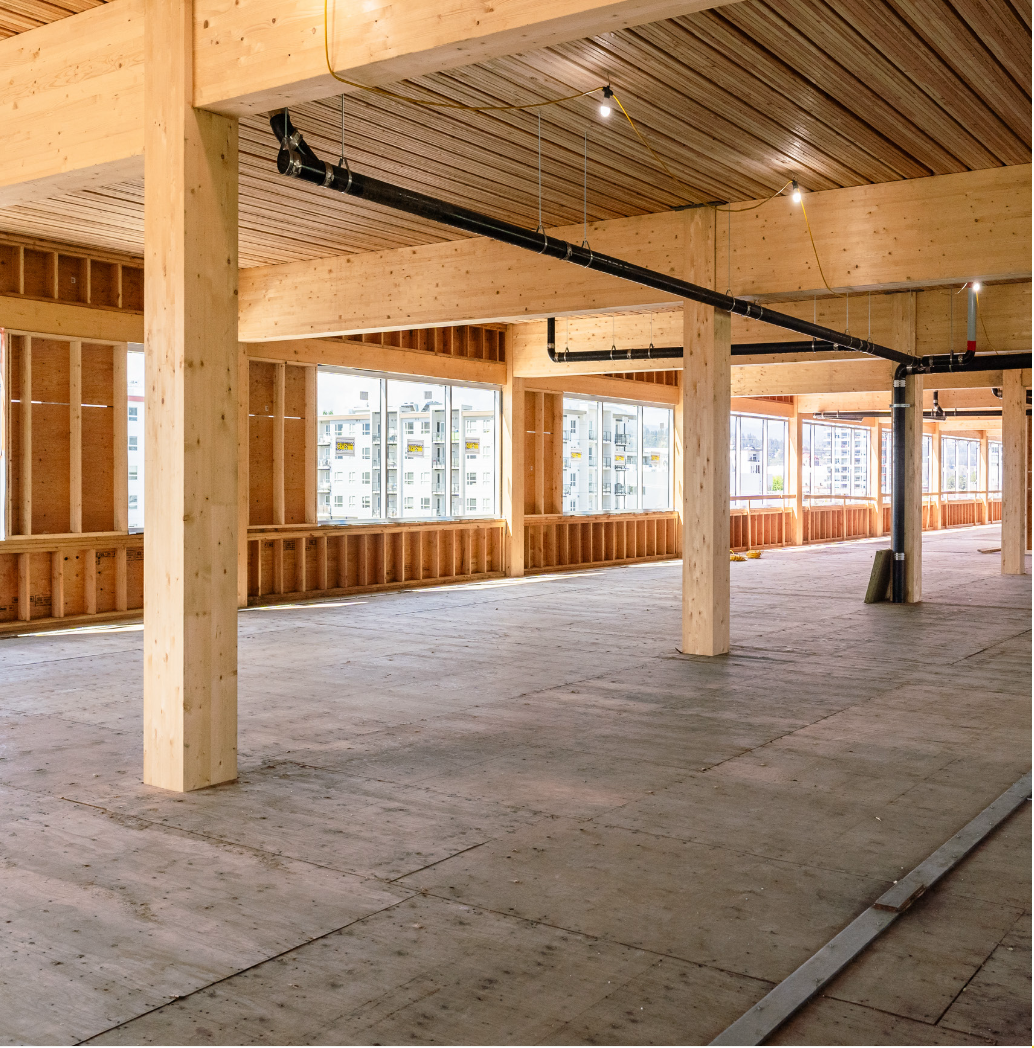
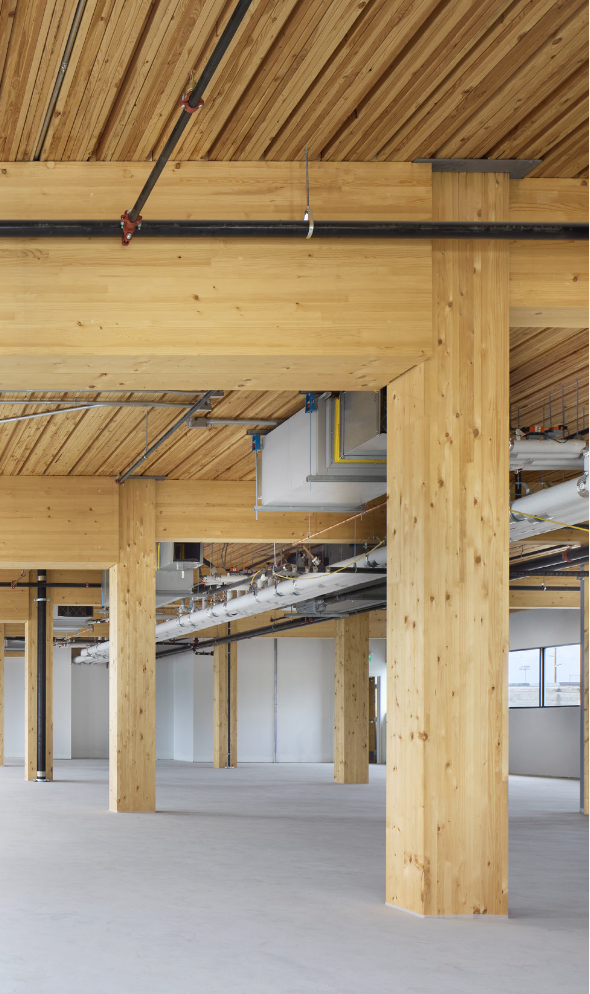
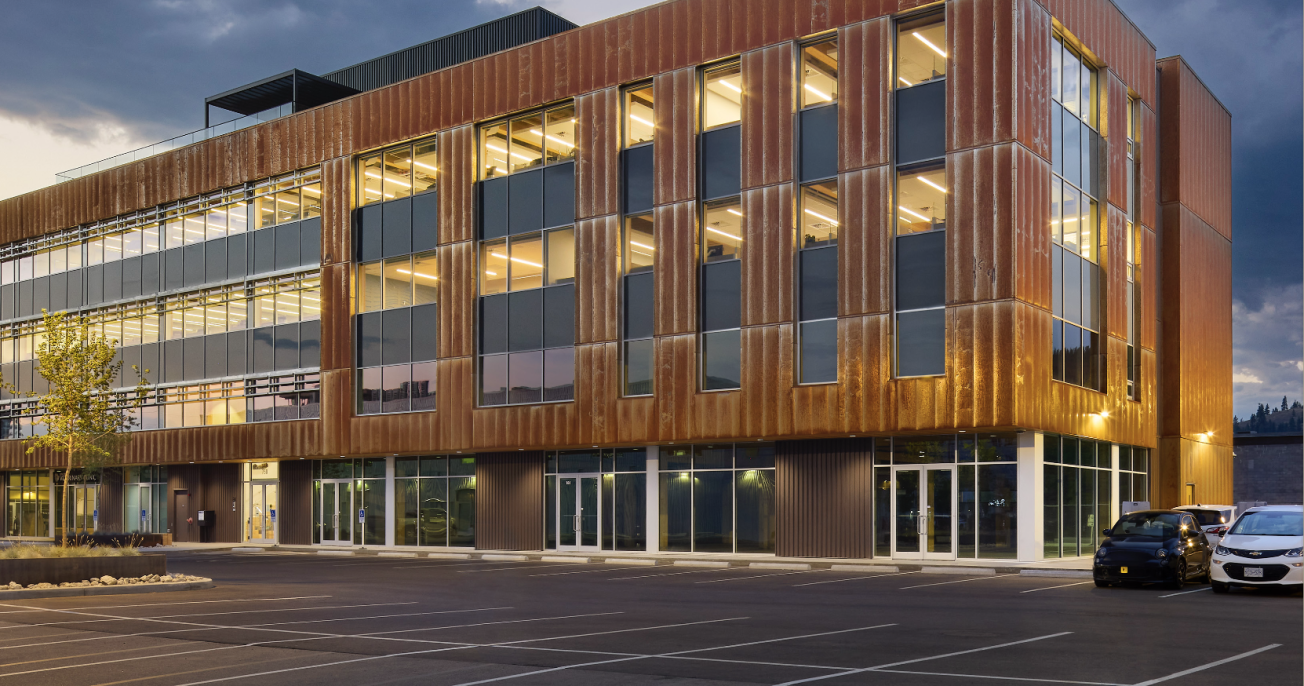
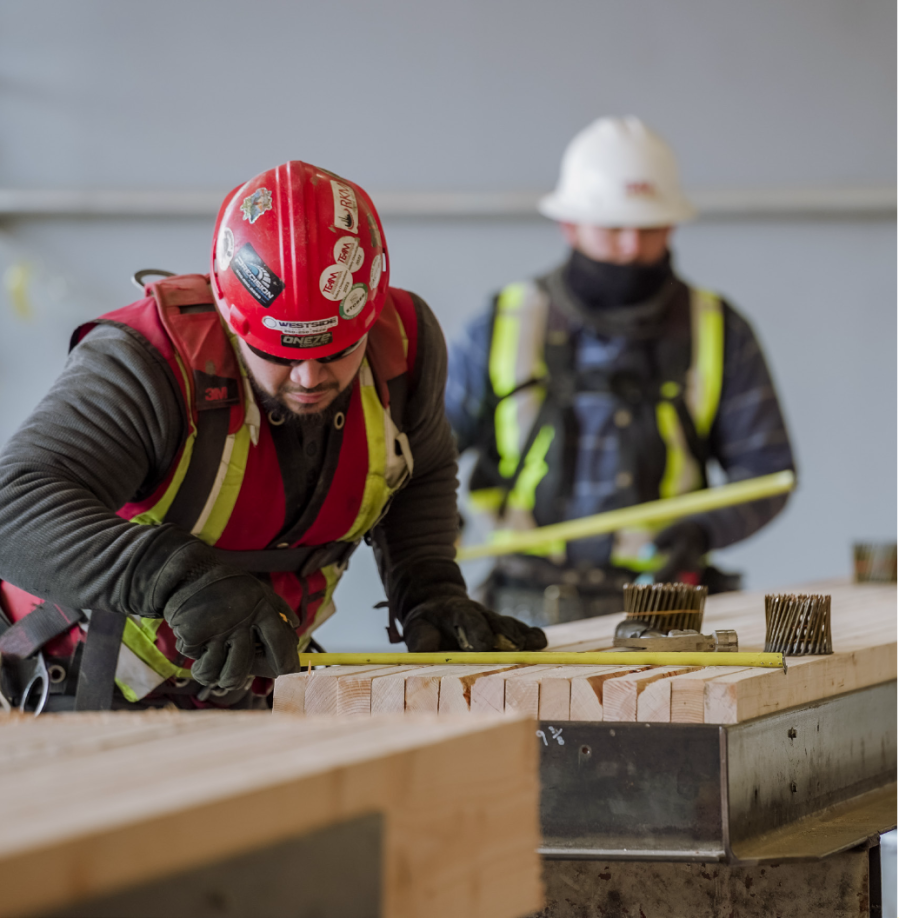
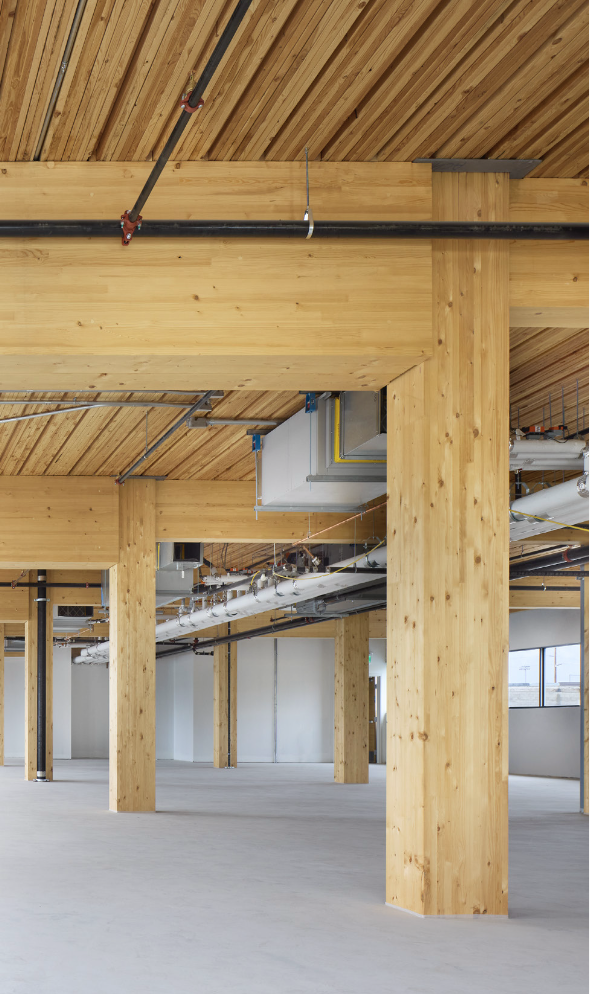
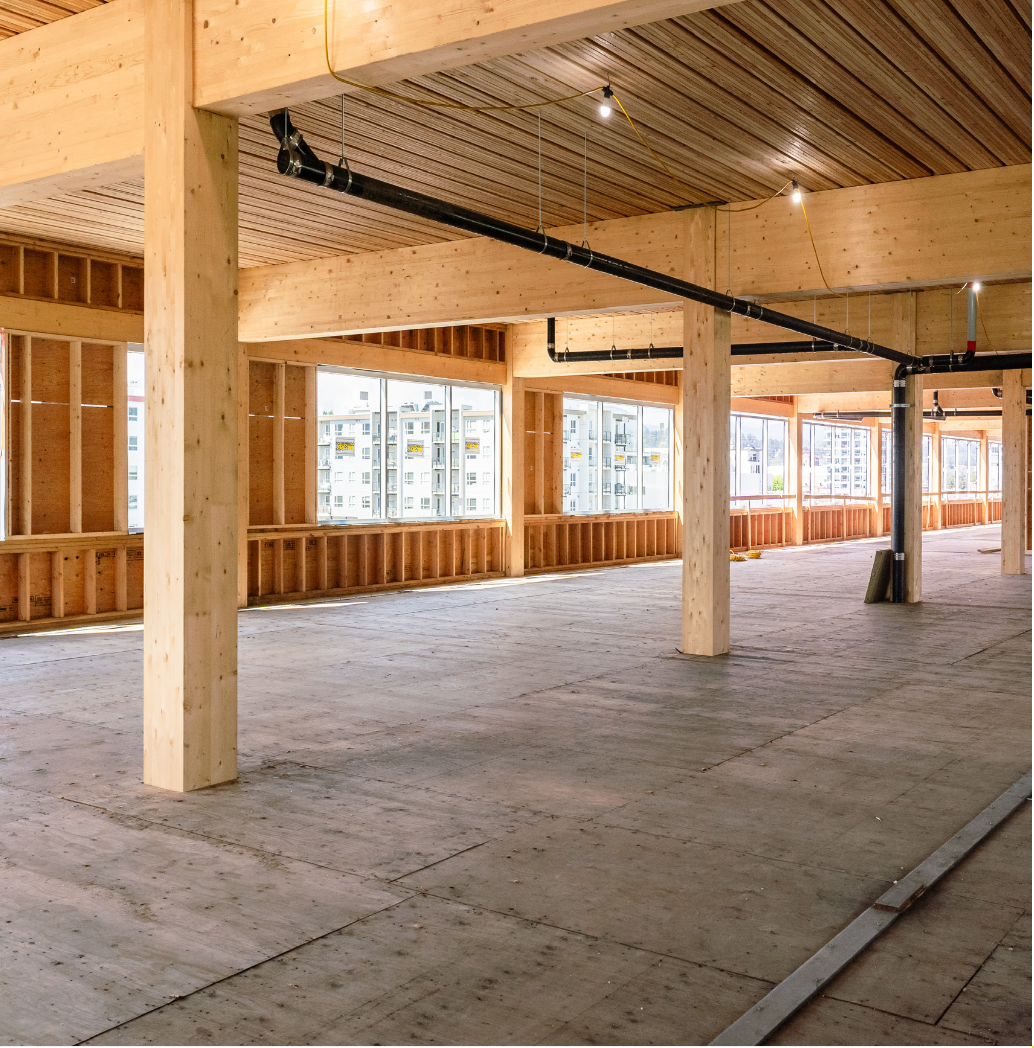
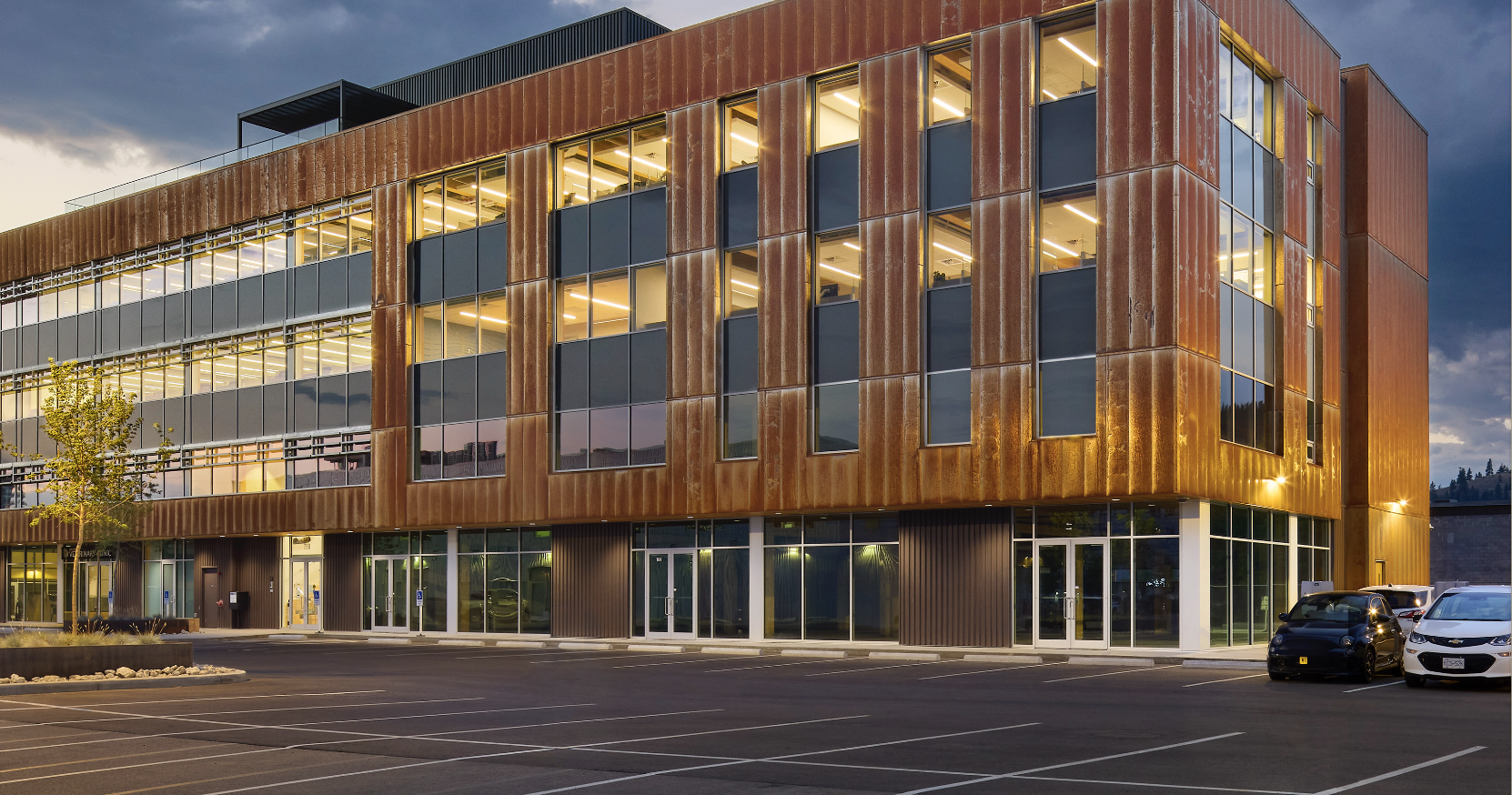
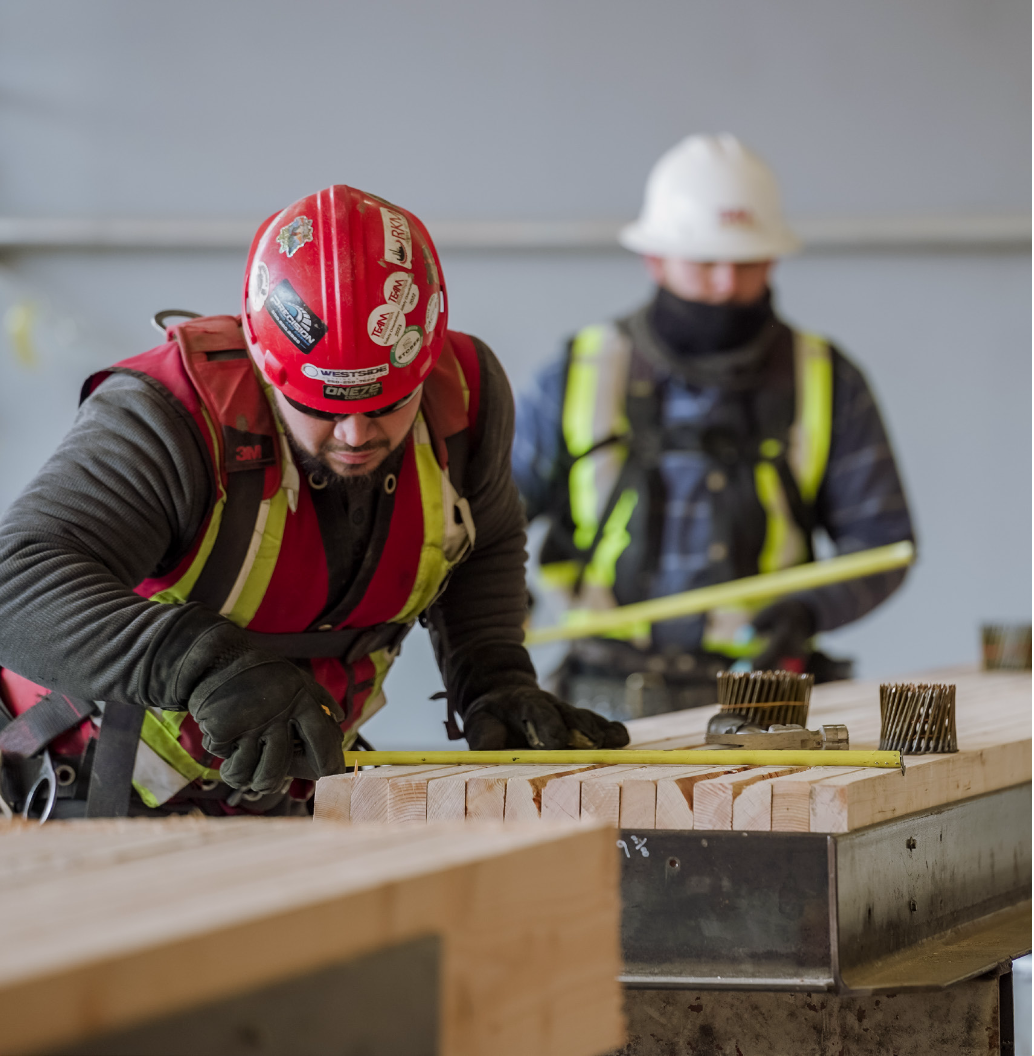
The Exchange is a six-storey commercial building in Kelowna that showcases a pragmatic, regionally grounded approach to mass timber construction. The building was conceived as a flexible office development capable of accommodating a range of tenant configurations, with exposed wood serving as a key differentiator in a competitive leasing market. The project uses a hybrid structural system consisting of glulam columns and beams paired with site-fabricated nail-laminated timber (NLT) panels. This strategy delivered enhanced architectural appeal.
From a development perspective, mass timber was selected to elevate marketability, meet municipal sustainability goals, and offer comparable insurance rates to a light-wood-frame alternative. Exposed timber was viewed as a strategic investment in tenant appeal, which proved true when the project achieved a 6–22 percent lease premium over comparable office space in Kelowna. This decision also aligned strongly with community expectations for low-carbon development.
From a cost perspective, the analysis compared the mass timber pro forma, the realized mass timber costs, and a light wood frame comparable across the same gross buildable area of 41,275 ft². The realized mass timber building landed at approximately $263 per square foot in direct construction costs, compared to about $262 per square foot for the light wood frame option. In practical terms, this made the two approaches cost-neutral, despite the mass timber structural package being roughly 22 percent more expensive than light wood framing.
When combined with the potential schedule advantage of up to five months under typical supply conditions, these results indicate that future projects should look beyond structural premiums alone and consider how mass timber can deliver broader benefits, including construction efficiencies, earlier occupancy, and strong market interest in distinctive, low-carbon office environments.
Affordable Rental Housing
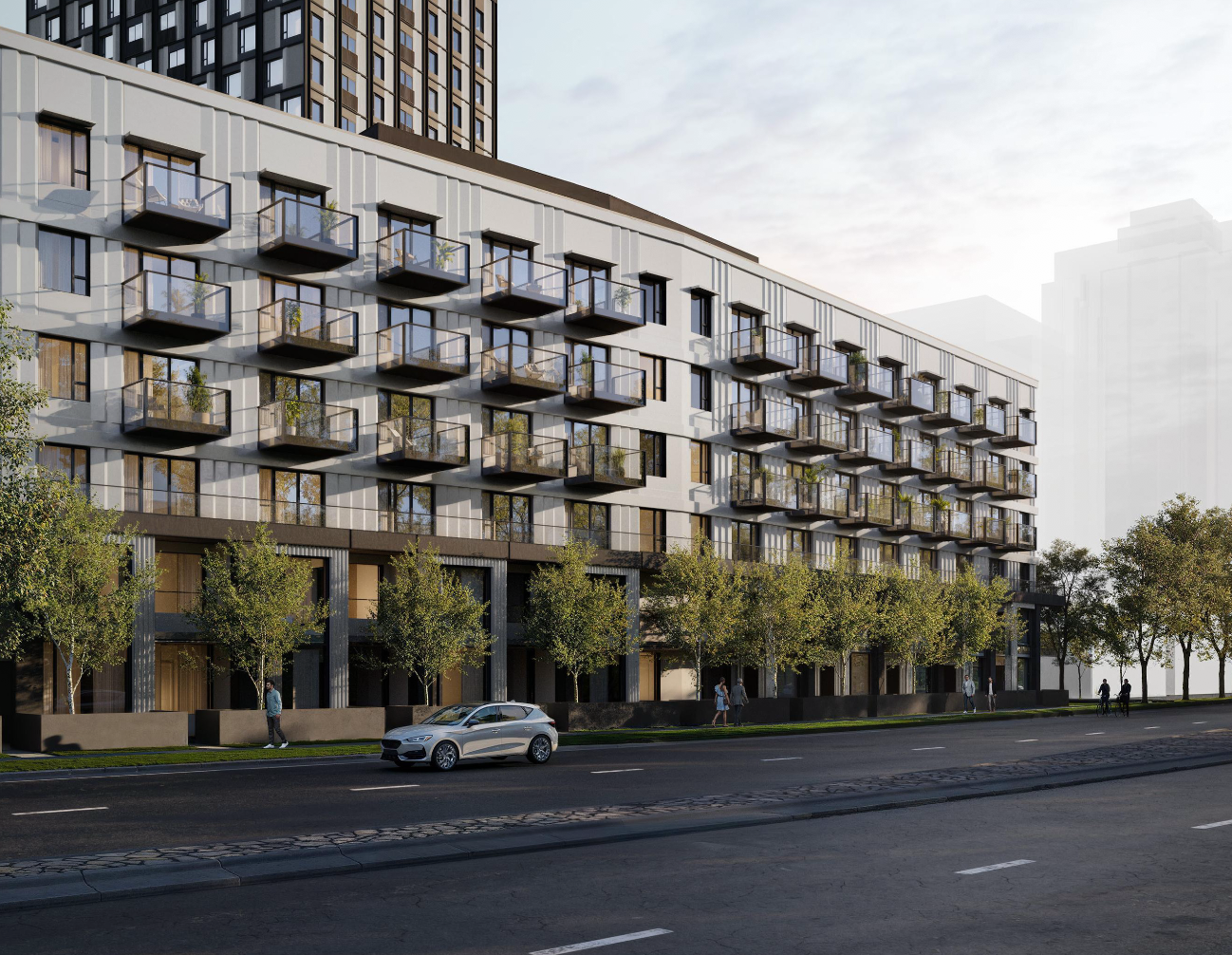
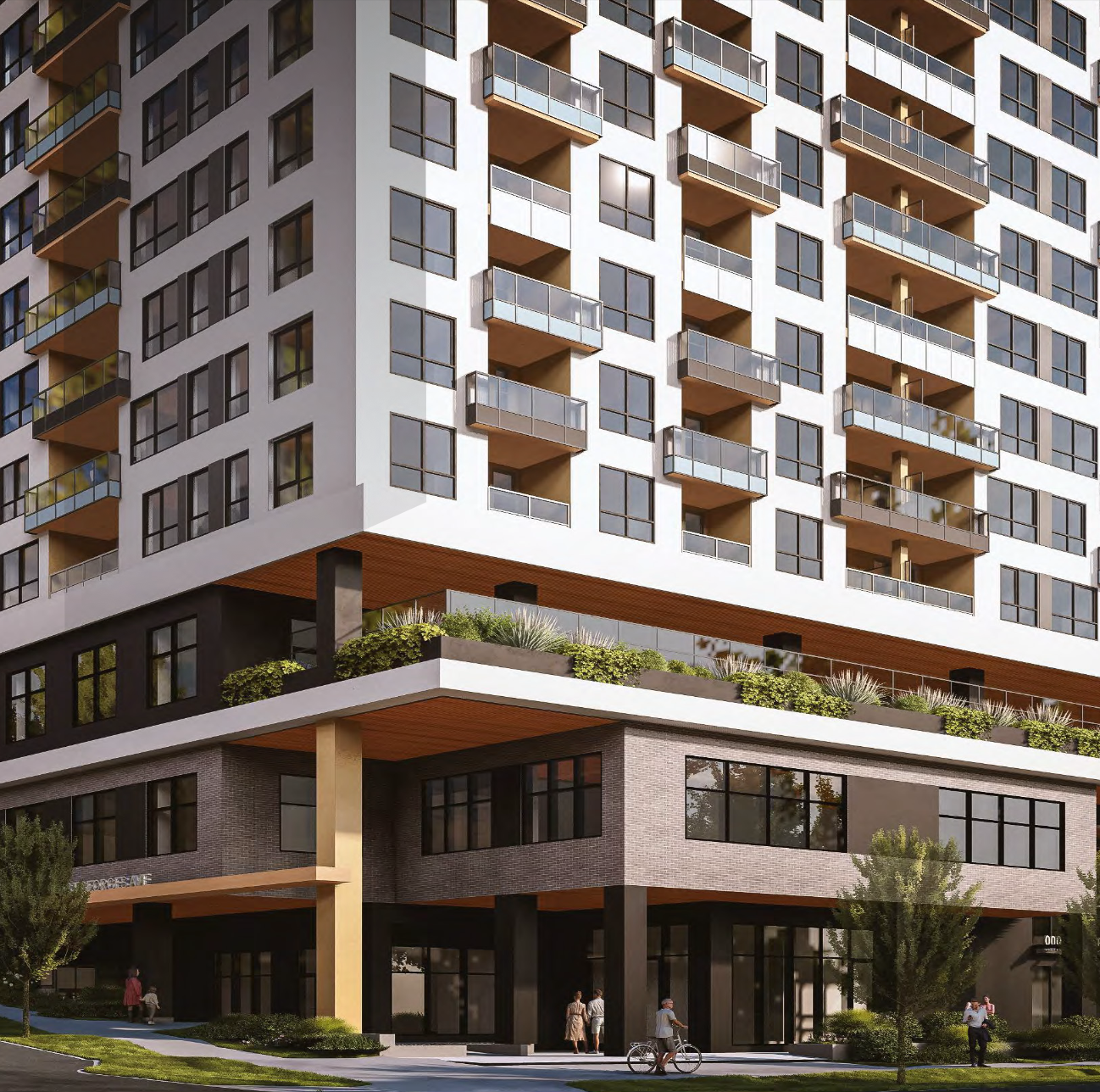
North Van Phase 2 is an 18-storey mixed-use building developed by Catalyst Community Developments Society on land leased from the City of North Vancouver. The project includes 179 affordable rental homes built atop the new North Shore Neighbourhood House, with the upper 15 storeys constructed in hybrid mass timber (CLT floors with steel columns) over a 3-storey concrete podium.
Stakeholder alignment, embodied-carbon reduction, and municipal readiness made mass timber a voluntary but strategic choice for this project. Strong support from the City of North Vancouver and alignment with provincial housing priorities further reinforced the approach. As one of the first BC Builds projects, it showcases government interest in scalable, repeatable mass timber solutions for affordable housing.
Key risks for this project included design coordination with MEP systems, course of construction insurance premiums, schedule optimization and supplier deposits. Risk mitigation relied on experienced consultants, early collaboration with the Authority Having Jurisdiction, and the use of a prefabricated envelope and modular clip-on balconies.
While mass timber carried higher costs in categories such as CLT panels and steel columns compared to concrete, it showed savings in project staffing and indirect construction costs, narrowing the overall premium. The hybrid structural system and modular speed walls shortened the anticipated superstructure schedule and prefabrication reduced onsite labour needs, an important benefit in a tight labour market.
The mass timber tower achieved near cost equivalency, with a difference of ~1.6% or $8 per sq.ft when compared to a concrete alternative. The full case study provides a detailed mass timber vs. concrete proforma, comparing the tower levels (Level 4 and up).
Reliable cost data has long been a barrier to wider adoption of mass timber construction. While factors such as construction efficiency, tenant appeal, and the potential for lower embodied carbon have made mass timber increasingly attractive to some project teams, owners and developers have consistently asked a more pragmatic question: How does mass timber pencil out? Uncertainty around cost has remained the most persistent hesitation point.
A new Mass Timber Business Case Studies published by WoodWorks BC, a market development program of the Canadian Wood Council, begins to answer this question by presenting three real projects where developers shared detailed cost, schedule, and design information.
Collectively, these studies illuminate how mass timber performs under real market conditions, comparing each project to conventional construction materials and demonstrating how strategic design choices and risk management can bring mass timber into cost parity across multiple building types.
FEATURE
Unlocking the Economics
of Mass Timber:
Insights from Three New Business Case Studies
Market Rate Rental Housing
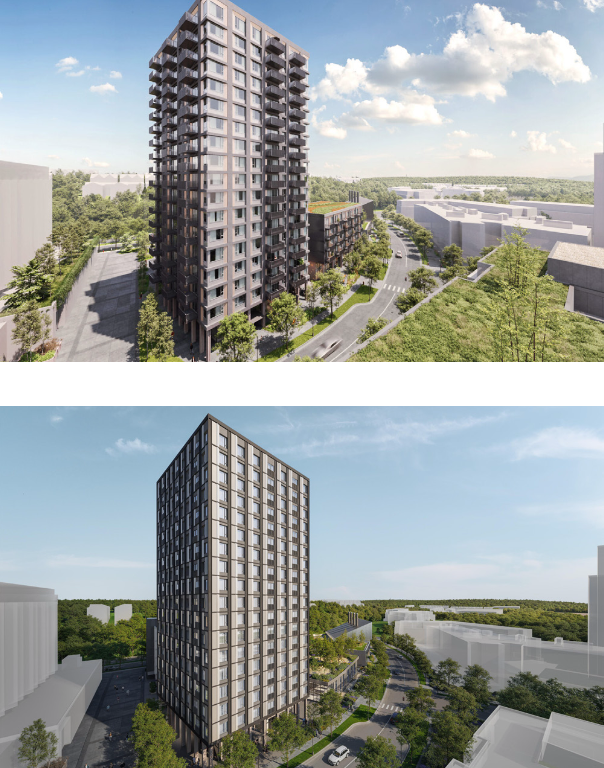
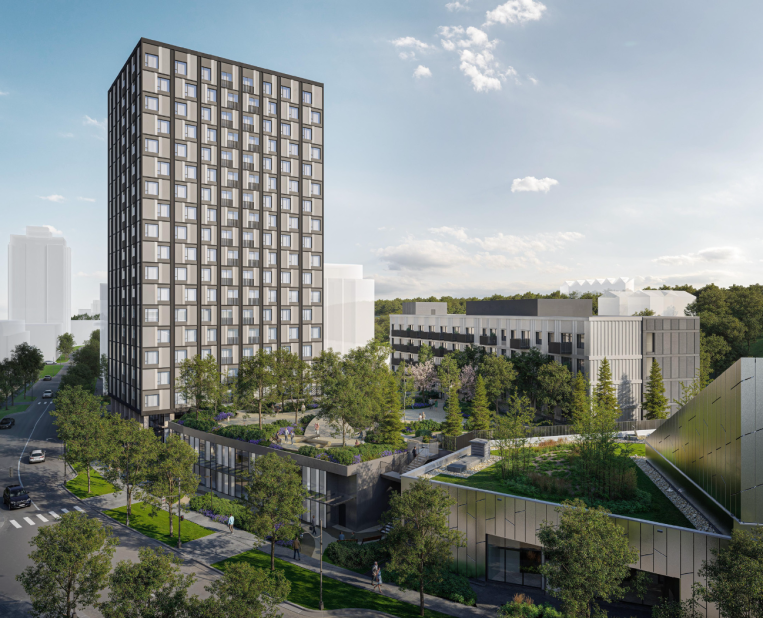
Parcel 19.1, proposed by Wesgroup Properties for the River District in Vancouver, is a 19-storey hybrid mass timber tower containing 17 storeys of mass timber over a two-storey concrete podium. Supported by a large master-planned context, the project includes approximately 240 strata and rental homes, plus an urgent care centre at grade.
Wesgroup saw mass timber as an investment in the future of sustainable construction. The strategy emphasized long-term R&D benefits, the desire for “Made in Canada” solutions, and alignment with sustainability commitments across its portfolio.
Key risks included regulatory approval for a tall hybrid structure, coordination of mechanical and electrical systems around CLT floor panels and maintaining competitive costs in a large-scale urban tower. Early and transparent engagement with the City of Vancouver proved essential, and the team explored both Canadian and European suppliers to evaluate sizing, cost, and transportation constraints.
A key takeaway from this case is that the above-grade mass timber structure achieved cost parity with concrete, excluding underground work. This was made possible through targeted design refinements, including a simpler building form, a larger floorplate, and the shift from balconies to Juliet railings, which together lowered costs by about $25,000 per unit.
The team deployed strategic material sequencing to secure competitive insurance rates, by delaying on-site arrival of the mass timber following completion of the concrete work. Prefabricated curtain wall panels also compress the overall schedule. Strong municipal collaboration, strategic design revisions, and rigorous evaluation of suppliers allowed mass timber to be cost competitive in a high-rise context which is an important milestone for the industry.
Conclusion
Taken together, these three case studies provide something the mass timber sector has long needed: transparent, real-world cost comparison data. More importantly, they show that cost parity is achievable, sometimes already within reach and often attainable through design optimization, prefabrication, and collaborative project delivery. For developers exploring mass timber, the message is clear: with the right team, strategy, and risk management, mass timber is not only viable but increasingly competitive across building types, from affordable housing to office space to tall residential towers.
Offices
The Exchange is a six-storey commercial building in Kelowna that showcases a pragmatic, regionally grounded approach to mass timber construction. The building was conceived as a flexible office development capable of accommodating a range of tenant configurations, with exposed wood serving as a key differentiator in a competitive leasing market. The project uses a hybrid structural system consisting of glulam columns and beams paired with site-fabricated nail-laminated timber (NLT) panels. This strategy delivered enhanced architectural appeal.
From a development perspective, mass timber was selected to elevate marketability, meet municipal sustainability goals, and offer comparable insurance rates to a light-wood-frame alternative. Exposed timber was viewed as a strategic investment in tenant appeal, which proved true when the project achieved a 6–22 percent lease premium over comparable office space in Kelowna. This decision also aligned strongly with community expectations for low-carbon development.
From a cost perspective, the analysis compared the mass timber pro forma, the realized mass timber costs, and a light wood frame comparable across the same gross buildable area of 41,275 ft². The realized mass timber building landed at approximately $263 per square foot in direct construction costs, compared to about $262 per square foot for the light wood frame option. In practical terms, this made the two approaches cost-neutral, despite the mass timber structural package being roughly 22 percent more expensive than light wood framing.
When combined with the potential schedule advantage of up to five months under typical supply conditions, these results indicate that future projects should look beyond structural premiums alone and consider how mass timber can deliver broader benefits, including construction efficiencies, earlier occupancy, and strong market interest in distinctive, low-carbon office environments.
Affordable Rental Housing
North Van Phase 2 is an 18-storey mixed-use building developed by Catalyst Community Developments Society on land leased from the City of North Vancouver. The project includes 179 affordable rental homes built atop the new North Shore Neighbourhood House, with the upper 15 storeys constructed in hybrid mass timber (CLT floors with steel columns) over a 3-storey concrete podium.
Stakeholder alignment, embodied-carbon reduction, and municipal readiness made mass timber a voluntary but strategic choice for this project. Strong support from the City of North Vancouver and alignment with provincial housing priorities further reinforced the approach. As one of the first BC Builds projects, it showcases government interest in scalable, repeatable mass timber solutions for affordable housing.
Key risks for this project included design coordination with MEP systems, course of construction insurance premiums, schedule optimization and supplier deposits. Risk mitigation relied on experienced consultants, early collaboration with the Authority Having Jurisdiction, and the use of a prefabricated envelope and modular clip-on balconies.
While mass timber carried higher costs in categories such as CLT panels and steel columns compared to concrete, it showed savings in project staffing and indirect construction costs, narrowing the overall premium. The hybrid structural system and modular speed walls shortened the anticipated superstructure schedule and prefabrication reduced onsite labour needs, an important benefit in a tight labour market.
The mass timber tower achieved near cost equivalency, with a difference of ~1.6% or $8 per sq.ft when compared to a concrete alternative. The full case study provides a detailed mass timber vs. concrete proforma, comparing the tower levels (Level 4 and up).