Author’s Note: I regret to inform you that this article is in fact solely regarding the construction of a cabin in an alpine (porcupine) environment, and how to do so in a cost-effective manner.
It does not contain a sliver of insight about how to hold these animals accountable for their crimes against humanity, the Earth, or God.

FEATURE
How to Manage a Porcupine While Building a Mass Timber Cabin,
and Make It Pay
Scroll to Read

Moving Heavy Timber (and heavy rocks) without Cranes
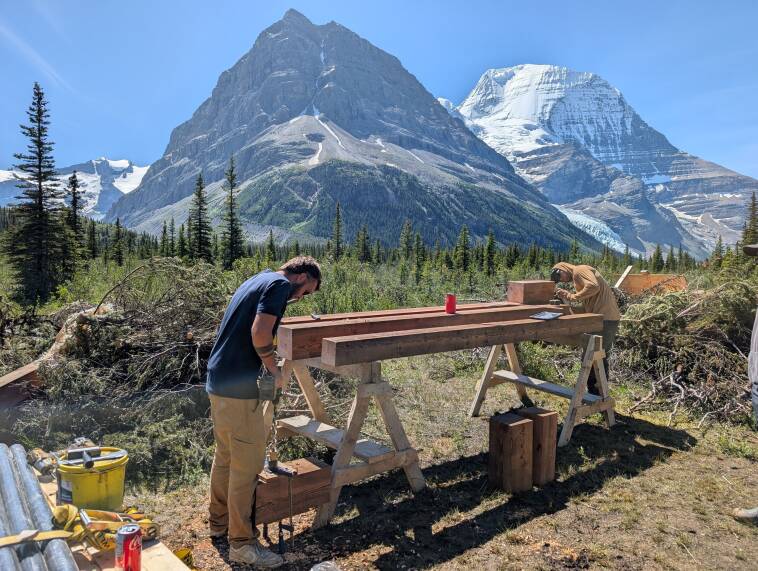
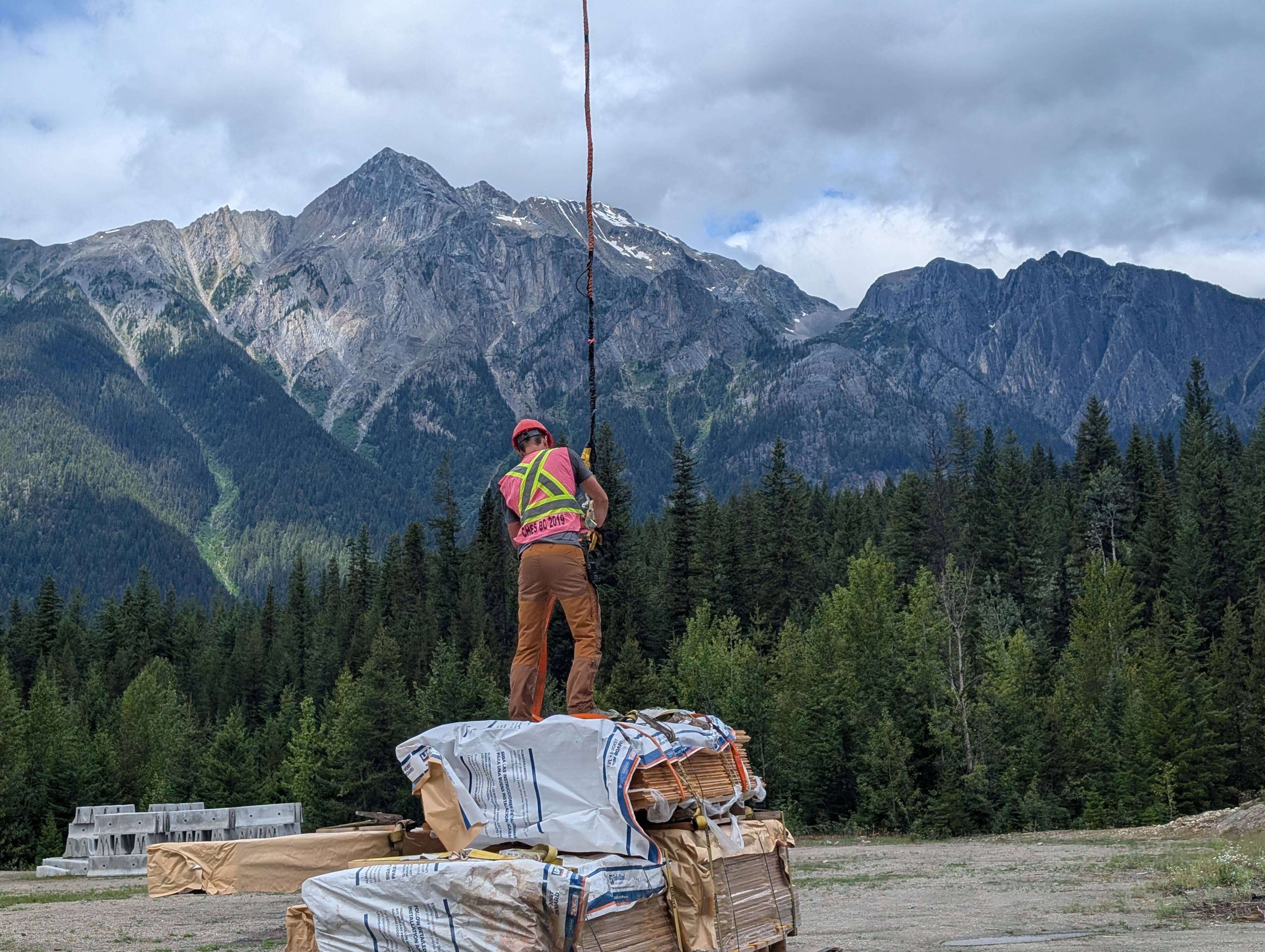
Our helicopter-driven planning decisions did not stop with the material movement. When looking at the big pieces of a timberframe or mass timber assembly it is very tempting to “just lift it with the helicopter” – but that approach is very expensive. In addition to being cost-sensitive, we were aware we needed to avoid lost days or weeks because of weather, forest fires, or other delays. Everything would have to be lifted and placed in the old-fashioned way.
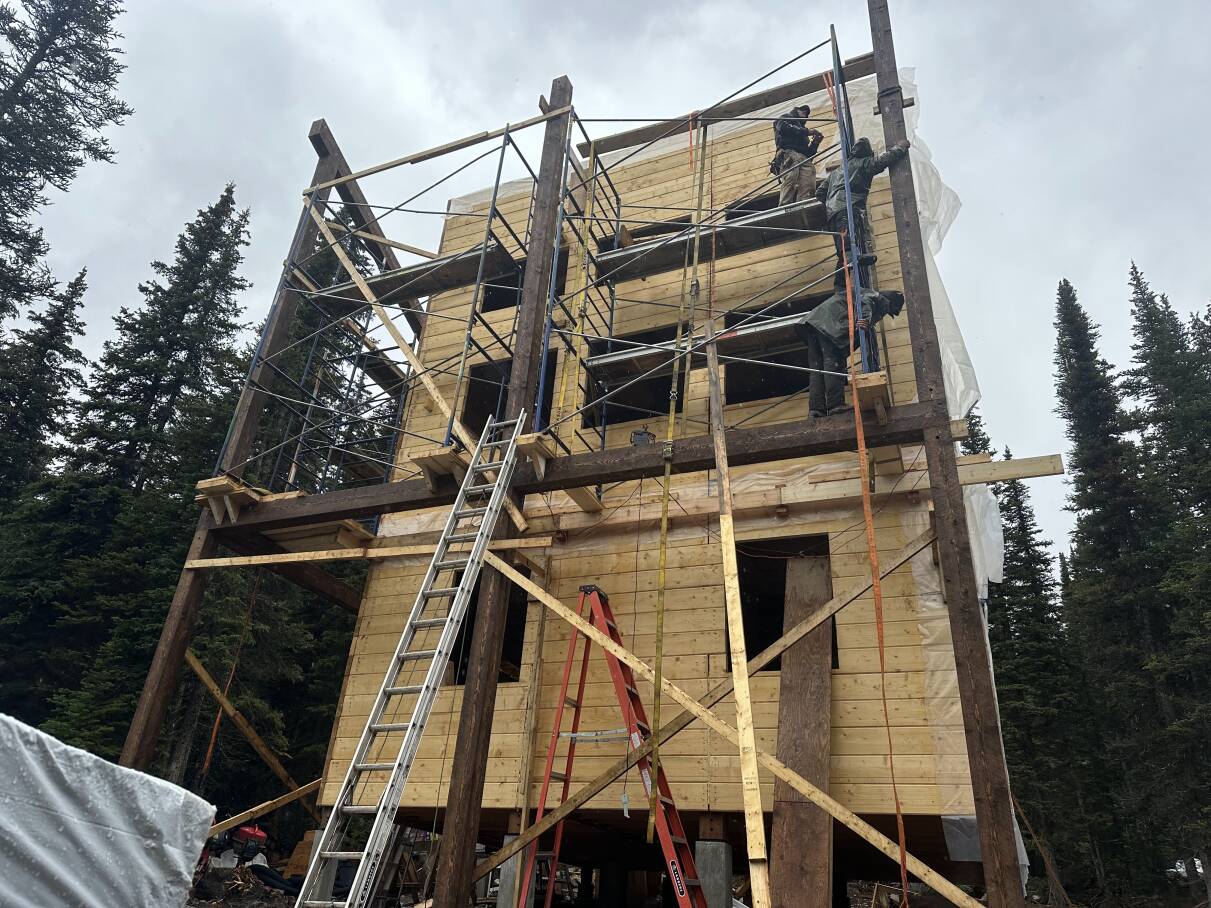
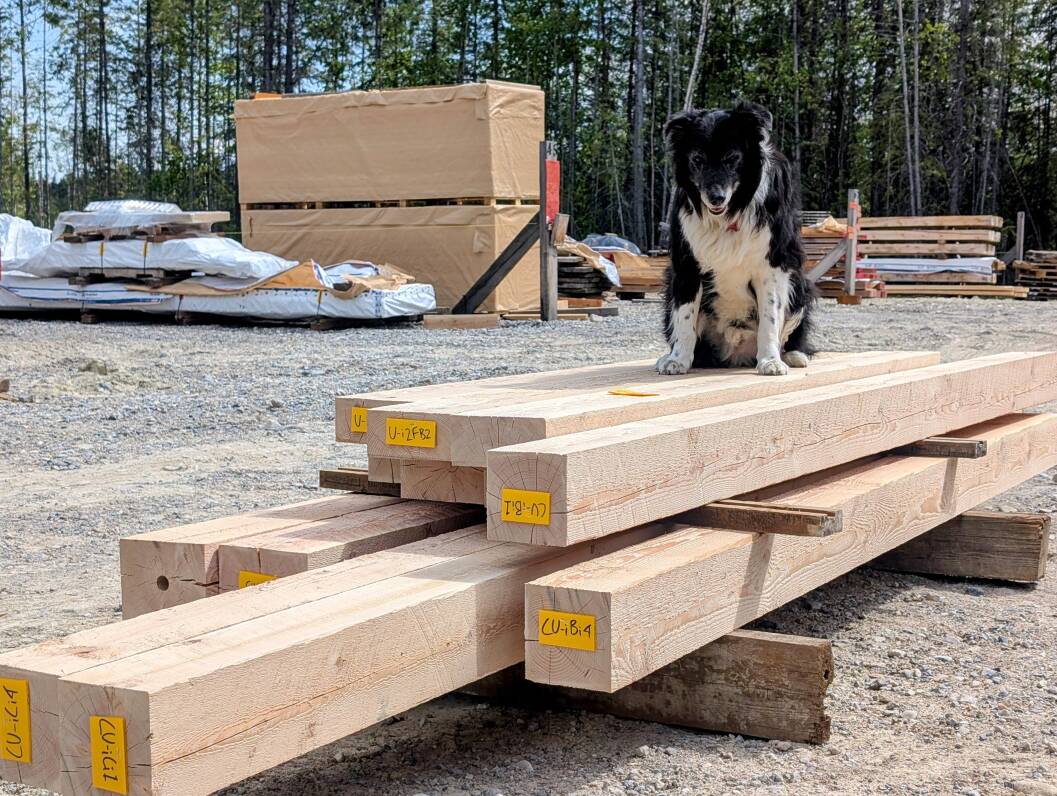
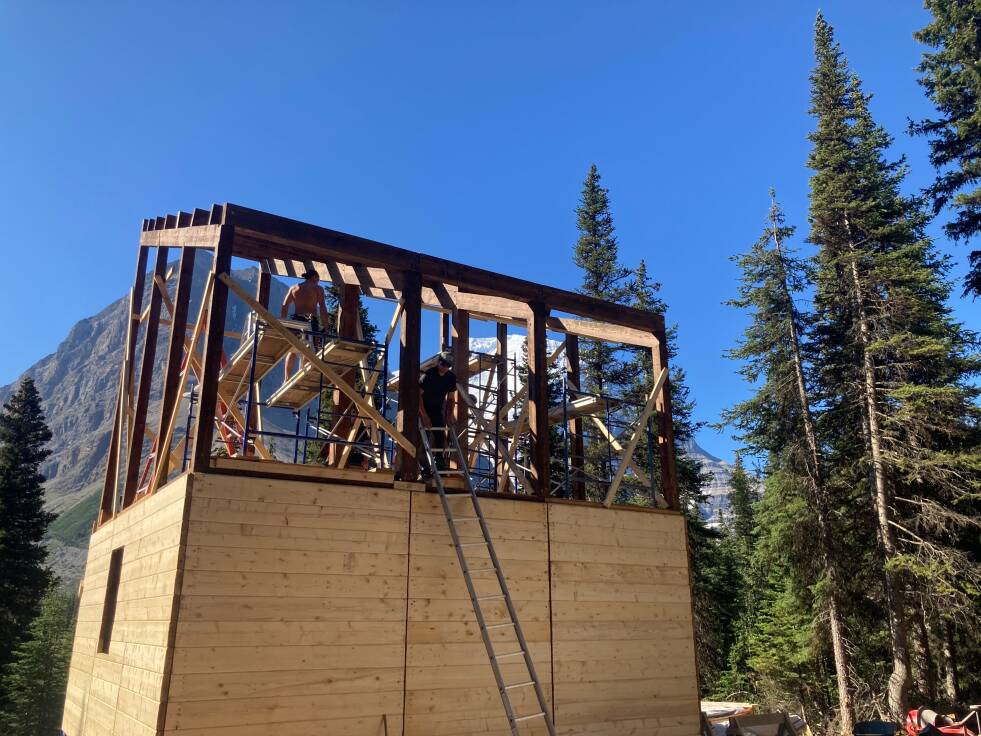
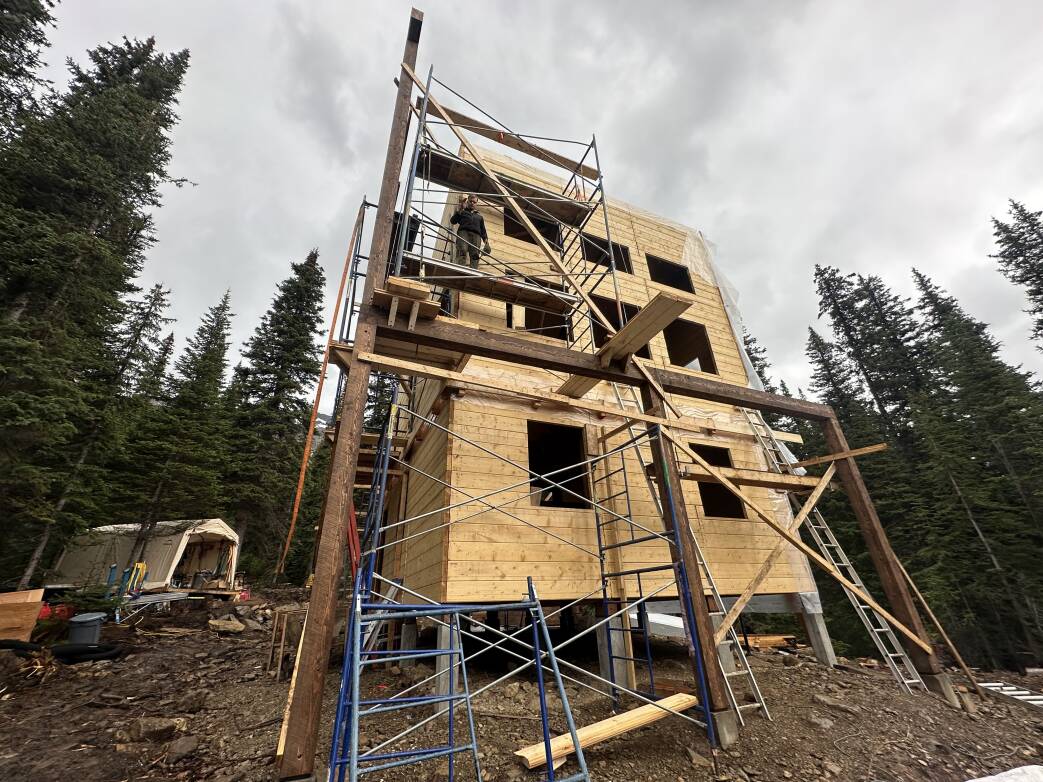
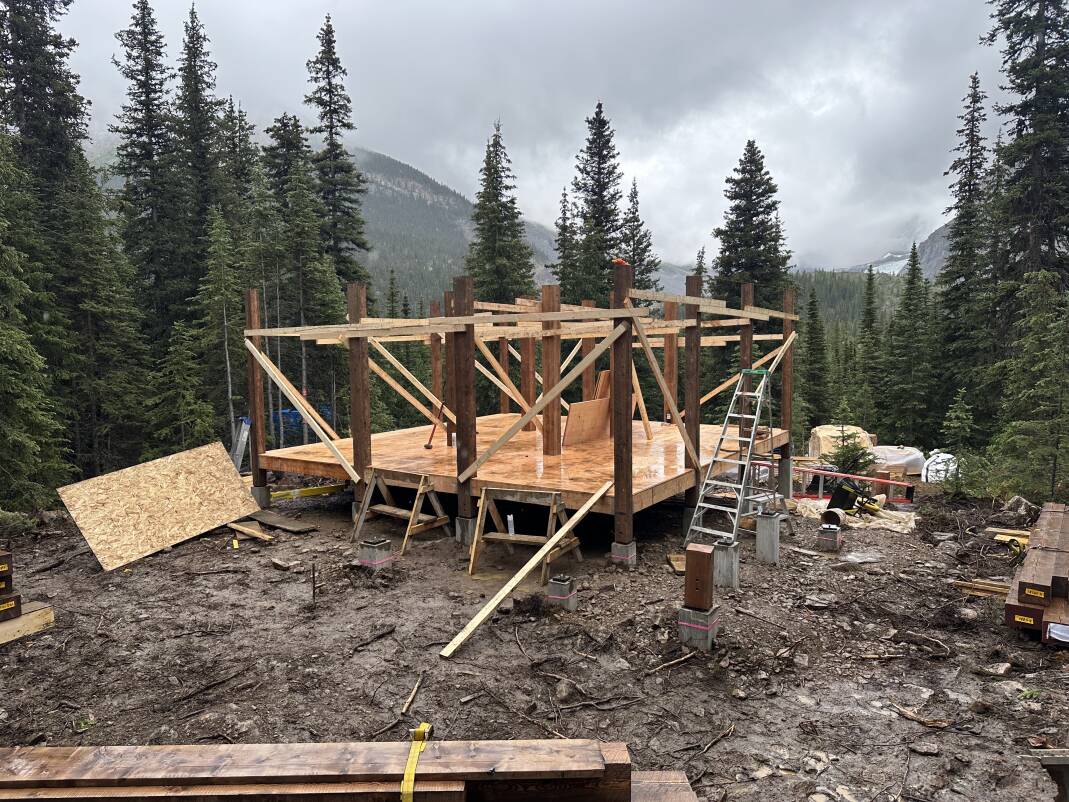
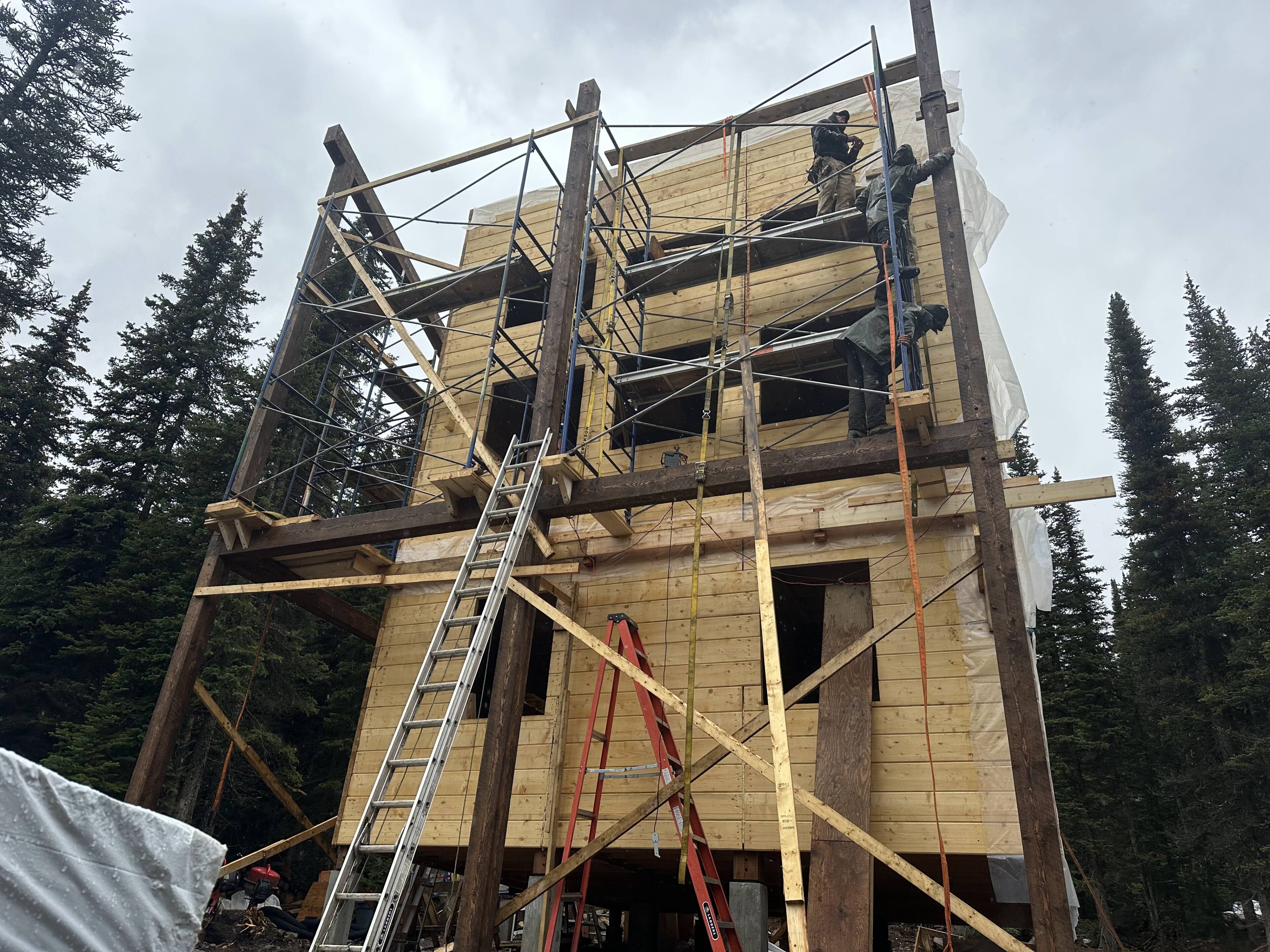
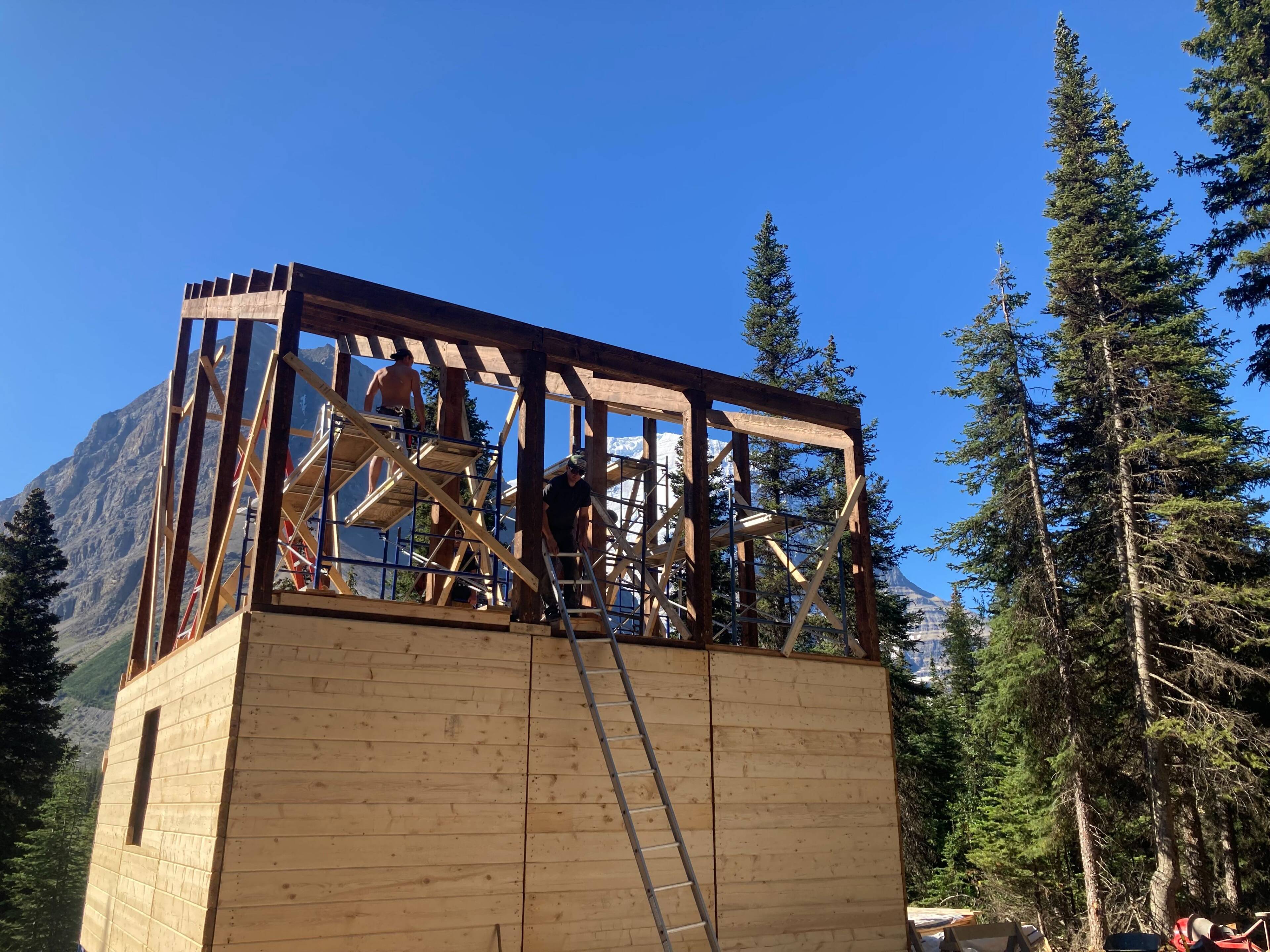
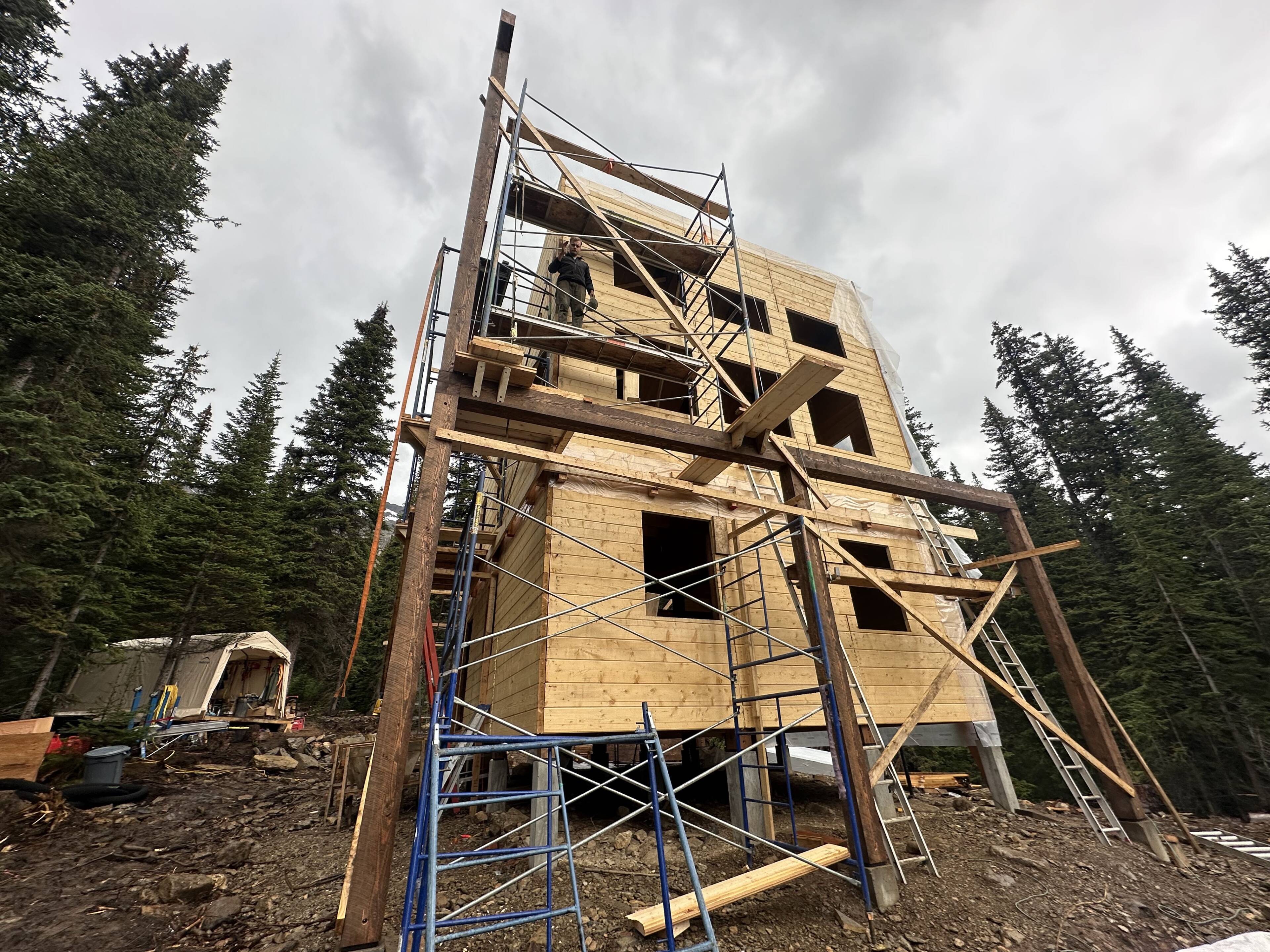
Using 3" T&G instead of large-panel products like DLT or CLT was a deliberate choice. With T&G, we could hand-place everything, even the enormous roof timbers, using only simple mechanical lifting techniques. The result was a structure that has all the benefits of mass timber but could be entirely assembled by a five-person crew. Timbers were kept to a manageable length, and all were tilted or lifted using traditional rigging techniques.
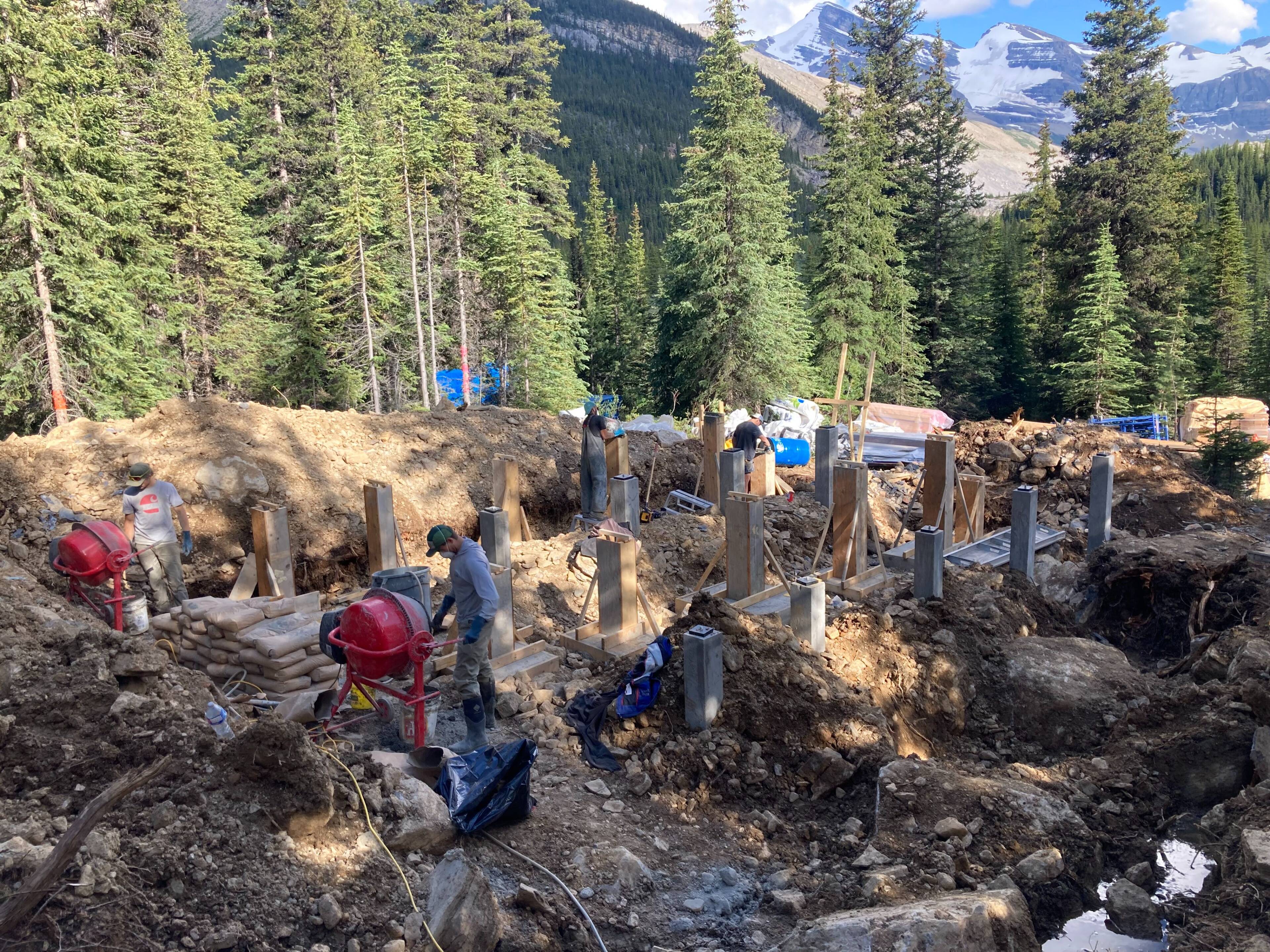
We considered excavating “the old-fashioned way” as well but this proved to be an unpopular suggestion in the early design meetings (the people who would end up holding the shovels were the ones making these strategy choices). In one of our more unusual steps, we disassembled an excavator, slung it in piece by piece, then reassembled it on site.
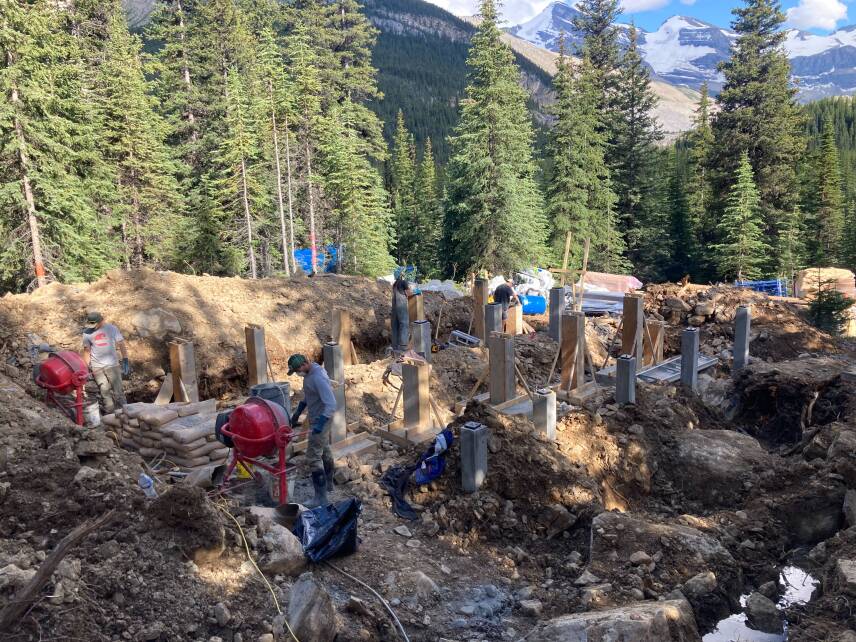
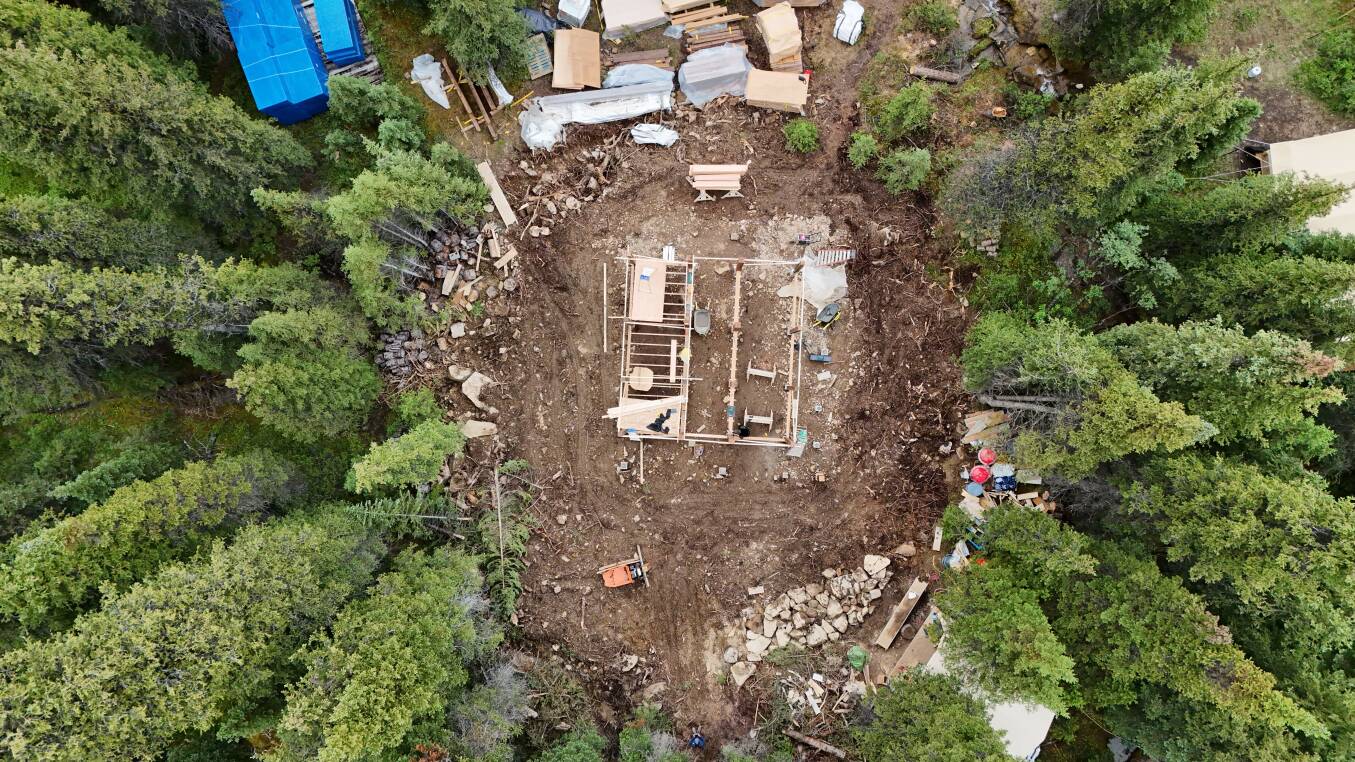
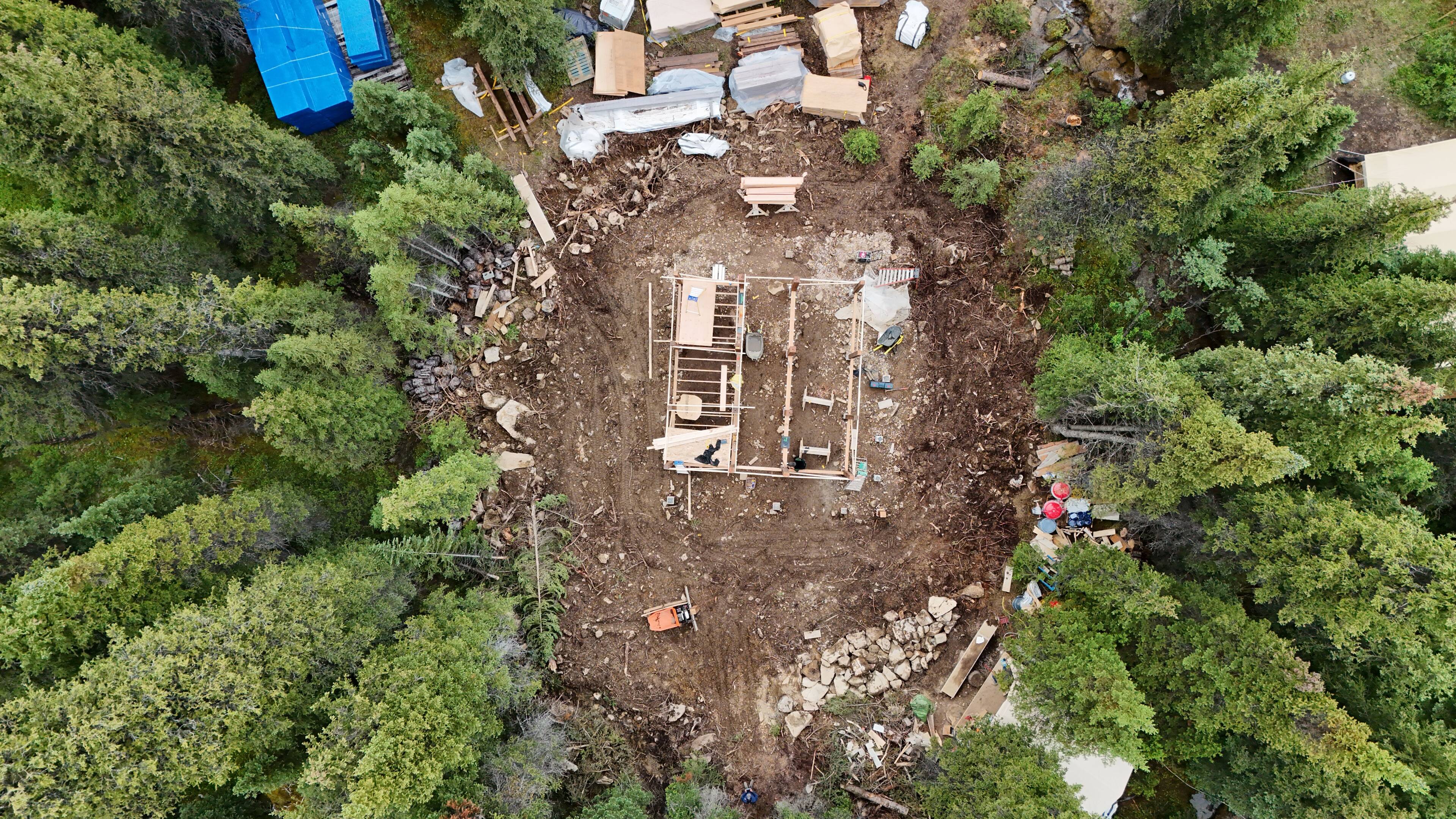
This turned out to be a lucky choice. We had based our estimates on the anecdotal information we had from the original decades old surveys which suggested that the site was entirely composed of alluvial gravel and sand. It seems that the gravel grew quite healthily over the intervening years and the sand just up and left because what we found were thousand-pound boulders with subterranean rivers running between them. It took more than a few broken jackhammer bits, but we eventually installed the footings, and the commotion was enough to keep our needly friends at bay—at least temporarily.
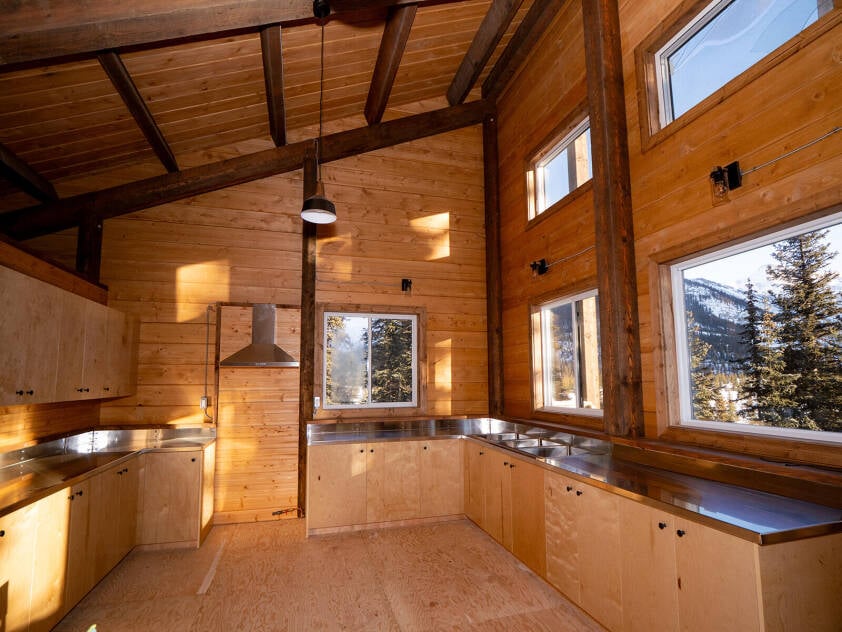
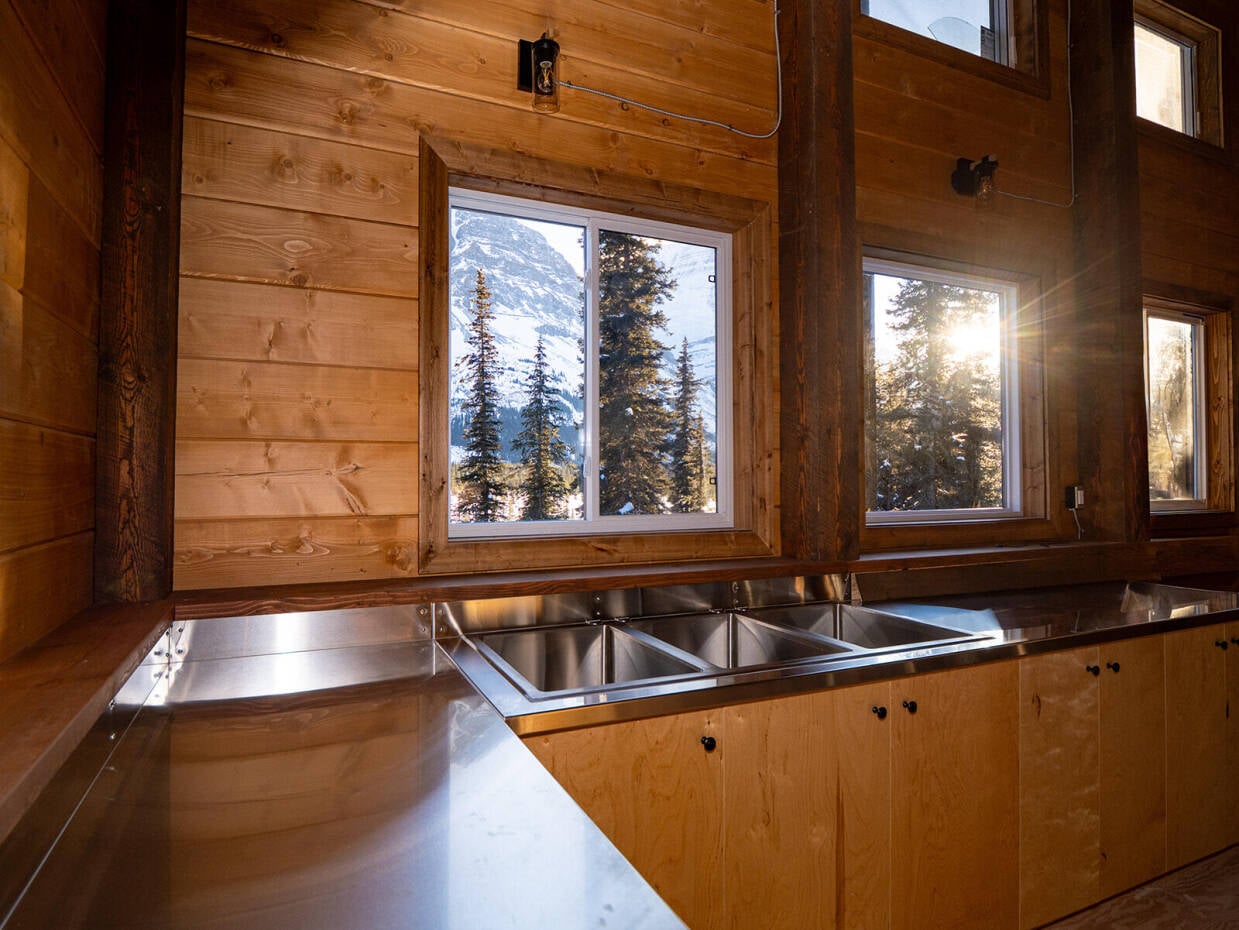
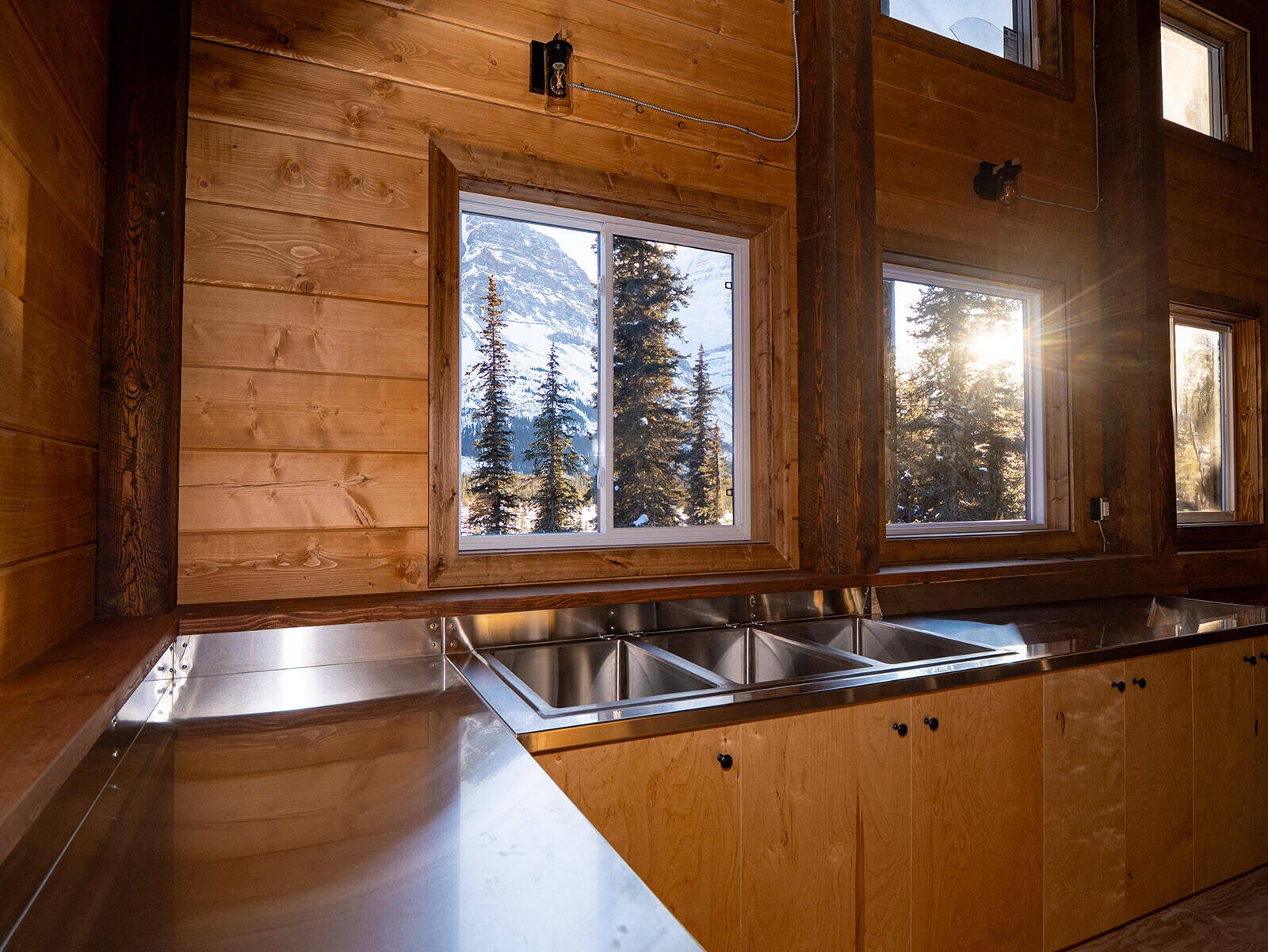
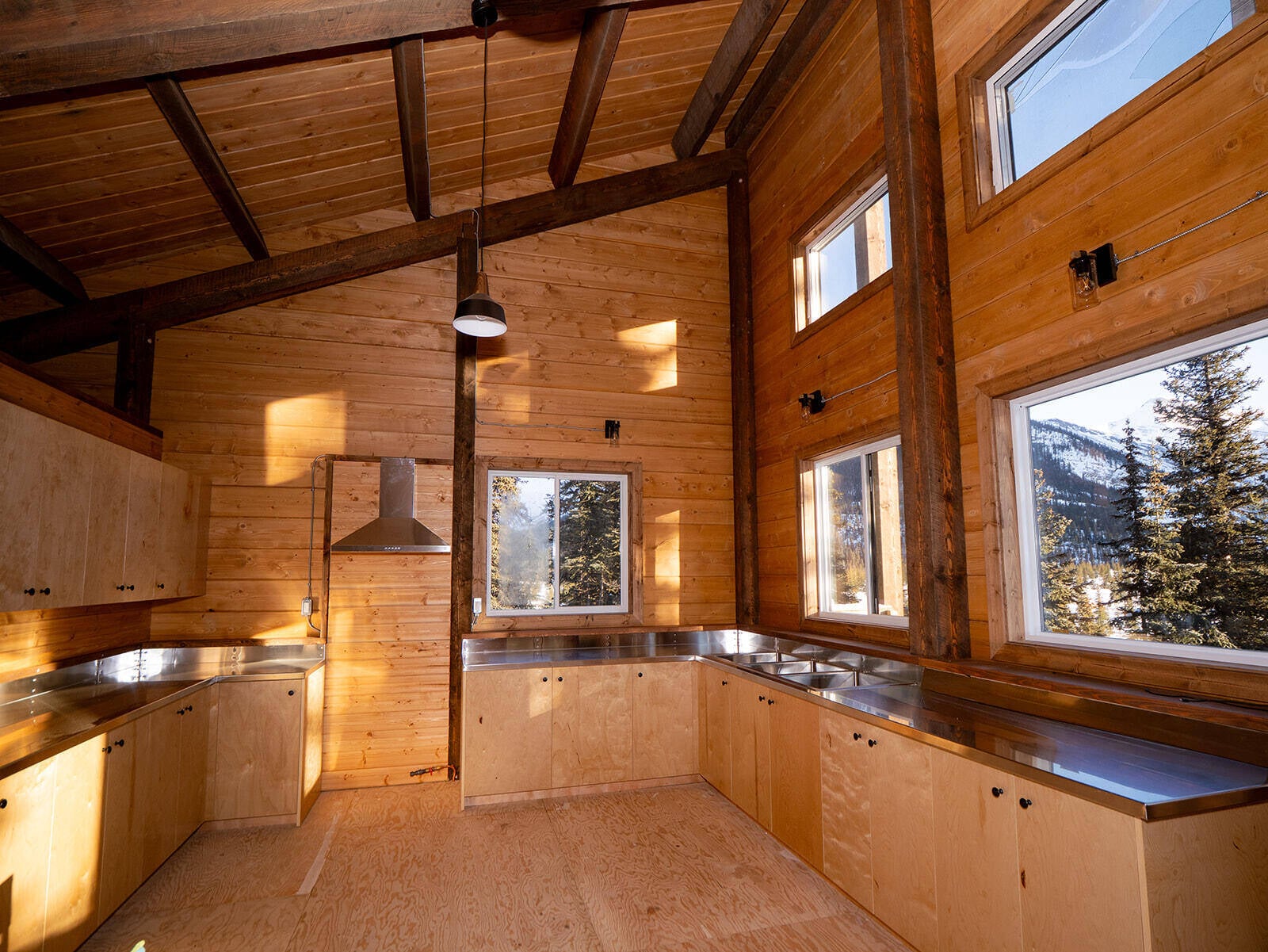
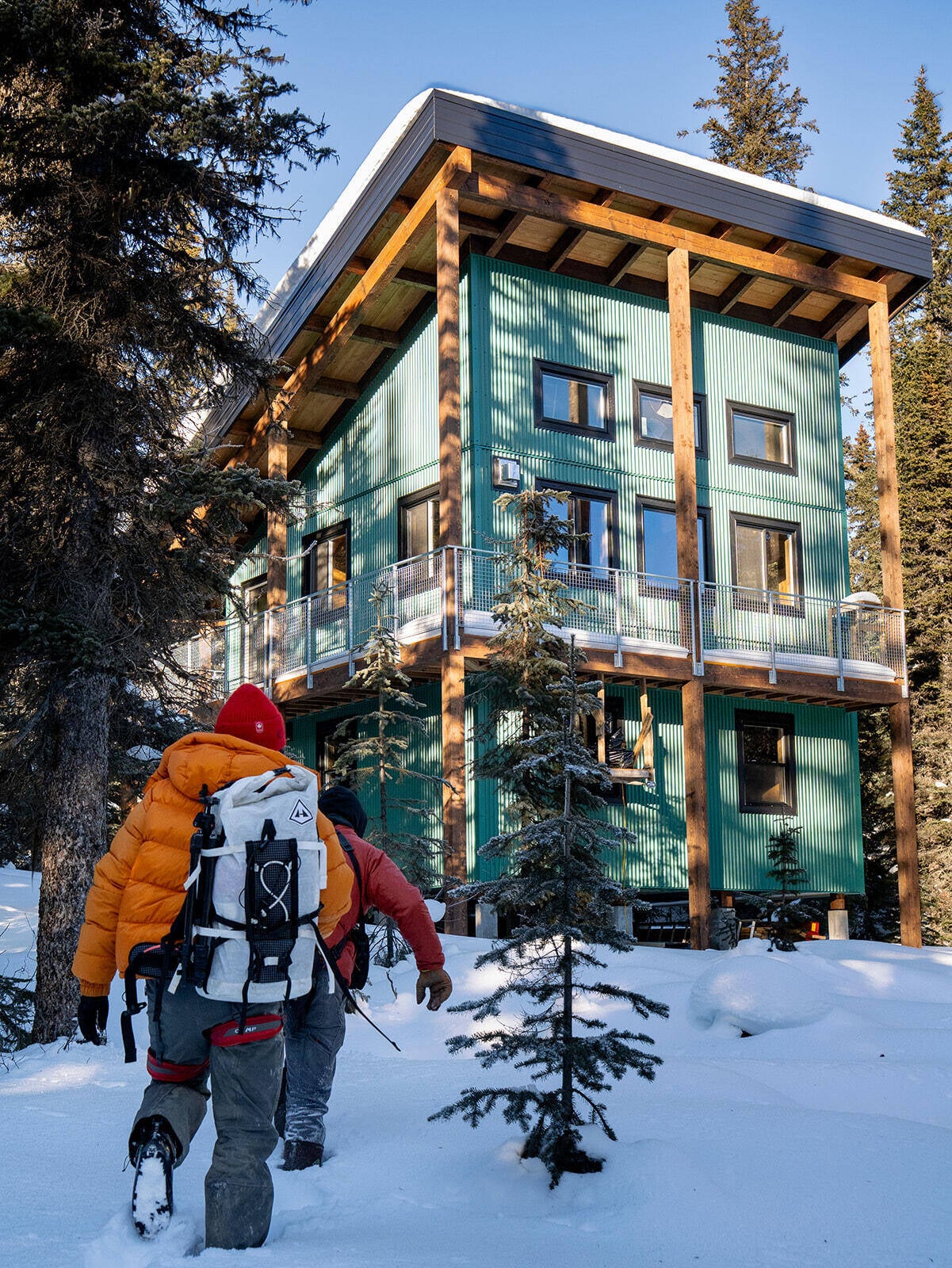
Inside, the mass timber quiets the space in a way that contrasts sharply with the scale outside. The warmth of the T&G, the heavy fir posts, and the way the interior holds light all contribute to a sense of calm that is rare in high-alpine buildings. Late in the day, when the sun reflects off the North Face of Mount Robson and throws a soft glow through the windows, the intent of the project becomes obvious: a durable, functional structure shaped entirely by the place it sits in.
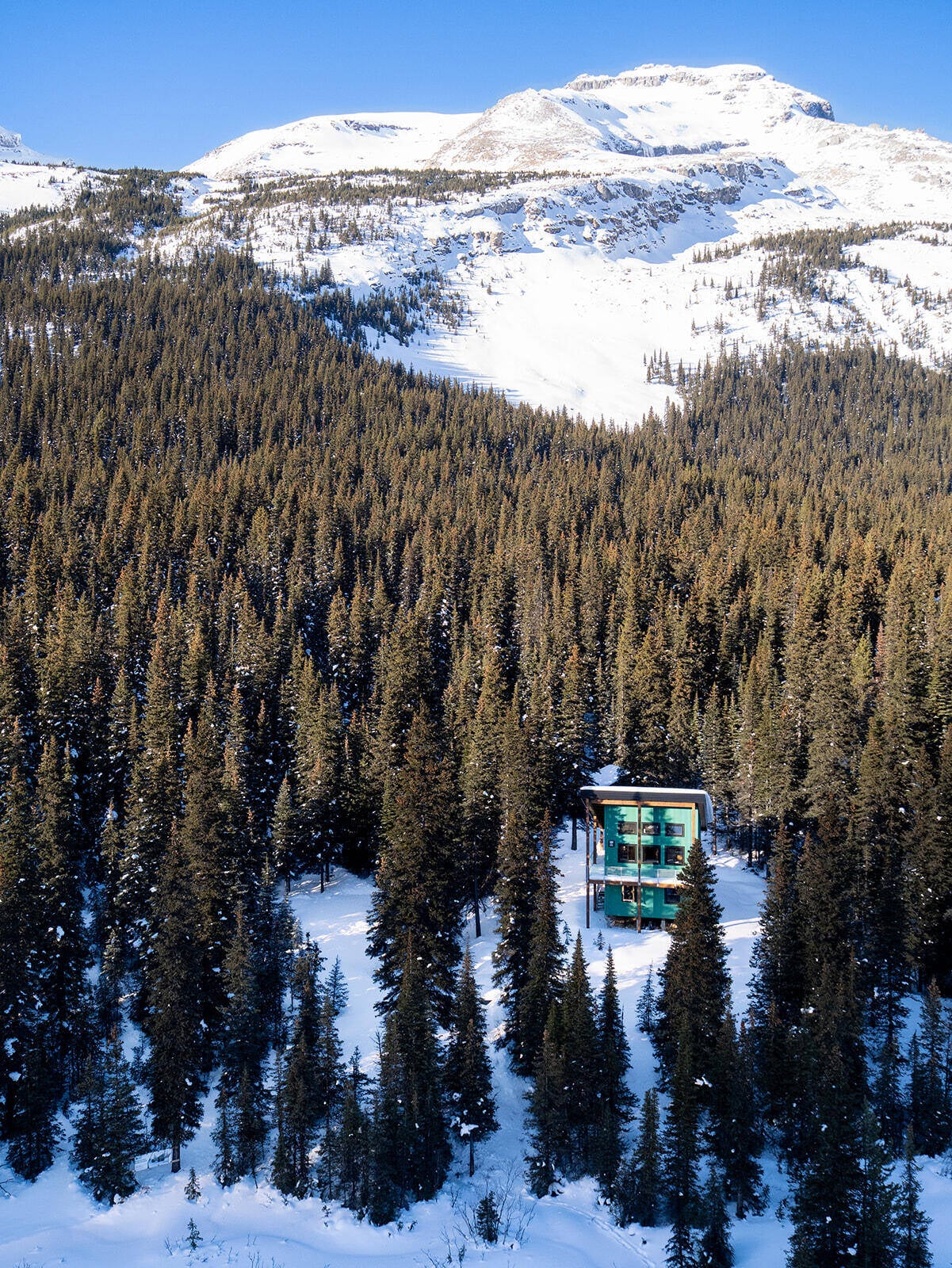
The cabin reached substantial completion at the end of October, just four and a half months after the first chainsaw was fired up to begin clearing the site. This was good timing, as it was just two weeks after winter arrived in the alpine and took out our showering facilities. We brushed the snow off our tents, packed up, and left the porcupines to fend for themselves until the sun starts feeling warm again in six months’ time.
The ACC will install furniture and test systems over the spring and we are all looking forward to seeing the cabin in operation in summer 2026!
Completion and Looking Forward
We approached this project with an obsession over coordination, continuity, and an extreme amount of planning. Our in-house project managers handled everything from layout and design concepts during the RFP response preparation, to prefabrication, to final installation. That continuity — experienced designers building what they themselves conceived — was a huge contributor to the success of this project.
Mass timber is often discussed in the context of urban density and carbon storage, but in an alpine setting, its advantages are more visceral. Timber feels warm in cold landscapes. It absorbs sound in a way that makes even small spaces feel calm. It tolerates rapid temperature swings that can tear apart lighter building systems. And most importantly for a remote hut: it endures.
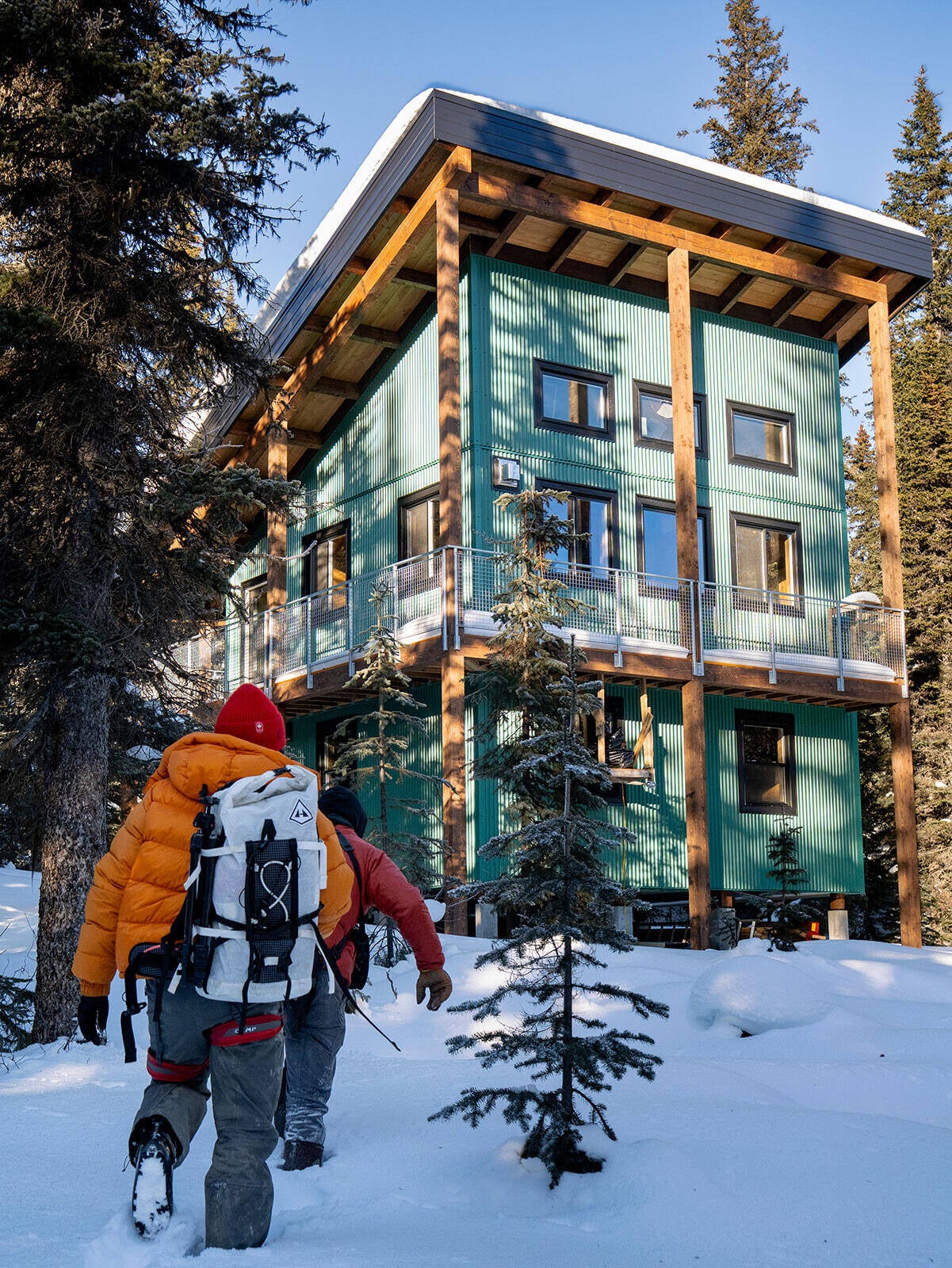
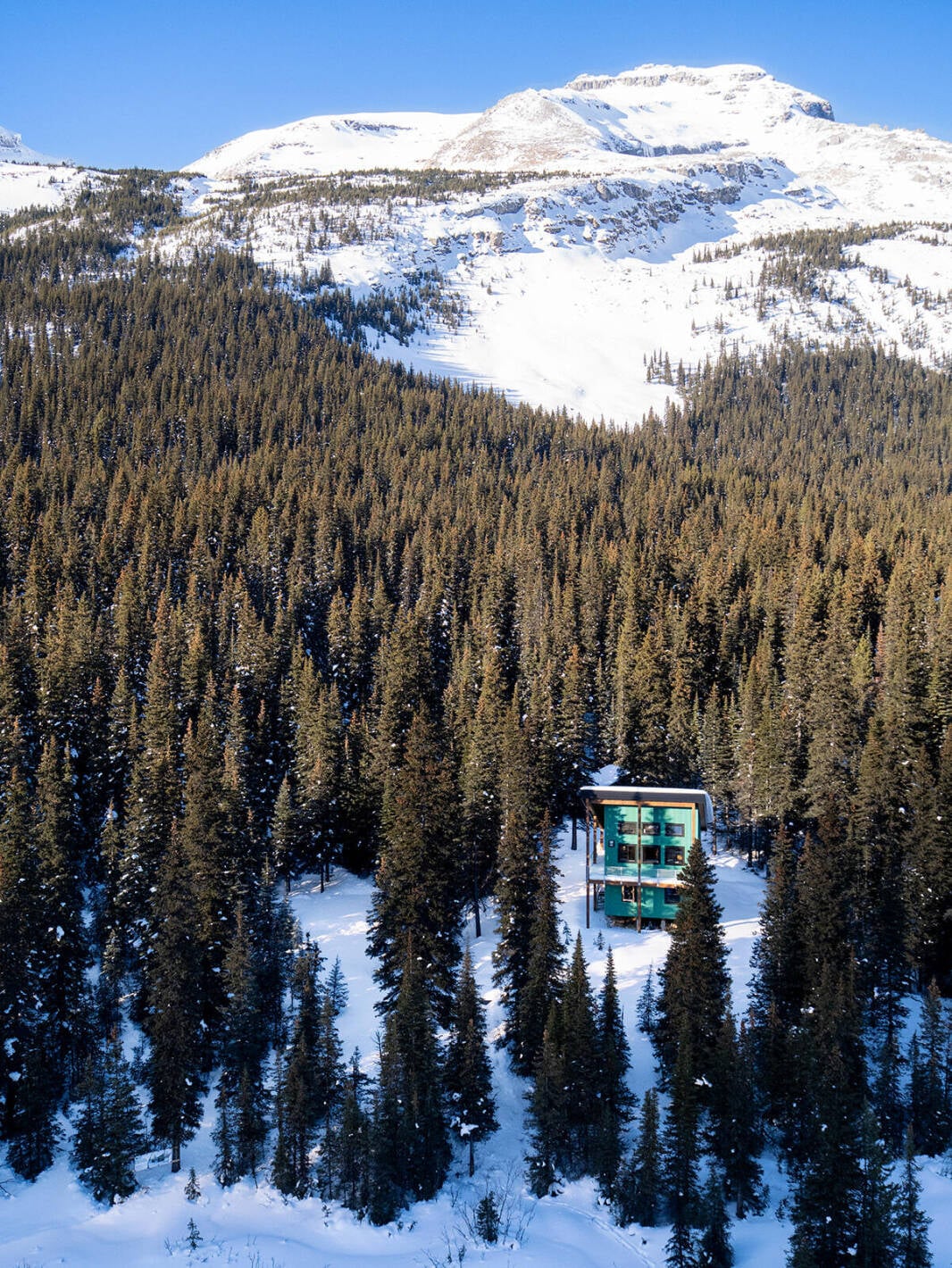
The Robson Pass Cabin is a simple, practical, design and aesthetic — one that feels completely at home in its surroundings. Although the design is modest, there is an easy clarity to it. The deep overhangs, the oversized roof beams, and the clean geometry of the frame express the real forces at work in an alpine environment without any ornament or architectural flourish. It looks built for the landscape, not imposed upon it.
Structure-led Design
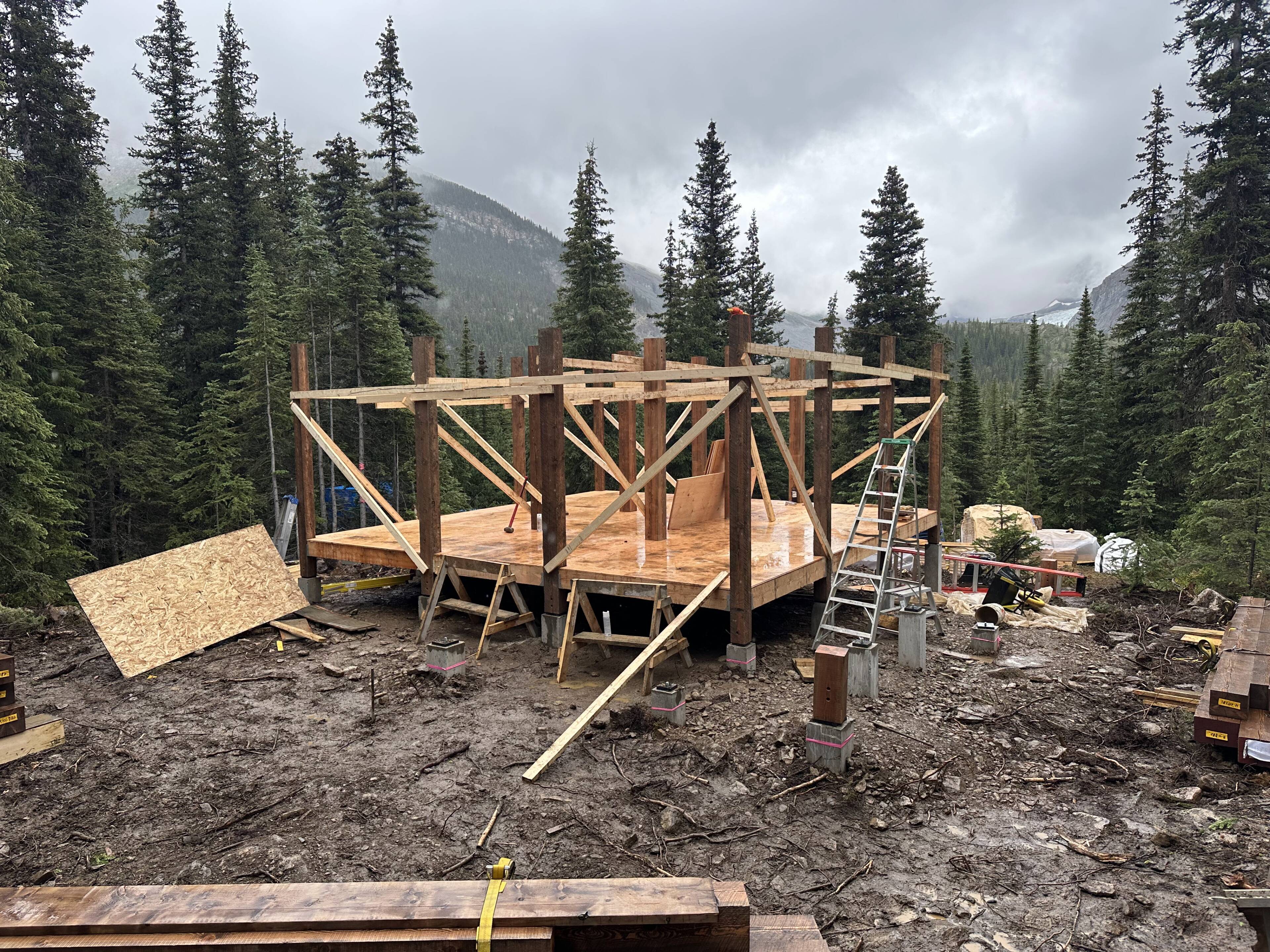
In most buildings, architectural considerations drive the process. Here, the structure had to lead. Heavy snow loads at Robson Pass demanded roof beams with a 10" × 18" cross-section of select-structural Douglas-fir. Ground conditions and excavation practicality informed foundation design. Ease of human-powered assembly was a major consideration in the size, shape, and layout of the cabin. Porcupine complications were not considered.
From the outset, we approached the cabin as a mass-timber hybrid: a conventional timberframe wrapped on all sides with 3" thick tongue-and-groove (T&G) decking. This assembly created a solid, quiet, highly resilient envelope that performs exceptionally well in thermal cycling and additionally resists the vibrations and “drumming” common in lightweight stick-framed alpine structures. The Alpine Club wanted durability, simplicity, and a mountain aesthetic that felt aligned with the landscape. Mass timber in this style provided that without requiring heavy machinery on site.
Mass timber’s inherent characteristics are particularly well suited to the operation of this cabin: thermal cycling due to constant traffic in and out, intermittent stove usage, etc. is smoothed out by the thermal mass of the structure. Moisture is similarly absorbed and released by the wood structure throughout the day and week in mountain weather. The interior layout and close attention to sound isolation between floors provides a quiet sleeping area even with a large group upstairs – a major upgrade in hut livability for mixed groups.
Because the cabin is a timberframe, we were able to use point-load foundations, dramatically reducing the amount of concrete and excavation compared to strip footings or a traditional foundation wall. Less concrete meant fewer flight hours, fewer ground disturbances and, ultimately, a smaller impact on the fragile alpine terrain.
Staging a Remote Jobsite
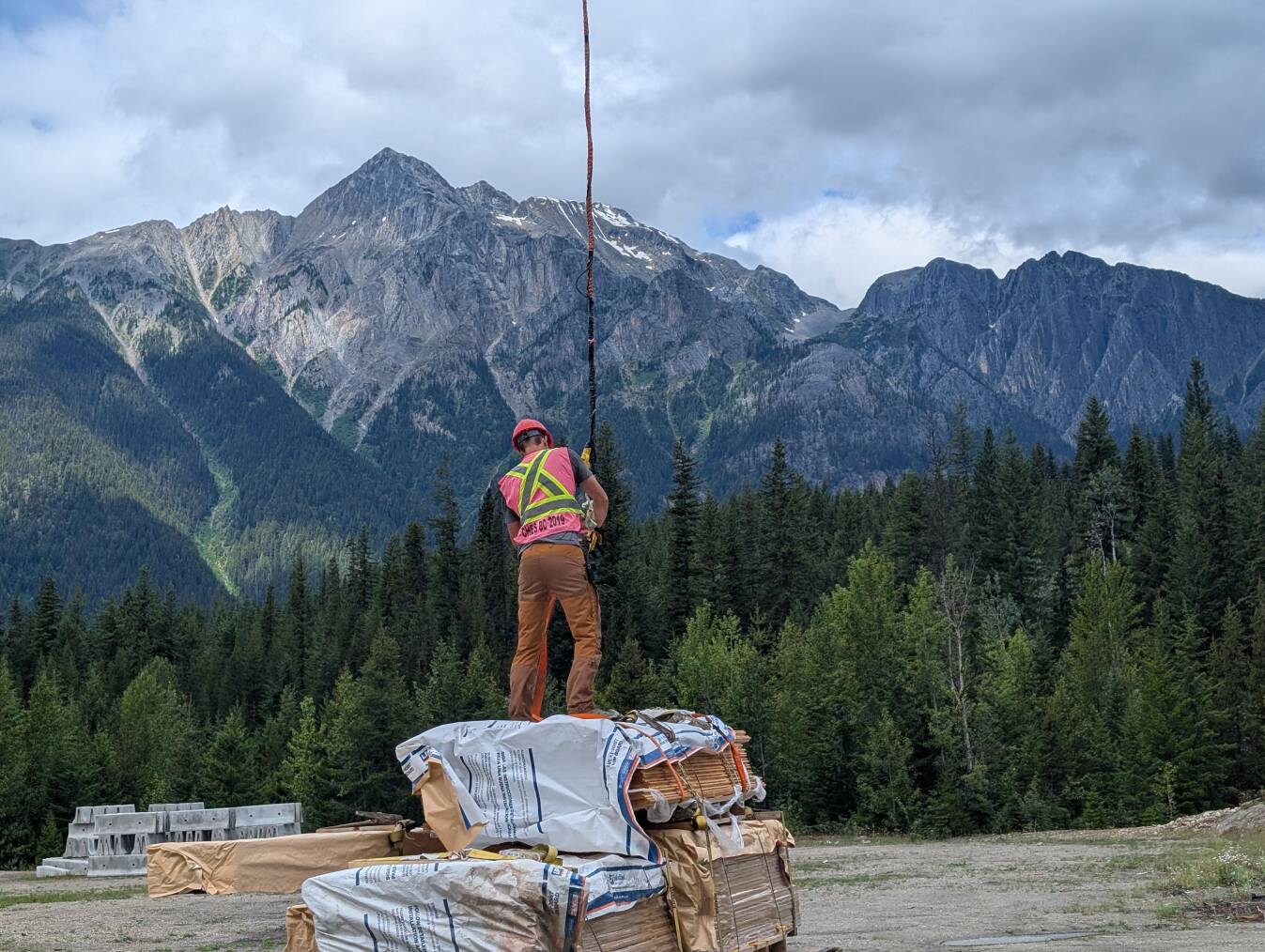
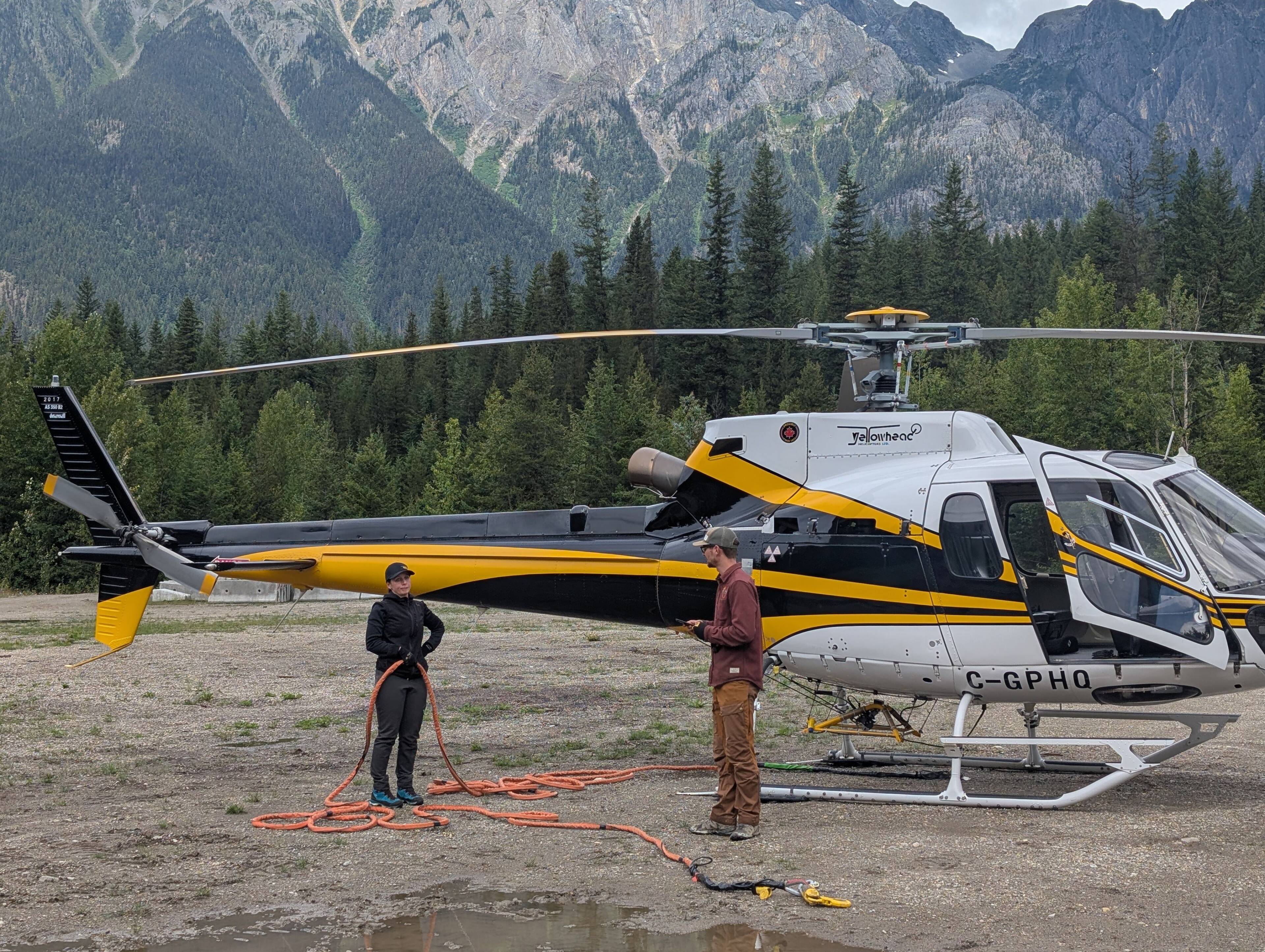
The staging area at Mount Robson has a healthy and thriving wildlife population. What it doesn’t have is power, cell coverage, or unloading equipment of any kind. That reality shaped our logistics plan as much as any design decision. Every delivery had to be loaded onto trailers in reverse order — carefully packed so the helicopter could lift directly from the deck without us needing to shuffle material on the ground.
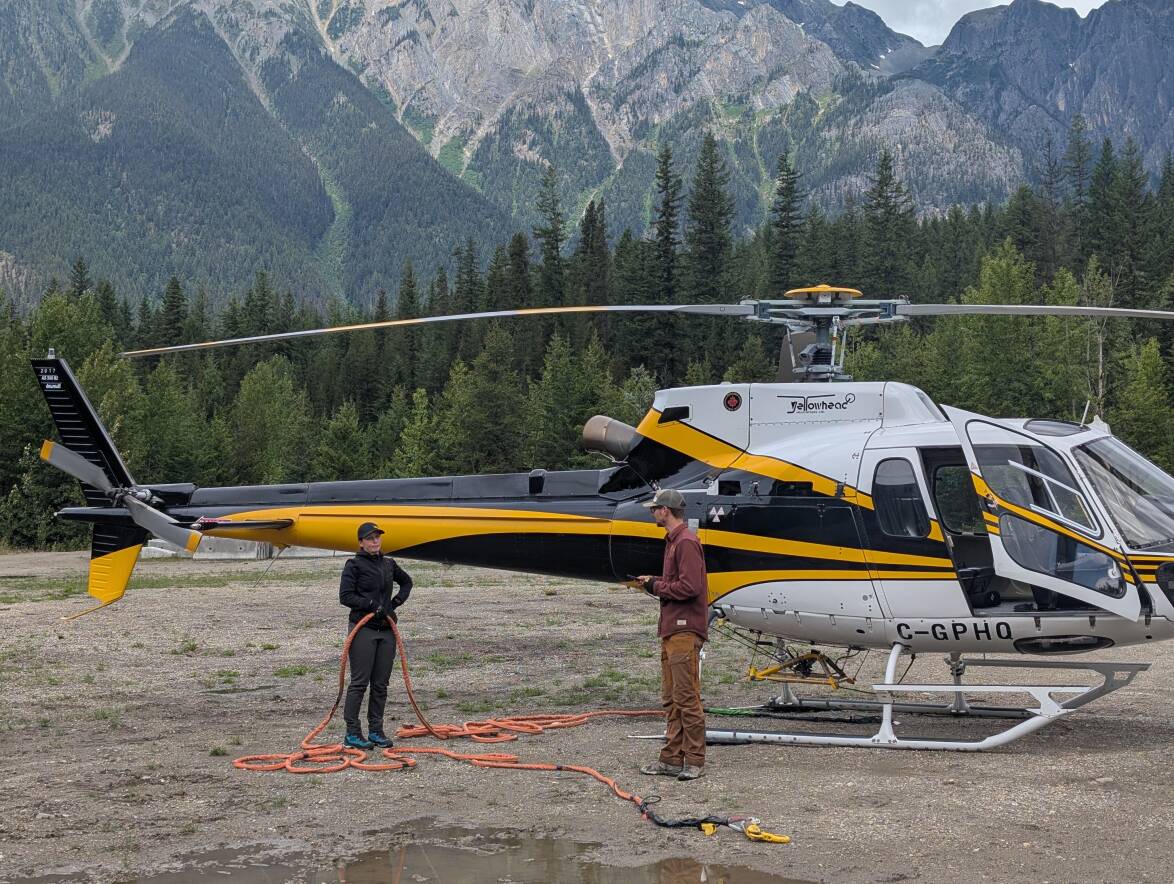
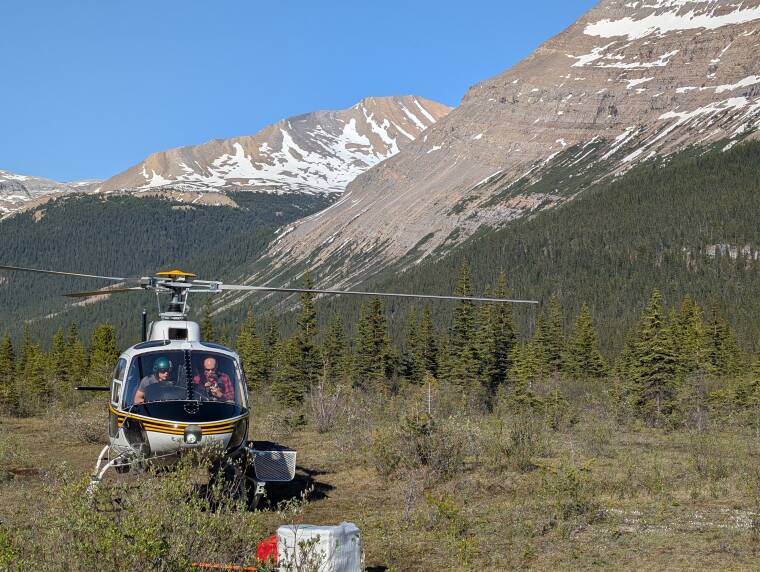
To further optimize material movement, we coordinated extensively with the helicopter company to the extent of choreographing load weights so that the first load of each fuel cycle was the lightest and the final the heaviest — taking advantage of the aircraft’s increasing lift capacity as it burned fuel. All materials were weighed, labelled, and palletized in advance, and we built custom crates that not only protected sensitive materials but were designed to be repurposed as part of the hut’s structure, eliminating waste and saving flight time.
In mountain construction, the helicopter dictates the schedule. Weather can shut down flying for days or weeks without warning. In bad forest fire years, construction flights can be grounded for months, as all available aircraft are diverted to firefighting. For that reason, we moved the bulk of the building materials as soon as the snow melted, even before the site had been fully cleared.
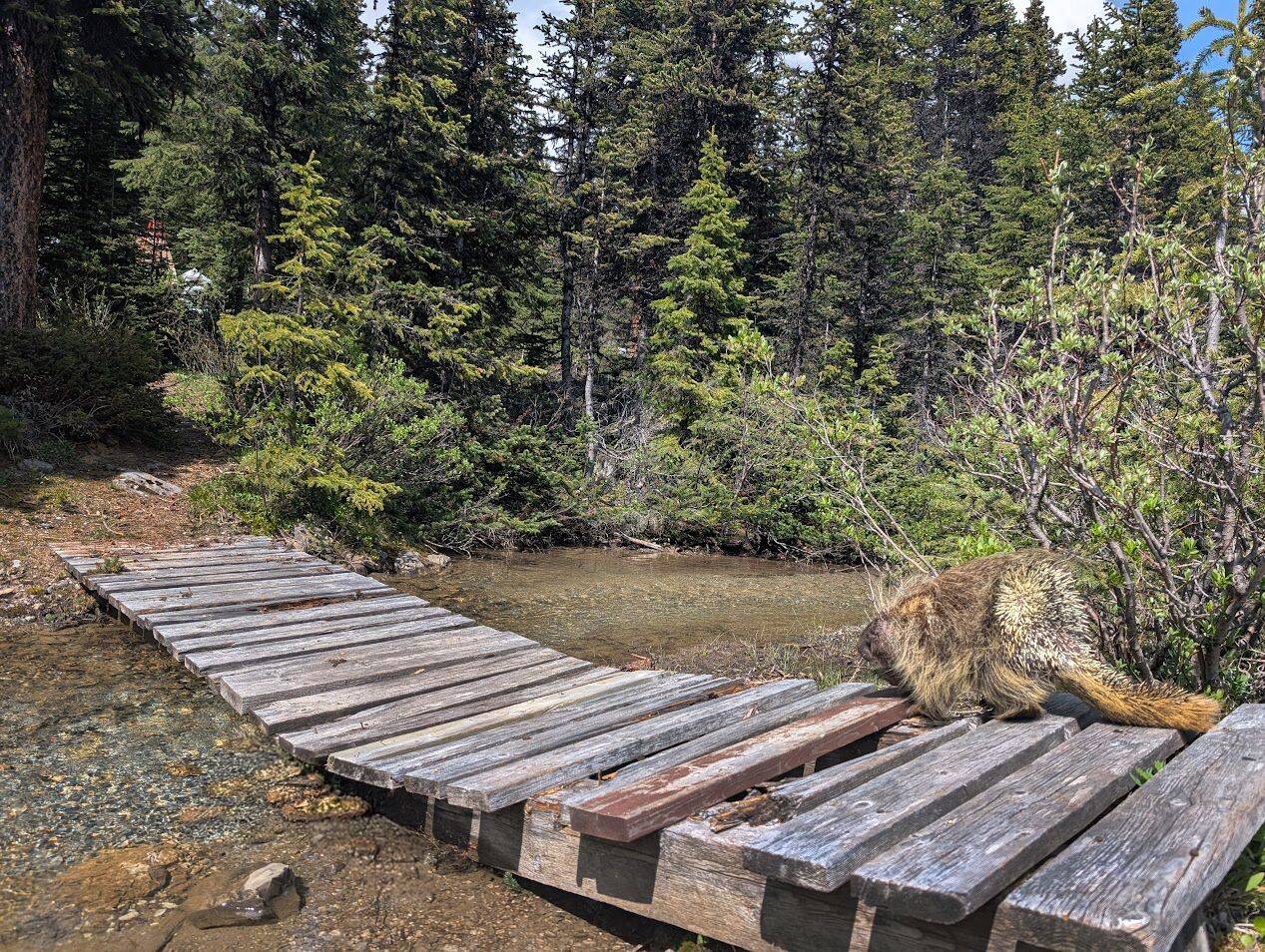
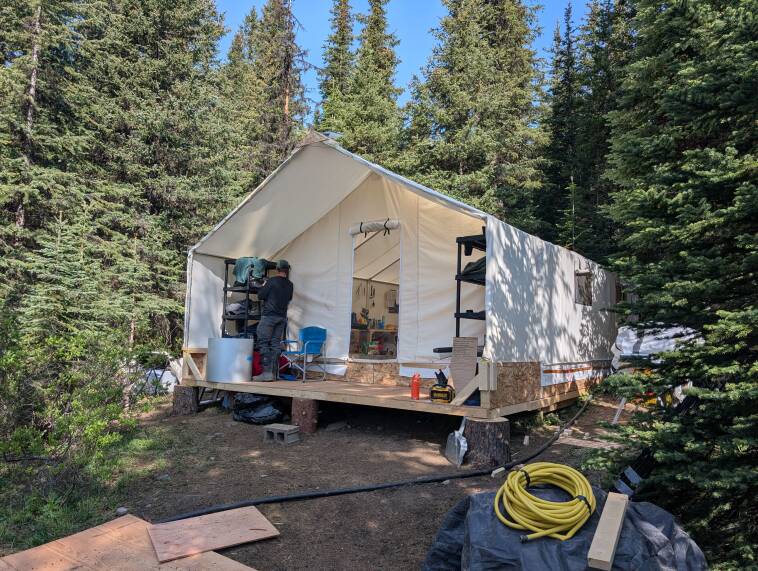
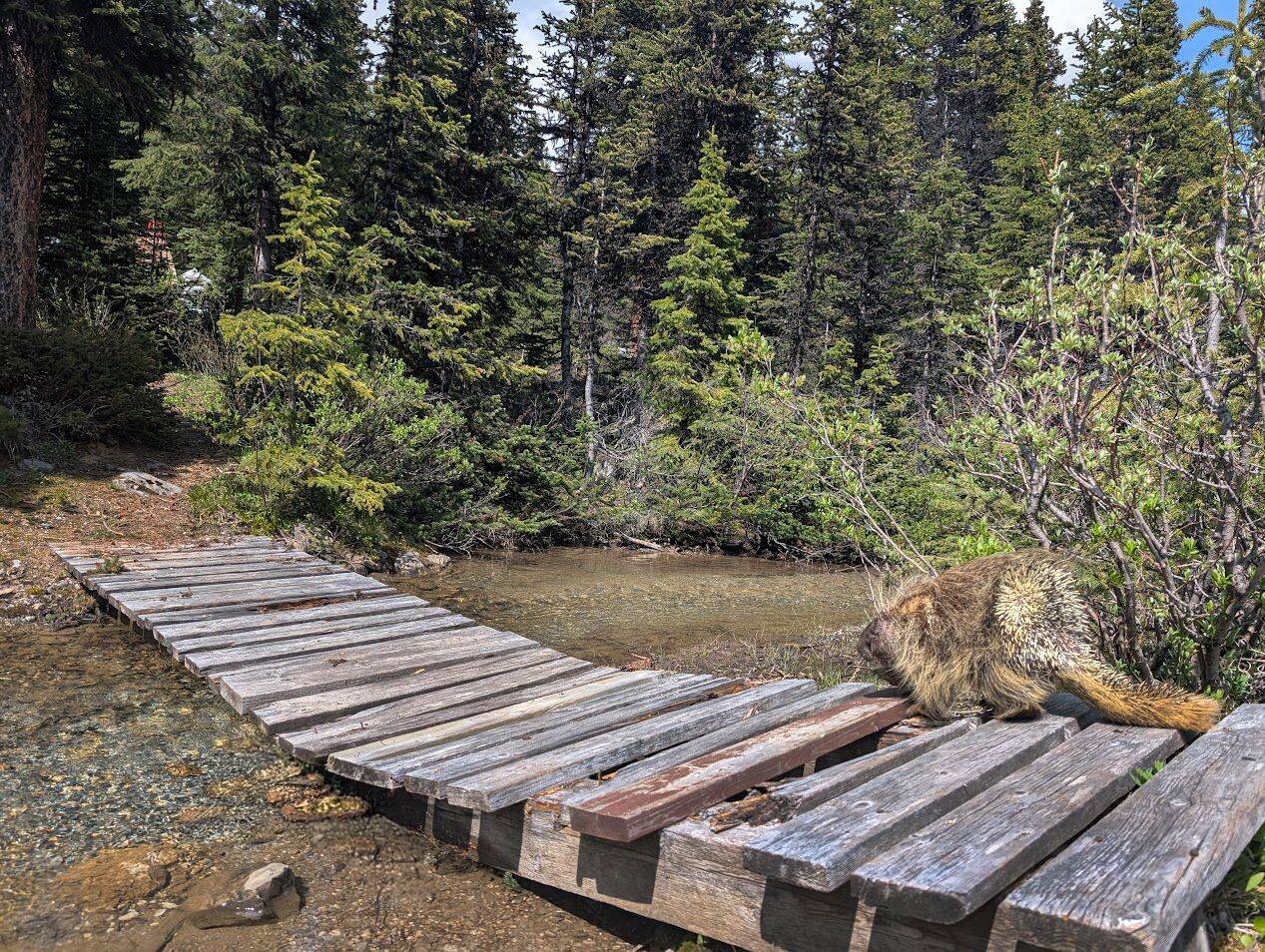
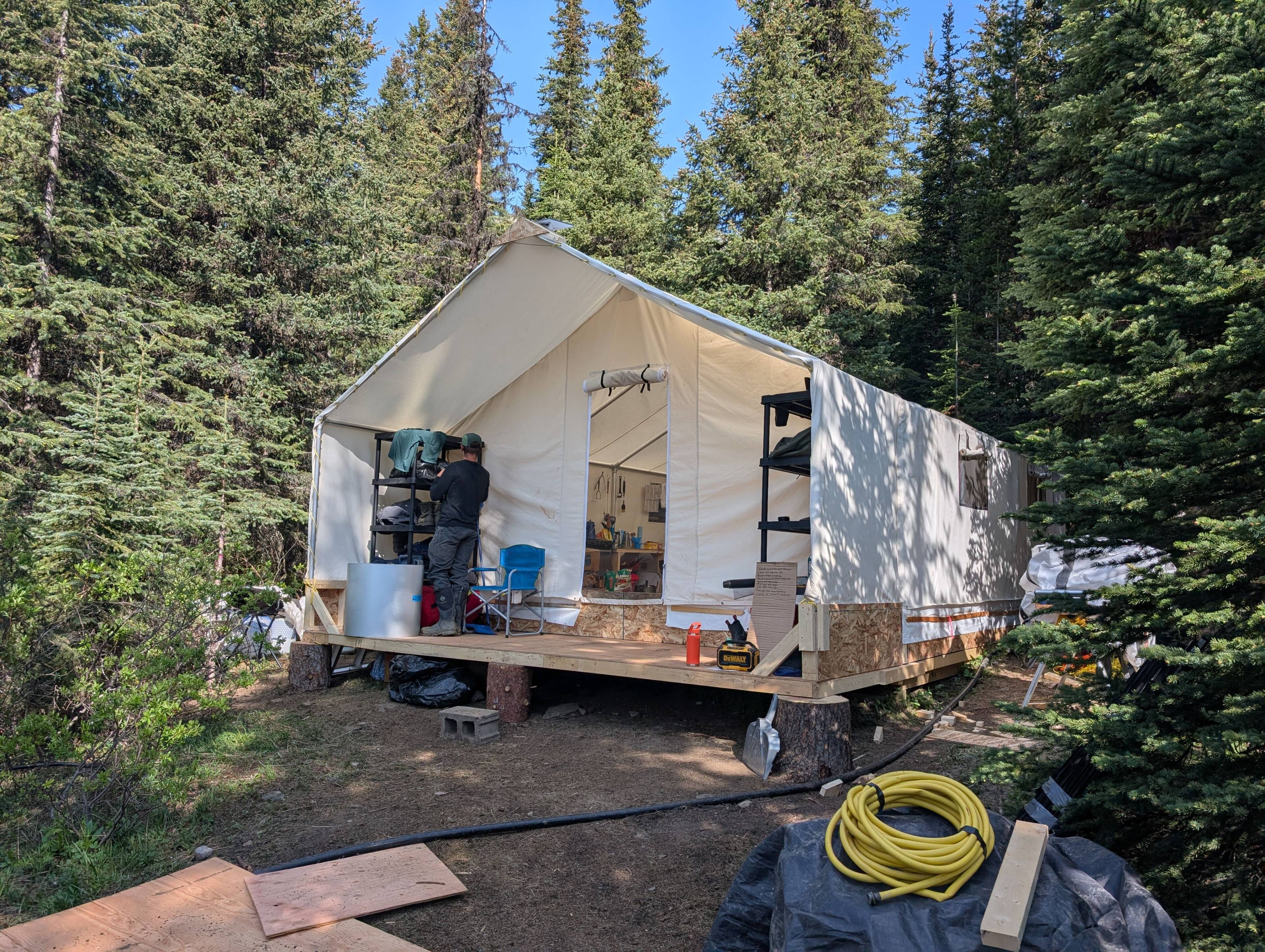
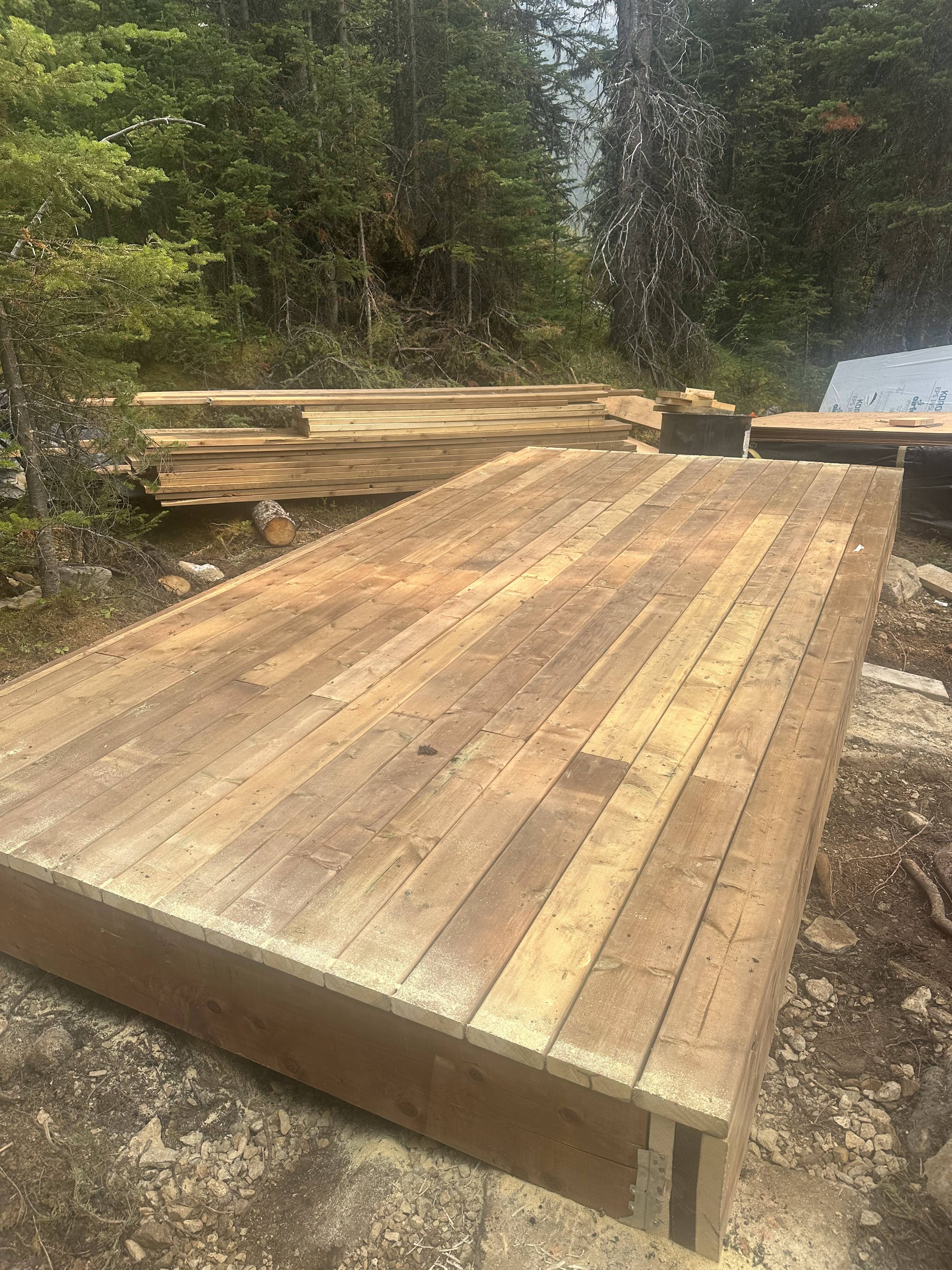
On site, our five-person crew lived in a temporary camp that we built early in the project. With no infrastructure available, we tapped a creek higher on the slope to create a running water system using hydrostatic pressure, installed a full kitchen, and even put in a shower powered by an instantaneous gas water heater. Starlink was, of course, non-negotiable. All of it was enclosed within an electric bear fence, although, in an unexpected twist, we never saw a bear and instead had porcupines eat the decking off our scaffolding! Porcupines eating our tent platforms! Porcupines refusing to move off the trail between tents and outhouse exactly when we did not have a moment to spare!
We never really figured out the solution to the porcupines, to be honest.
Prefabrication
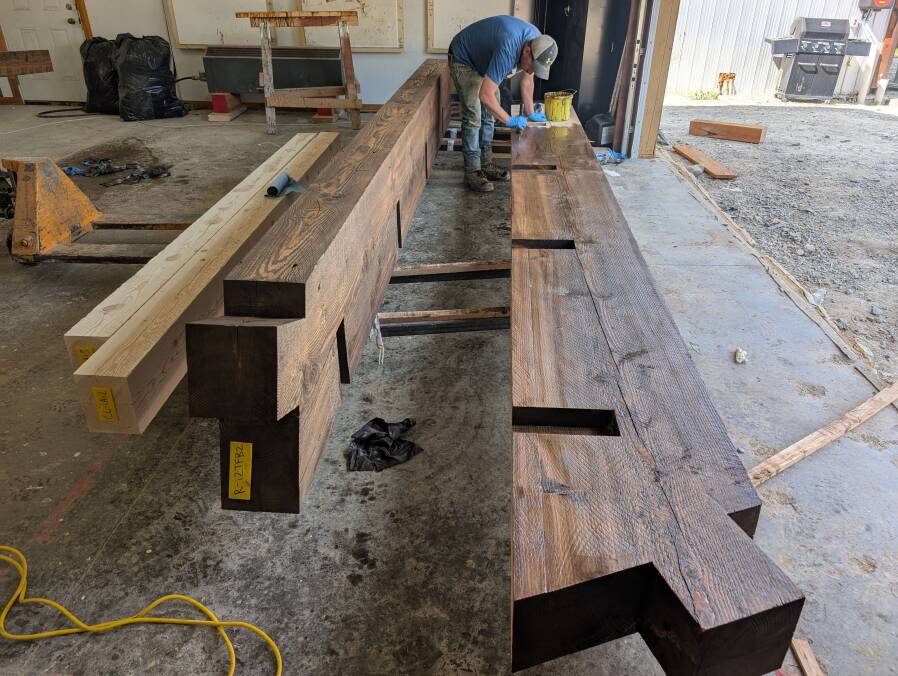
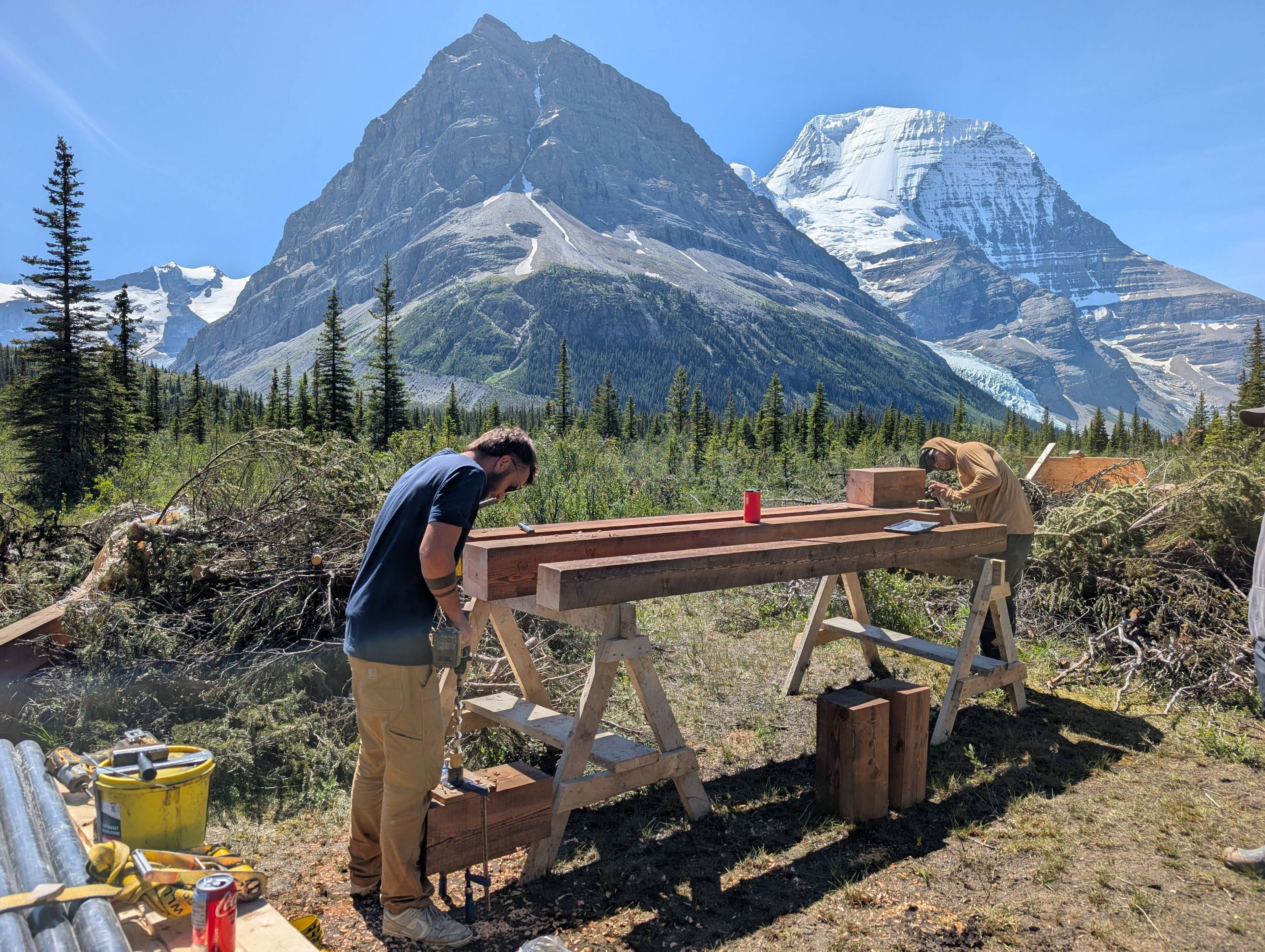
The build window at this site is short: we expected snow to leave the site by mid-June or early July, and to be back on the ground as early as September. We had a few months over the winter to prepare and took full advantage. The entire building was fully prefabricated and finished in our shop, including staining and pre-fitting. Prefabrication wasn’t just about saving time on site; it was about removing uncertainty. When materials can only arrive by air, there is no option to run to the hardware store or modify major components on the fly.
Our structural engineer produced not only the engineering package but also the fabrication drawings. This atypical choice was made to eliminate the translation errors that can occur in the standard workflow where the engineer, CAD tech, and fabricator might all work for three different companies. A fly-in remote site is no place to discover that someone cut a beam 1’ short!
The Situation
The Alpine Club of Canada (ACC) operates a large network of backcountry huts throughout Canada, with the bulk of them in the mountains of BC and Alberta. The huts vary widely in form and construction; some are similar to heli-ski lodges, and some are 2-person tin shacks perched in extremely improbable locations. Some have spiny wildlife.
The latest addition to this hut network is in one of the most spectacular and popular locations in BC: Robson Pass, on the border of Mt. Robson Provincial Park and Jasper National Park, right between Berg and Adolphus lakes, and with a view of both the North and Emperor faces of Mount Robson. Mount Robson is the most prominent peak in the North American Rockies, the tallest of the Canadian Rockies, and the site of over one hundred years of harrowing and memorable first ascents and descents, following Conrad Kain. The site is reachable only by a 22-kilometre trail with over 1,000 meters of elevation gain… or in our case, a helicopter.
Over the last century of hut operations many lessons have been learned, and the ACC was keen to build their latest addition utilizing modern technology to address the most common issues in these unique buildings. In addition to the obvious structural and environmental concerns associated with buildings in alpine environments, primary goals for this cabin were to address moisture issues commonly created by lots of wet people and gear in small spaces, noise issues created by the same, and a general increase in thermal comfort overall.
Ennadai Woodworks was awarded the cabin contract as a design-build in early 2025. Ennadai is based in the mountain town of Golden BC and is proudly staffed by a small crew who are passionate woodworkers as well as outdoorspeople. Our leadership staff spend most of their spare time in the mountains guiding, exploring, and in one case racing on the national ski mountaineering team.
Author’s Note: I regret to inform you that this article is in fact solely regarding the construction of a cabin in an alpine (porcupine) environment, and how to do so in a cost-effective manner.
It does not contain a sliver of insight about how to hold these animals accountable for their crimes against humanity, the Earth, or God.
FEATURE
How to Manage a Porcupine While Building a Mass Timber Cabin,
and Make It Pay
Moving Heavy Timber (and heavy rocks) without Cranes
Our helicopter-driven planning decisions did not stop with the material movement. When looking at the big pieces of a timberframe or mass timber assembly it is very tempting to “just lift it with the helicopter” – but that approach is very expensive. In addition to being cost-sensitive, we were aware we needed to avoid lost days or weeks because of weather, forest fires, or other delays. Everything would have to be lifted and placed in the old-fashioned way.
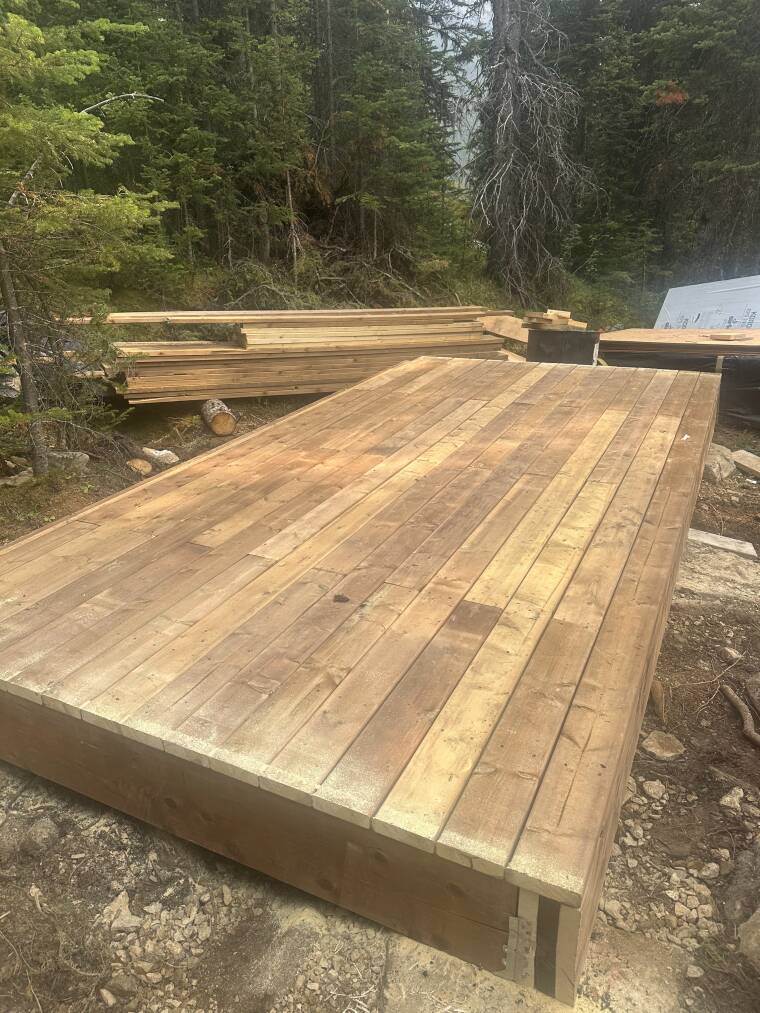
Using 3" T&G instead of large-panel products like DLT or CLT was a deliberate choice. With T&G, we could hand-place everything, even the enormous roof timbers, using only simple mechanical lifting techniques. The result was a structure that has all the benefits of mass timber but could be entirely assembled by a five-person crew. Timbers were kept to a manageable length, and all were tilted or lifted using traditional rigging techniques.
We considered excavating “the old-fashioned way” as well but this proved to be an unpopular suggestion in the early design meetings (the people who would end up holding the shovels were the ones making these strategy choices). In one of our more unusual steps, we disassembled an excavator, slung it in piece by piece, then reassembled it on site.
This turned out to be a lucky choice. We had based our estimates on the anecdotal information we had from the original decades old surveys which suggested that the site was entirely composed of alluvial gravel and sand. It seems that the gravel grew quite healthily over the intervening years and the sand just up and left because what we found were thousand-pound boulders with subterranean rivers running between them. It took more than a few broken jackhammer bits, but we eventually installed the footings, and the commotion was enough to keep our needly friends at bay—at least temporarily.
Staging a Remote Jobsite
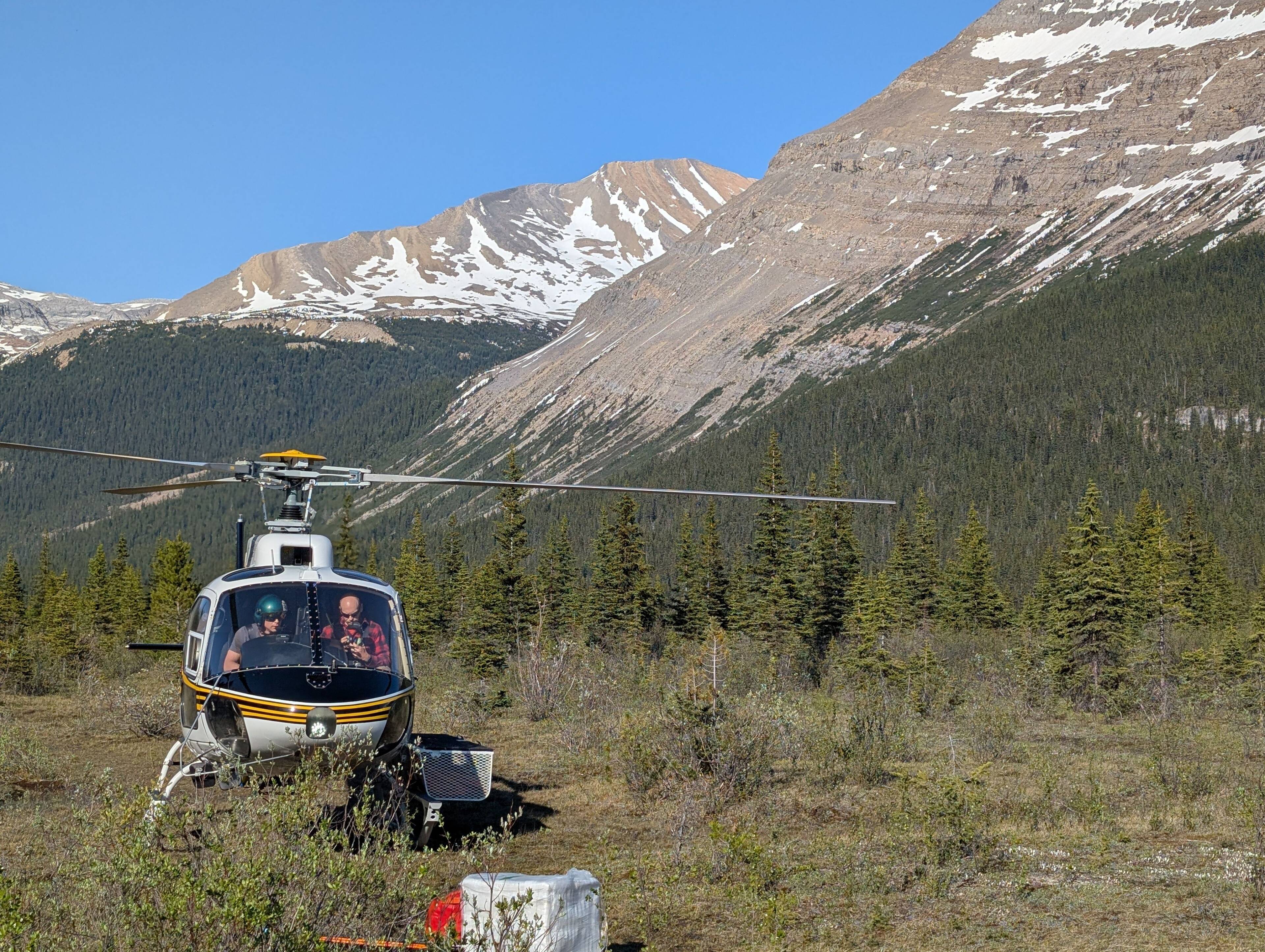
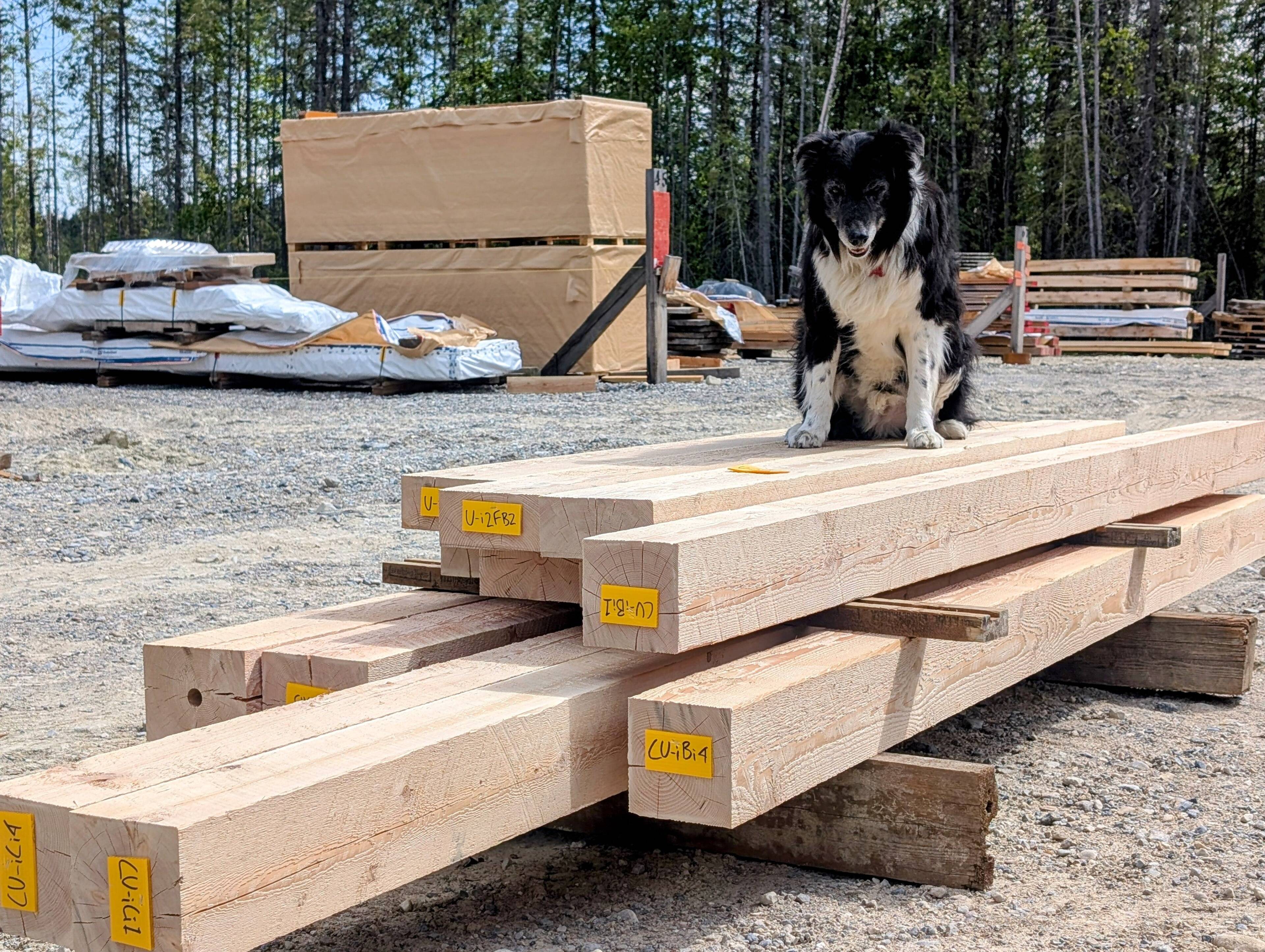
The staging area at Mount Robson has a healthy and thriving wildlife population. What it doesn’t have is power, cell coverage, or unloading equipment of any kind. That reality shaped our logistics plan as much as any design decision. Every delivery had to be loaded onto trailers in reverse order — carefully packed so the helicopter could lift directly from the deck without us needing to shuffle material on the ground.
To further optimize material movement, we coordinated extensively with the helicopter company to the extent of choreographing load weights so that the first load of each fuel cycle was the lightest and the final the heaviest — taking advantage of the aircraft’s increasing lift capacity as it burned fuel. All materials were weighed, labelled, and palletized in advance, and we built custom crates that not only protected sensitive materials but were designed to be repurposed as part of the hut’s structure, eliminating waste and saving flight time.
In mountain construction, the helicopter dictates the schedule. Weather can shut down flying for days or weeks without warning. In bad forest fire years, construction flights can be grounded for months, as all available aircraft are diverted to firefighting. For that reason, we moved the bulk of the building materials as soon as the snow melted, even before the site had been fully cleared.
On site, our five-person crew lived in a temporary camp that we built early in the project. With no infrastructure available, we tapped a creek higher on the slope to create a running water system using hydrostatic pressure, installed a full kitchen, and even put in a shower powered by an instantaneous gas water heater. Starlink was, of course, non-negotiable. All of it was enclosed within an electric bear fence, although, in an unexpected twist, we never saw a bear and instead had porcupines eat the decking off our scaffolding! Porcupines eating our tent platforms! Porcupines refusing to move off the trail between tents and outhouse exactly when we did not have a moment to spare!
We never really figured out the solution to the porcupines, to be honest.
Prefabrication
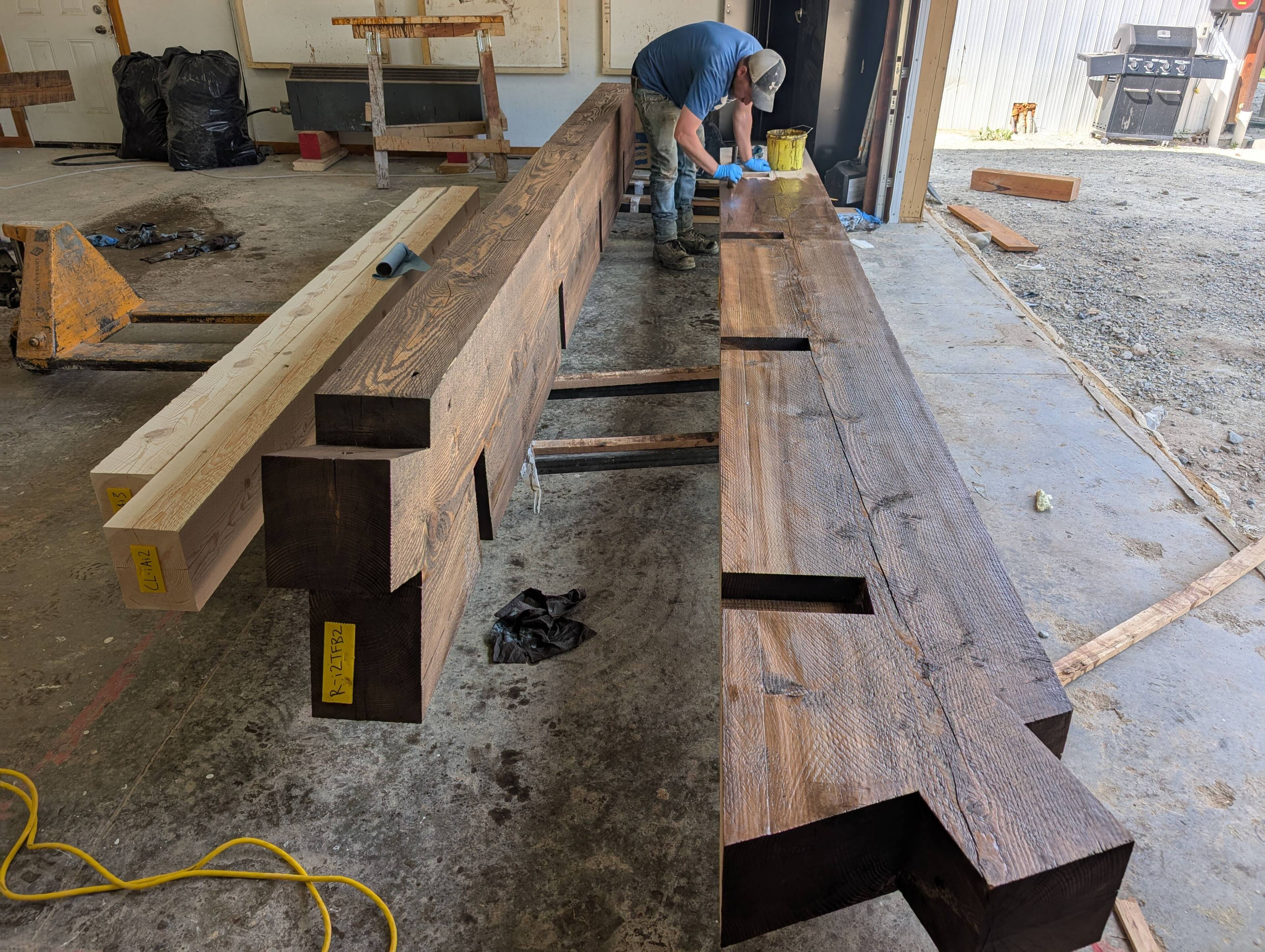
The build window at this site is short: we expected snow to leave the site by mid-June or early July, and to be back on the ground as early as September. We had a few months over the winter to prepare and took full advantage. The entire building was fully prefabricated and finished in our shop, including staining and pre-fitting. Prefabrication wasn’t just about saving time on site; it was about removing uncertainty. When materials can only arrive by air, there is no option to run to the hardware store or modify major components on the fly.
Our structural engineer produced not only the engineering package but also the fabrication drawings. This atypical choice was made to eliminate the translation errors that can occur in the standard workflow where the engineer, CAD tech, and fabricator might all work for three different companies. A fly-in remote site is no place to discover that someone cut a beam 1’ short!
Structure-led Design
In most buildings, architectural considerations drive the process. Here, the structure had to lead. Heavy snow loads at Robson Pass demanded roof beams with a 10" × 18" cross-section of select-structural Douglas-fir. Ground conditions and excavation practicality informed foundation design. Ease of human-powered assembly was a major consideration in the size, shape, and layout of the cabin. Porcupine complications were not considered.
From the outset, we approached the cabin as a mass-timber hybrid: a conventional timberframe wrapped on all sides with 3" thick tongue-and-groove (T&G) decking. This assembly created a solid, quiet, highly resilient envelope that performs exceptionally well in thermal cycling and additionally resists the vibrations and “drumming” common in lightweight stick-framed alpine structures. The Alpine Club wanted durability, simplicity, and a mountain aesthetic that felt aligned with the landscape. Mass timber in this style provided that without requiring heavy machinery on site.
Mass timber’s inherent characteristics are particularly well suited to the operation of this cabin: thermal cycling due to constant traffic in and out, intermittent stove usage, etc. is smoothed out by the thermal mass of the structure. Moisture is similarly absorbed and released by the wood structure throughout the day and week in mountain weather. The interior layout and close attention to sound isolation between floors provides a quiet sleeping area even with a large group upstairs – a major upgrade in hut livability for mixed groups.
Because the cabin is a timberframe, we were able to use point-load foundations, dramatically reducing the amount of concrete and excavation compared to strip footings or a traditional foundation wall. Less concrete meant fewer flight hours, fewer ground disturbances and, ultimately, a smaller impact on the fragile alpine terrain.
Completion and Looking Forward
We approached this project with an obsession over coordination, continuity, and an extreme amount of planning. Our in-house project managers handled everything from layout and design concepts during the RFP response preparation, to prefabrication, to final installation. That continuity — experienced designers building what they themselves conceived — was a huge contributor to the success of this project.
Mass timber is often discussed in the context of urban density and carbon storage, but in an alpine setting, its advantages are more visceral. Timber feels warm in cold landscapes. It absorbs sound in a way that makes even small spaces feel calm. It tolerates rapid temperature swings that can tear apart lighter building systems. And most importantly for a remote hut: it endures.
The Robson Pass Cabin is a simple, practical, design and aesthetic — one that feels completely at home in its surroundings. Although the design is modest, there is an easy clarity to it. The deep overhangs, the oversized roof beams, and the clean geometry of the frame express the real forces at work in an alpine environment without any ornament or architectural flourish. It looks built for the landscape, not imposed upon it.
The Situation
The Alpine Club of Canada (ACC) operates a large network of backcountry huts throughout Canada, with the bulk of them in the mountains of BC and Alberta. The huts vary widely in form and construction; some are similar to heli-ski lodges, and some are 2-person tin shacks perched in extremely improbable locations. Some have spiny wildlife.
The latest addition to this hut network is in one of the most spectacular and popular locations in BC: Robson Pass, on the border of Mt. Robson Provincial Park and Jasper National Park, right between Berg and Adolphus lakes, and with a view of both the North and Emperor faces of Mount Robson. Mount Robson is the most prominent peak in the North American Rockies, the tallest of the Canadian Rockies, and the site of over one hundred years of harrowing and memorable first ascents and descents, following Conrad Kain. The site is reachable only by a 22-kilometre trail with over 1,000 meters of elevation gain… or in our case, a helicopter.
Over the last century of hut operations many lessons have been learned, and the ACC was keen to build their latest addition utilizing modern technology to address the most common issues in these unique buildings. In addition to the obvious structural and environmental concerns associated with buildings in alpine environments, primary goals for this cabin were to address moisture issues commonly created by lots of wet people and gear in small spaces, noise issues created by the same, and a general increase in thermal comfort overall.
Ennadai Woodworks was awarded the cabin contract as a design-build in early 2025. Ennadai is based in the mountain town of Golden BC and is proudly staffed by a small crew who are passionate woodworkers as well as outdoorspeople. Our leadership staff spend most of their spare time in the mountains guiding, exploring, and in one case racing on the national ski mountaineering team.