Protecting mass timber during construction begins well before rain appears in the forecast. Design decisions, construction sequencing, and preparations on site all influence how much moisture reaches the wood, how long it stays wet, and how readily it can dry.
The Canadian Wood Council’s Handbook for Construction Moisture Management of Mass Timber Buildings, developed with technical leadership from RDH Building Science, brings current industry knowledge and experience together in a practical resource. Its central message is straightforward: wood can get wet during construction, but every project needs a realistic plan for managing that exposure and a team committed to following through.

FEATURE
Moisture Management in Mass Timber
Scroll to Read

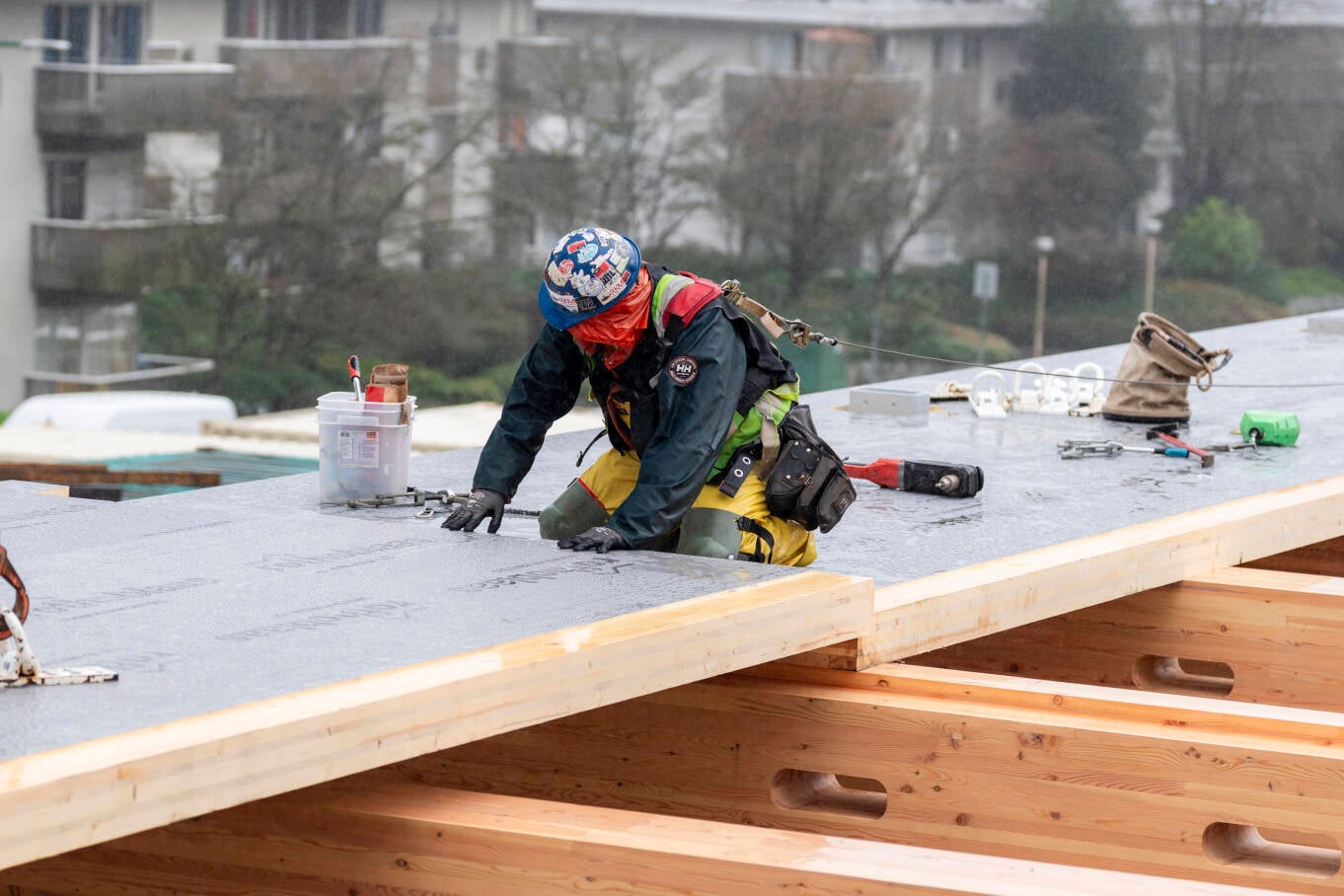
Accurate measurements are essential because moisture is not distributed evenly. A panel may look dry while a connection remains wet. Measurements must reach relevant depths and locations, with appropriate corrections for wood species and temperature. Averaging readings can conceal areas that need attention.
2. How long wood stays wet matters
One of the most important concepts in understanding moisture management is time-of-wetness, which is the length of time wood remains wet. It requires considering both how quickly and deeply water can enter an element and how readily that moisture can escape.
Water on an accessible surface with good drying potential presents a different risk from water trapped within a connection or beneath a concrete topping. In mass timber, thick sections, layered assemblies, and tight interfaces can make drying difficult. Water may enter through a small gap and spread into areas that are difficult to inspect or reach.
This is why there is no universal answer to the question, “How long can wood stay wet?” The consequences depend on the moisture conditions, assembly, and ability to dry. Repeated wetting with incomplete drying can progressively increase risk.
The practical priority is to identify vulnerable locations early, protect them carefully, and respond promptly when wetting occurs. Particular attention belongs where water can enter easily and escape slowly.
3. Passive protection needs active management
Effective moisture management combines complementary measures: weather shielding, applied passive protection, active water removal, and drying systems.
Shielding helps keep precipitation away from the timber. Membranes and coatings provide protection at the material surface. Water removal addresses accumulation when exposure occurs, and drying systems may be needed to reduce moisture already absorbed into the wood.
Passive measures alone are not enough. Factory-applied protection still requires attention to joints, fastener penetrations, and damage sustained during installation. A membrane’s performance depends on continuity, maintenance, and the conditions it encounters.
Active management means assigning people to inspect protection, remove standing water, monitor conditions, and respond when problems arise. Drying also requires a considered approach and measurements to confirm progress. These activities need clear responsibility and resources within the construction plan.
4. Every project needs its own moisture risk assessment
There is no one-size-fits-all approach to moisture management. Each project requires an assessment of assembly vulnerabilities, seasonal weather, project-specific risk tolerance, and duration of exposure.
An exposed timber ceiling with demanding appearance expectations may require different measures than a ceiling that will be concealed. Roofs, connections, and assemblies that can trap water require particular consideration. The schedule also matters since a delay may move construction into wetter weather or extend the period before the building is enclosed.
Assessing these conditions helps teams select an appropriate combination of protection strategies and anticipate where additional effort will be needed.
5. Turn the assessment into a plan and follow it
A Mass Timber Moisture Management Plan translates the assessment into coordinated actions and documented responsibilities. The handbook recommends that the design team require the contractor to prepare and submit a plan. As a best practice, general contractors should develop one even when the project does not explicitly require it.
Developed with input from the project team, the plan establishes how timber will be protected, how moisture will be monitored, and who will respond to wetting. It also supports decisions about when timber is ready to receive roofing, toppings, or finishes that restrict drying.
Implementation requires ongoing inspection, maintenance, and adaptation. Changes in weather, assemblies, or construction sequencing should prompt a review of the approach. Following the plan helps reduce moisture damage, unforeseen costs, and schedule delays.
There are four moisture content zones that help project teams understand increasing risk:
Safe Zone: 16% or less
Risk Zone: 17–19%
Damage Zone: 20–25%
Decay Zone: above 25%
These categories help guide decisions. A reading in an elevated zone does not, by itself, establish that damage has occurred. Duration of exposure and drying conditions also matter.
1. Understand what “wet wood” means
Wood naturally contains moisture. Moisture content measures the water held within the material as a percentage of its dry weight. It describes conditions within the wood, separate from puddles or visible surface water.
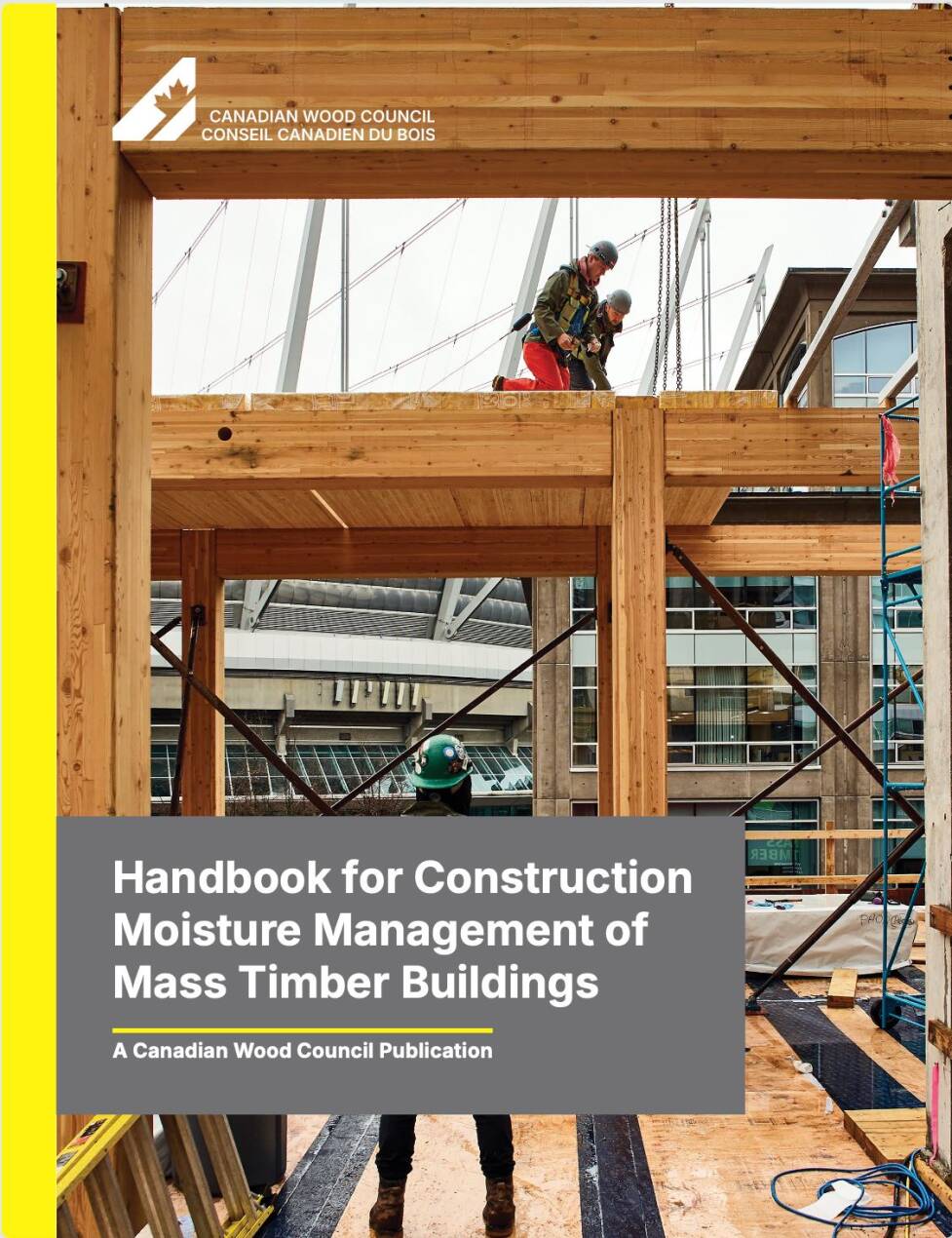
Our understanding of moisture management continues to evolve as the industry gains experience. The handbook is an excellent resource that captures current knowledge and best practices while providing helpful tools teams can use today, including a Mass Timber Moisture Management Plan template, sample specification, and checklists.
Sign up for a free account to watch the WoodWorks webinar featuring RDH’s Graham Finch for explanations and site examples, and download CWC’s free handbook for guidance on developing and implementing a plan for your project.
Protecting mass timber during construction begins well before rain appears in the forecast. Design decisions, construction sequencing, and preparations on site all influence how much moisture reaches the wood, how long it stays wet, and how readily it can dry.
The Canadian Wood Council’s Handbook for Construction Moisture Management of Mass Timber Buildings, developed with technical leadership from RDH Building Science, brings current industry knowledge and experience together in a practical resource. Its central message is straightforward: wood can get wet during construction, but every project needs a realistic plan for managing that exposure and a team committed to following through.
FEATURE
Moisture Management in Mass Timber
Accurate measurements are essential because moisture is not distributed evenly. A panel may look dry while a connection remains wet. Measurements must reach relevant depths and locations, with appropriate corrections for wood species and temperature. Averaging readings can conceal areas that need attention.
2. How long wood stays wet matters
One of the most important concepts in understanding moisture management is time-of-wetness, which is the length of time wood remains wet. It requires considering both how quickly and deeply water can enter an element and how readily that moisture can escape.
Water on an accessible surface with good drying potential presents a different risk from water trapped within a connection or beneath a concrete topping. In mass timber, thick sections, layered assemblies, and tight interfaces can make drying difficult. Water may enter through a small gap and spread into areas that are difficult to inspect or reach.
This is why there is no universal answer to the question, “How long can wood stay wet?” The consequences depend on the moisture conditions, assembly, and ability to dry. Repeated wetting with incomplete drying can progressively increase risk.
The practical priority is to identify vulnerable locations early, protect them carefully, and respond promptly when wetting occurs. Particular attention belongs where water can enter easily and escape slowly.
3. Passive protection needs active management
Effective moisture management combines complementary measures: weather shielding, applied passive protection, active water removal, and drying systems.
Shielding helps keep precipitation away from the timber. Membranes and coatings provide protection at the material surface. Water removal addresses accumulation when exposure occurs, and drying systems may be needed to reduce moisture already absorbed into the wood.
Passive measures alone are not enough. Factory-applied protection still requires attention to joints, fastener penetrations, and damage sustained during installation. A membrane’s performance depends on continuity, maintenance, and the conditions it encounters.
Active management means assigning people to inspect protection, remove standing water, monitor conditions, and respond when problems arise. Drying also requires a considered approach and measurements to confirm progress. These activities need clear responsibility and resources within the construction plan.
4. Every project needs its own moisture risk assessment
There is no one-size-fits-all approach to moisture management. Each project requires an assessment of assembly vulnerabilities, seasonal weather, project-specific risk tolerance, and duration of exposure.
An exposed timber ceiling with demanding appearance expectations may require different measures than a ceiling that will be concealed. Roofs, connections, and assemblies that can trap water require particular consideration. The schedule also matters since a delay may move construction into wetter weather or extend the period before the building is enclosed.
Assessing these conditions helps teams select an appropriate combination of protection strategies and anticipate where additional effort will be needed.
5. Turn the assessment into a plan and follow it
A Mass Timber Moisture Management Plan translates the assessment into coordinated actions and documented responsibilities. The handbook recommends that the design team require the contractor to prepare and submit a plan. As a best practice, general contractors should develop one even when the project does not explicitly require it.
Developed with input from the project team, the plan establishes how timber will be protected, how moisture will be monitored, and who will respond to wetting. It also supports decisions about when timber is ready to receive roofing, toppings, or finishes that restrict drying.
Implementation requires ongoing inspection, maintenance, and adaptation. Changes in weather, assemblies, or construction sequencing should prompt a review of the approach. Following the plan helps reduce moisture damage, unforeseen costs, and schedule delays.
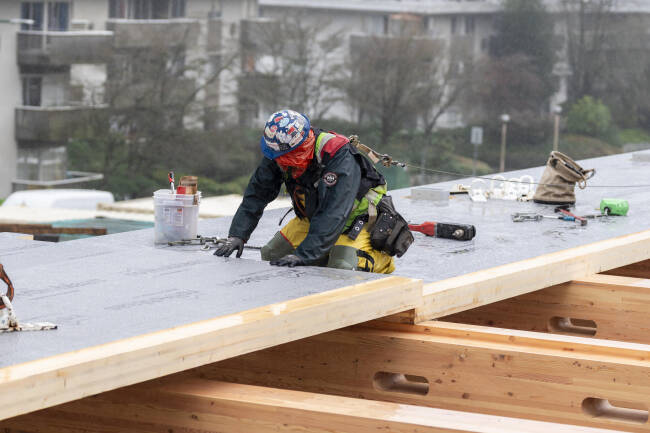
1. Understand what “wet wood” means
Wood naturally contains moisture. Moisture content measures the water held within the material as a percentage of its dry weight. It describes conditions within the wood, separate from puddles or visible surface water.
Where and When to Find Results
The project has moved beyond concept. Most of the funding is secured, partners are confirmed, and the rig is underway. Testing is scheduled to begin in spring 2026 and conclude by the end of 2026. Once the core matrix is complete, we will release the database for open industry use.
The deliverable will not be a dense report that requires translation. Instead, we will provide a design-ready database that links clear test descriptions to the ceiling-to-ceiling path’s contribution to ASTC. For readers who want more depth, we will also outline how the design ratings were derived from the Kᵢⱼ measurements.
Tailor-Made Results for the Design Community
This initiative is education-first, with the wood design community squarely in mind. If there is a floor or roof topping you specify regularly—wet or dry—or an underlayment you rely on, we encourage you to connect with us (email: sedwards@hgcacoustics.com). Likewise, sharing the ASTC and AIIC targets you are seeing by building type will help us prioritize the test matrix and present results in formats that can be used directly in practice.
As testing progresses, we will keep the community informed. The intent is simple: to help teams keep the wood exposed, keep projects on budget, and keep acoustic performance where it needs to be.
There are four moisture content zones that help project teams understand increasing risk:
Safe Zone: 16% or less
Risk Zone: 17–19%
Damage Zone: 20–25%
Decay Zone: above 25%
These categories help guide decisions. A reading in an elevated zone does not, by itself, establish that damage has occurred. Duration of exposure and drying conditions also matter.
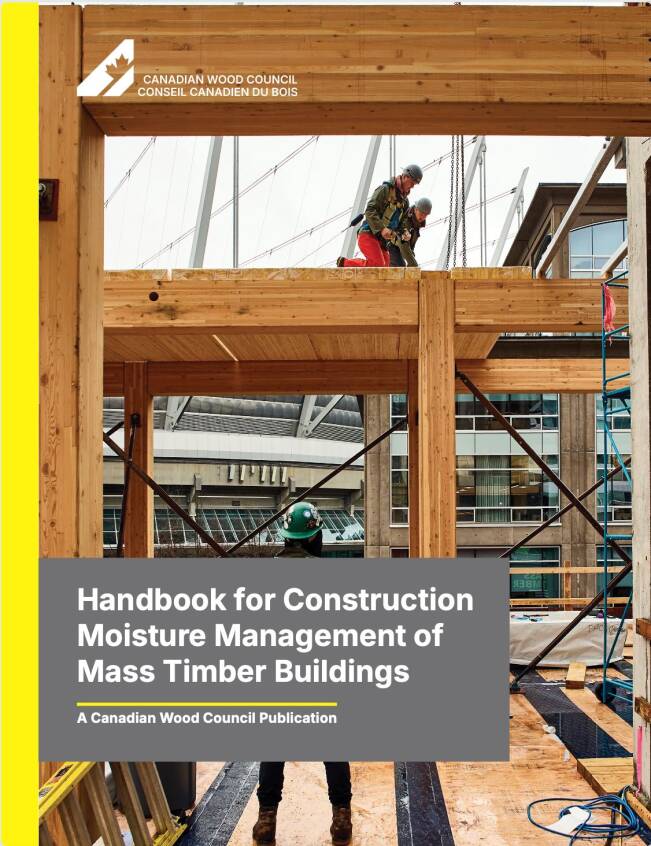
Our understanding of moisture management continues to evolve as the industry gains experience. The handbook is an excellent resource that captures current knowledge and best practices while providing helpful tools teams can use today, including a Mass Timber Moisture Management Plan template, sample specification, and checklists.
Sign up for a free account to watch the WoodWorks webinar featuring RDH’s Graham Finch for explanations and site examples, and download CWC’s free handbook for guidance on developing and implementing a plan for your project.