A recent study found that the construction sector now accounts for a third of global CO2 emissions and will likely consume the entire carbon budget for 2°C by 2045, if we don't have a "material revolution" shifting away from concrete and steel toward bio-based alternatives like mass timber. But the choice of materials is not the only revolution we need. Buildings last a long time, and any decision we make today “locks in” emissions for decades to come.
So yes, we have to use biogenic materials like mass timber to reduce our embodied or upfront carbon emissions. But we also must:
eliminate our use of fossil fuels to reduce operating carbon emissions.
maximize our energy efficiency to reduce electrical demand, particularly at peak times.
think about resilience in a world where extreme weather can knock out services.
use more sophisticated methods of prefabrication and construction to reduce construction time, costs, and tolerances.
increase our urban density so people can reduce their need for private automobiles.
figure out how to build efficiently and cost-effectively on small sites so we can infill them across our cities.
Oh, and we also have a housing crisis and need hundreds of thousands of residential units in a hurry.
This magazine is called “Wood Design and Building,” so when I visited Hälsa at 230 Royal York in Toronto, a nine-storey, sixty-unit residential building from Windmill Developments and Leader Lane Developments, I was looking for lumber. But I found so much more. In many ways, this building is a prototype that pushes every button on my list. It is a catalogue of possible solutions to help address and adapt to the climate crisis.

FEATURE
The Future of Construction is Here and it’s Panelized, Prefabricated, and Passivhaus
Scroll to Read

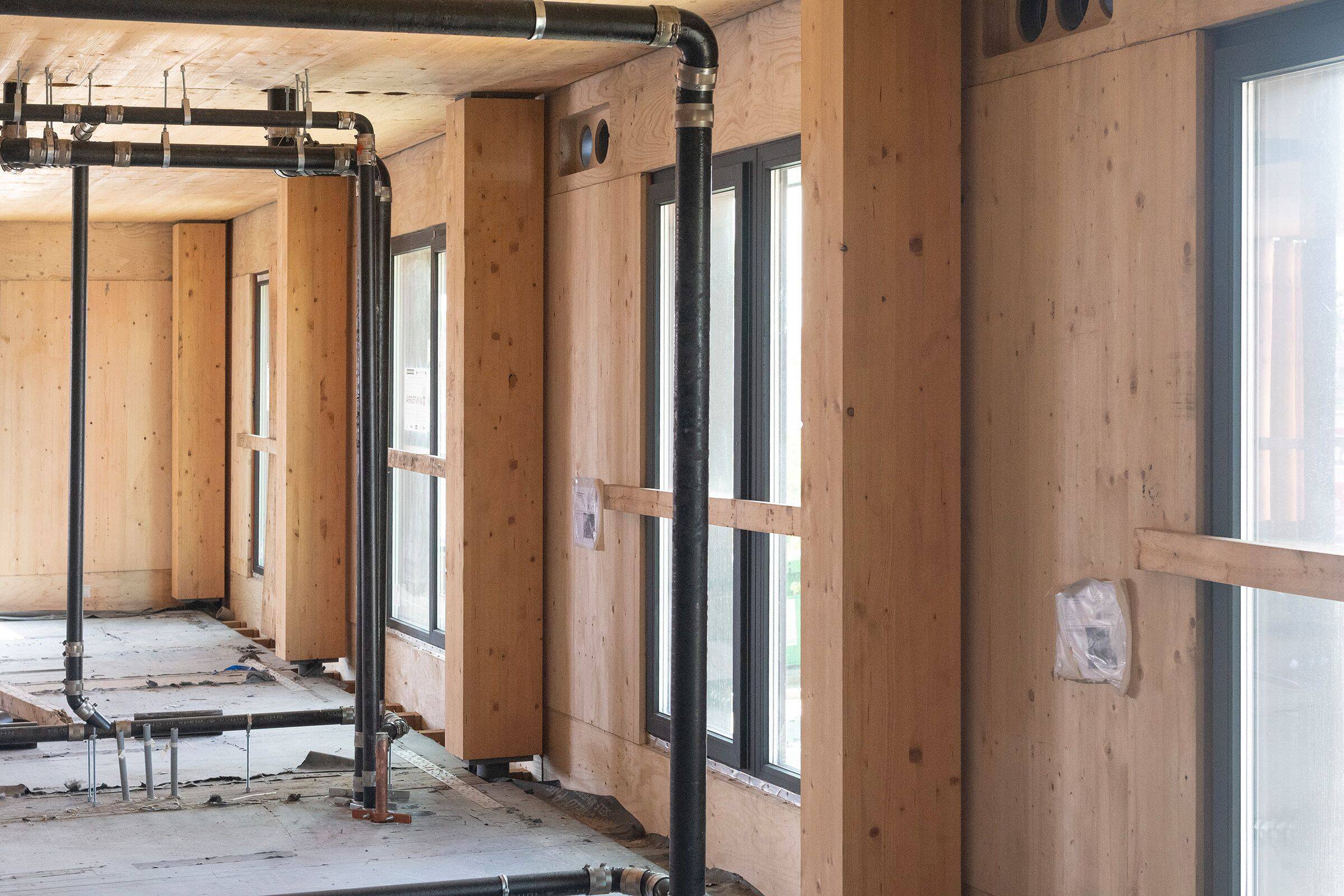
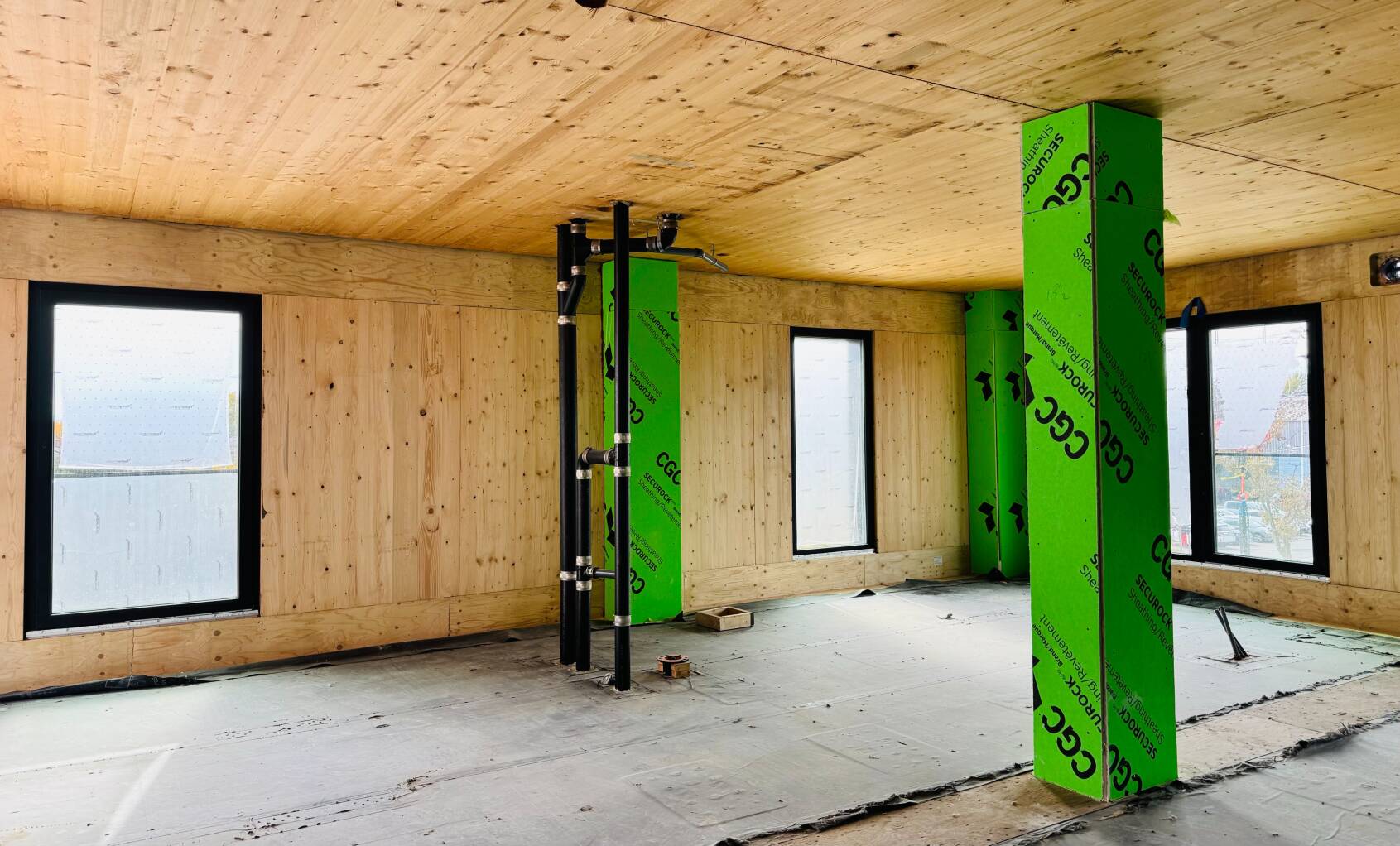


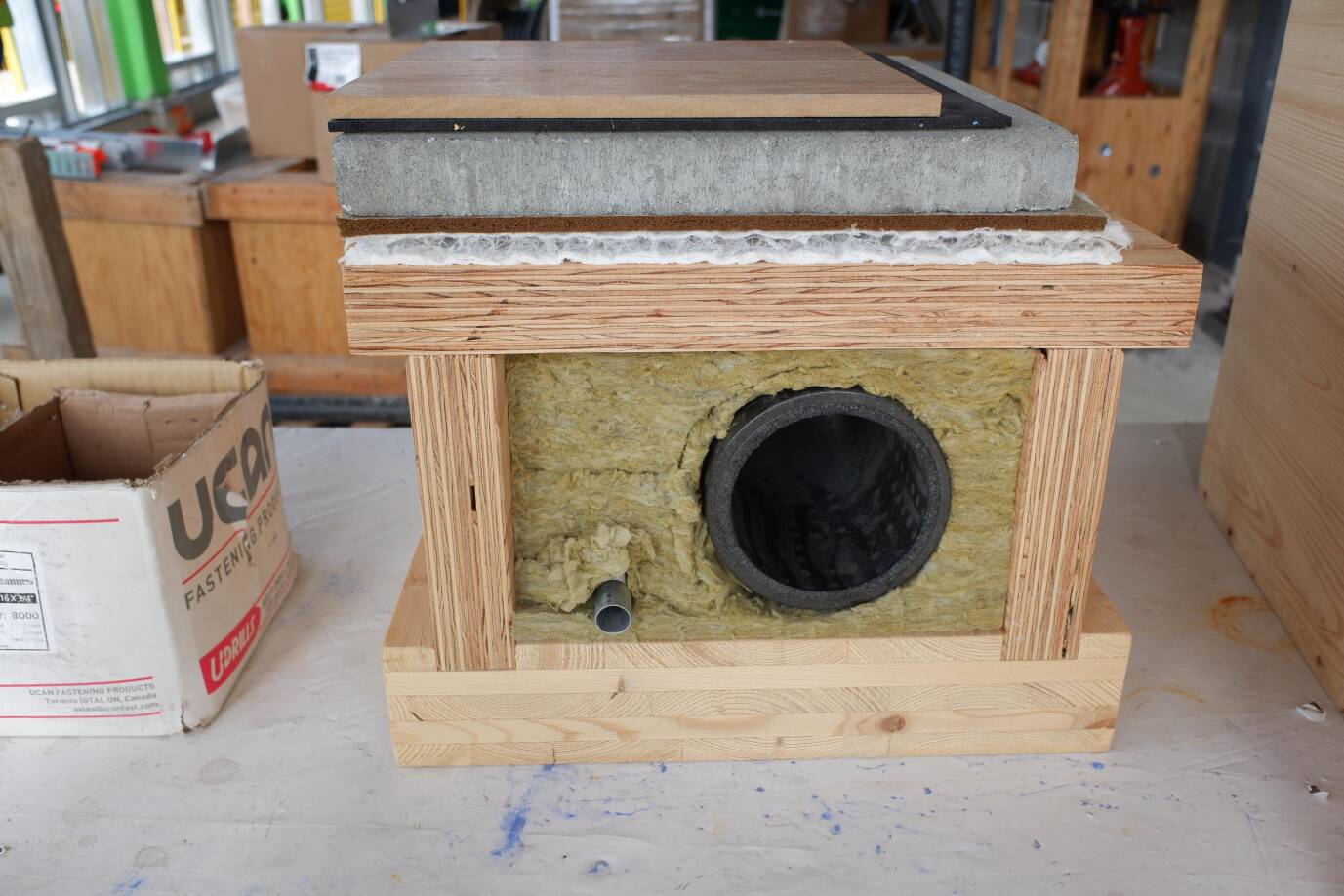
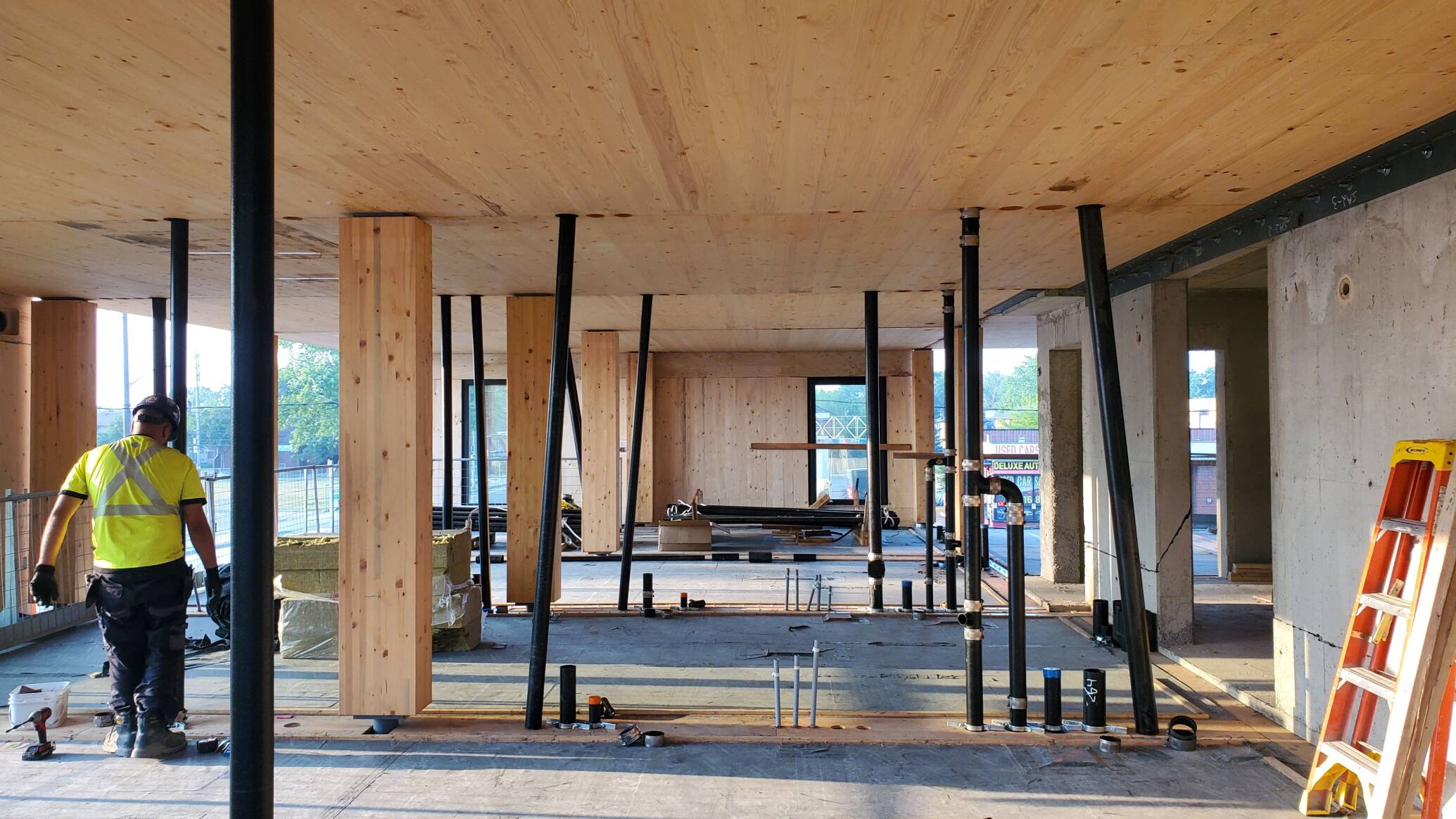
After lifting and placing the floor and wall panels and enclosing the unit, layers of acoustic insulation, concrete, more acoustic insulation and flooring are installed. The first layer seen in the image is the sound control underlayment.
Mass Timber is relatively new in North America, and there are still some kinks in the supply chain. For example, in this case the CLT is Austrian, landing in Halifax and shipped by rail across Canada to Intelligent City's factory in Vancouver for assembly into cassettes, and then trucked back to Toronto. Shawn Keyes of Intelligent City explains that the infrastructure in Canada doesn't yet exist; there are only four CLT plants offering limited choice, and no MPP plants. Keyes notes that the industry is young:
"The mass timber supply chain in North America is still in the early stages of development, and overcoming traditional ways of building and creating long-term, sustained demand is a key challenge. Overcoming this challenge with demonstration projects and proof of concept projects such as 230 Royal York are validation to the market of large-scale viability of the Intelligent city building systems."
Even with all of the shipping, it is still anticipated that the overall carbon footprint will be lower than the concrete alternative. However, Stephen Savell, Partner in developer Windmill, noted in an email:
“We are definitely not shipping another building all the way across the country again. There are many logistical challenges with such large loads as well as permitting restrictions within every province. We had many small delays that compounded into larger delays onsite. However, we knew this would be a challenge and realized we needed this building built in Ontario to gain momentum for a larger modular factory to be fit out within the GTA for future projects.”
Plans are in the works for an Ontario facility to deliver future projects for Windmill and other builders, using Canadian wood products.
With construction costs as high as they are today, residential design is a fight for inches. Consequently, the timber columns are clad in drywall for fire resistance; had they been left exposed, they would have required more wood to act as a char layer in case of fire. Construction manager Payam Noursalehi suggested that if he were doing this again, he would use steel columns, which take up even less space.
The wood ceilings and exterior walls are left exposed; this is one of the glories of mass timber, with its smell, its moisture management, and its biophilic effects. We have come a long way from the first mass timber residential tower in London, where the architects, Waugh Thistleton, were told by the developer to cover every square inch of wood with drywall because he was afraid the rental market would think wood was cheap and undesirable.
When asked what he was proudest of on the project, Steven Savell responded:
“Changing the way in which we build. The construction industry is antiquated. We see prefabrication and mass timber as the future for these types of projects to deliver a higher quality housing project faster and more sustainably.”
One of the authors of the recent study of the carbon footprint of construction noted that "Humanity has literally built itself into a corner with steel and cement." John Schellnhuber concluded: "To meet the Paris goals, we must reinvent the very materials that shape our cities. A global material revolution rooted in circularity, innovation, and cooperation can turn the construction sector from a climate problem into a cornerstone of a sustainable and resilient future."
Hälsa at 230 Royal York represents more than a material revolution. It has been described as "an opportunity to foster a replicable model for reducing embodied carbon, accelerating delivery timelines, and lowering lifecycle costs. This represents a significant step forward in addressing the housing crisis while also aligning with climate imperatives, positioning the project as a benchmark for future urban development."
California architect Bronwyn Barry has said, "The future of construction has 3 P’s: Panelized, Prefab & #Passivhaus," We are seeing the future at 230 Royal York Road.
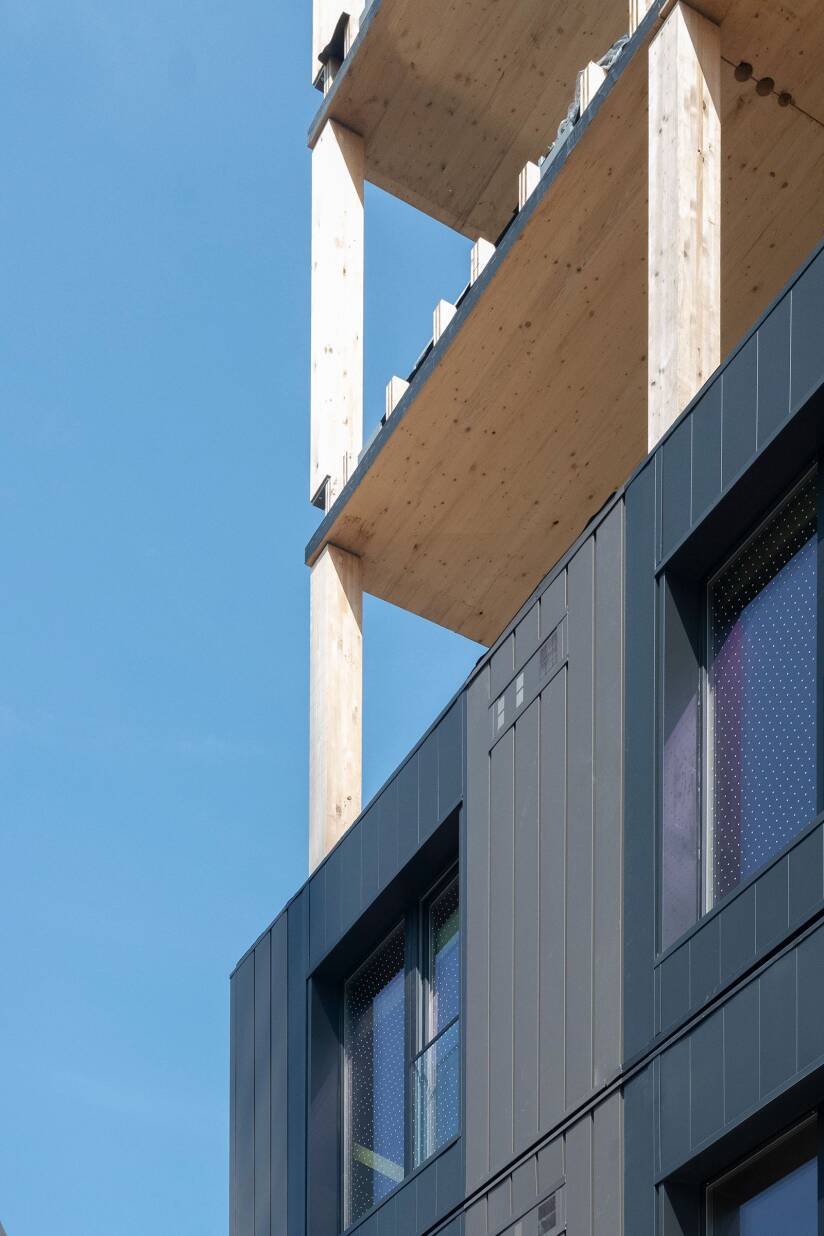
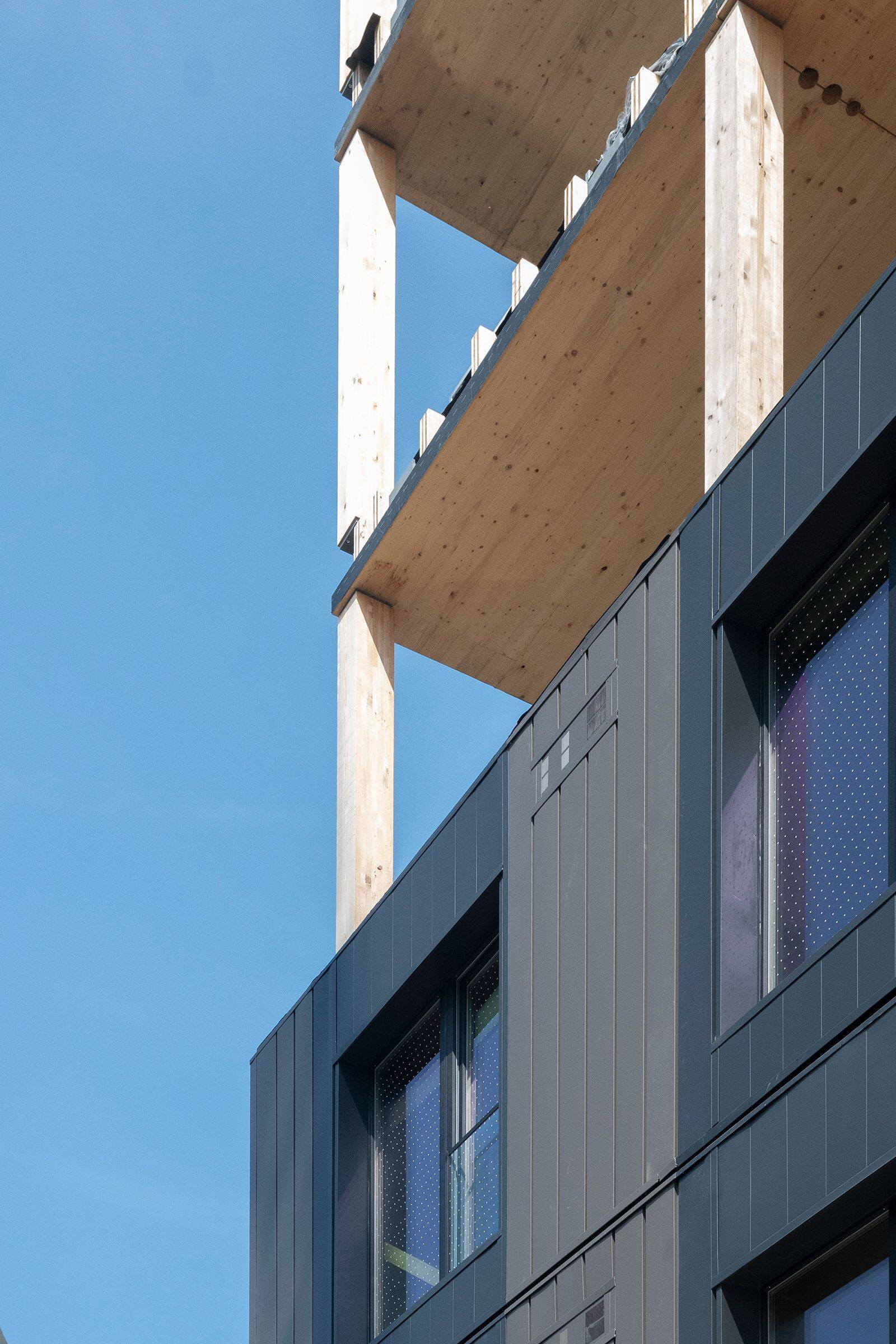
The exterior wall panels also come pre-assembled with windows, cladding, a thick blanket of rockwool insulation and the CLT. They slide into place, eliminating the need for scaffolding. Essentially, except for the concrete stair and elevator core, the entire building is constructed indoors in the Intelligent City factory in Vancouver using BIM and CNC routers, protected with a waterproof membrane, shipped to Toronto and snapped together like the Kenner Girder and Panel building set I had as a kid. This created some serious challenges for Windmill; Stephen Savell, Partner in developer Windmill says:
“The biggest challenge was changing the way our design and construction partners think about delivering a project of this scale. Meaning we had to figure out all the details much earlier than a standard construction project since the entire structure and envelope systems were being prefabricated in a factory. This meant items like all the vertical plumbing and electrical penetrations, the envelope details, etc. needed to be worked out well in advance so the drawings could be converted into digital twin modeling for production by Intelligent City.”
Meeting the tough Passive House standard requires insulation, but also airtightness; the panels may be cut in Vancouver, but they have to fit together and get tested in Toronto. That’s why accuracy and tolerances matter. The Passive House standard makes sense for residential buildings; it significantly reduces operating costs, almost eliminates noise from the exterior, and delivers fresh filtered air to each unit. Passive house buildings are also more resilient; if the electricity fails, the interior can stay warm or cool for days.
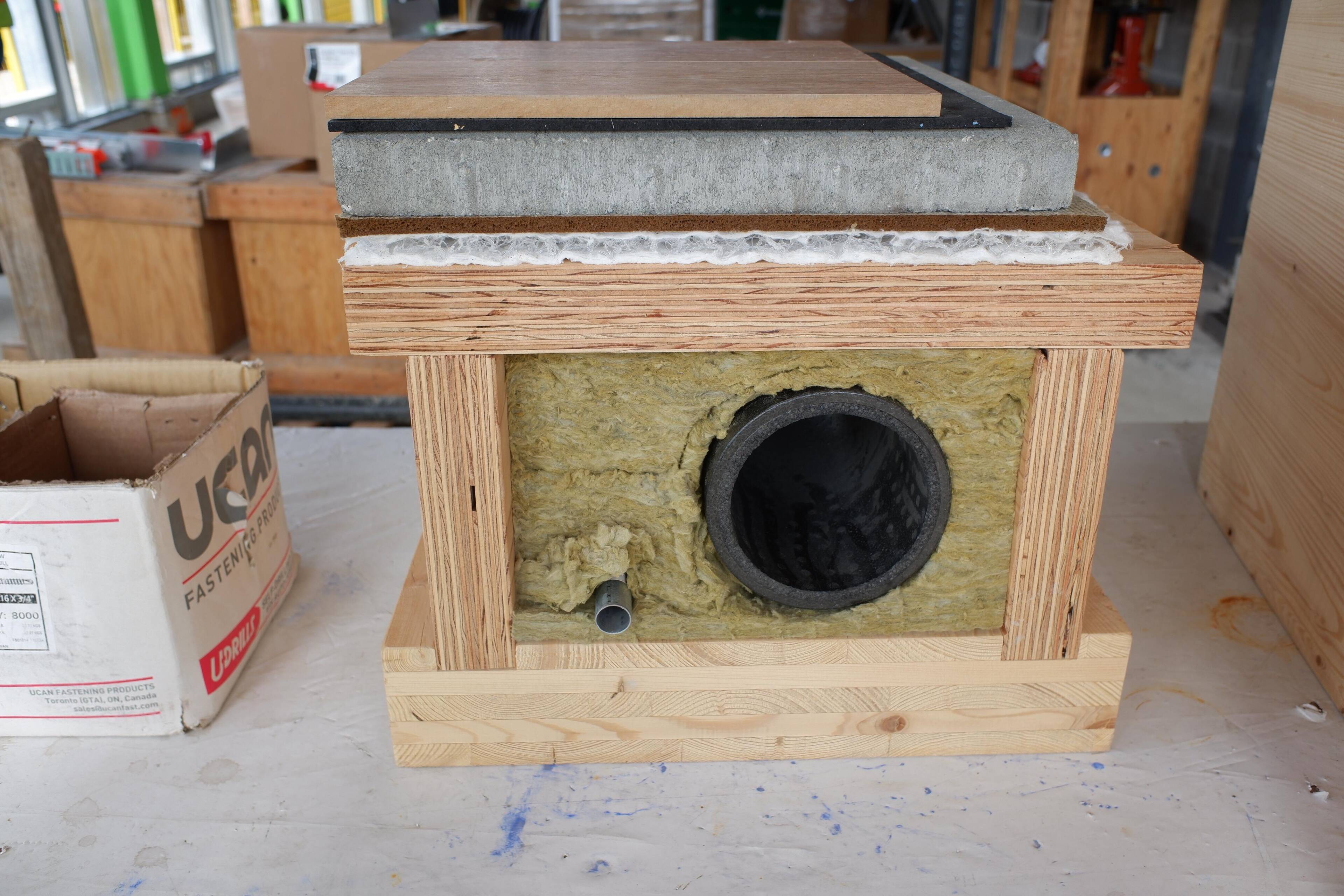
The floor cassettes solve several problems inherent in conventional mass timber construction. They are hollow-core assemblies that provide space for ducts, conduits, and insulation, built up with Laminated-Veneer-Lumber (LVL) or Mass Plywood Panel (MPP) on top of a Cross-Laminated Timber (CLT) base. It reduces the number of bulkheads required and keeps the wood ceiling clean. It also significantly reduces sound transmission, often a problem with mass timber buildings.
One Planet Living framework
Windmill is a leader in applying the holistic One Planet Living standard, which promotes "using materials from sustainable sources" and "making buildings energy efficient." It is rarely used in North America, because it goes so far beyond normal real estate development concerns. However, Windmill also considers the usual suspects, such as LEED v4, Toronto Green Standard Tier 2, and CAGBC's Zero Carbon Building Standard.
To reduce upfront carbon emissions, the developers went with mass timber, but not the conventional slabs of Cross-Laminated Timber; instead, Hälsa uses Intelligent City's "Platform for Life" system of mass-timber floor cassettes, columns, and prefabricated Passivhaus exterior wall envelope panels. Intelligent City’s building systems were developed by the company’s president and former CTO, Oliver David, and the firm itself was founded by Oliver Lang, whose architectural practice, LWPAC, designed the project. Intelligent City claims:
“Our technology-driven mass timber solutions offer unparalleled quality and efficiency. The result is a faster design and planning process, and quicker on-site construction. Our commitment to innovation delivers high-quality urban housing faster, reducing environmental impact and enhancing community livability.”
A recent study found that the construction sector now accounts for a third of global CO2 emissions and will likely consume the entire carbon budget for 2°C by 2045, if we don't have a "material revolution" shifting away from concrete and steel toward bio-based alternatives like mass timber. But the choice of materials is not the only revolution we need. Buildings last a long time, and any decision we make today “locks in” emissions for decades to come.
So yes, we have to use biogenic materials like mass timber to reduce our embodied or upfront carbon emissions. But we also must:
eliminate our use of fossil fuels to reduce operating carbon emissions.
maximize our energy efficiency to reduce electrical demand, particularly at peak times.
think about resilience in a world where extreme weather can knock out services.
use more sophisticated methods of prefabrication and construction to reduce construction time, costs, and tolerances.
increase our urban density so people can reduce their need for private automobiles.
figure out how to build efficiently and cost-effectively on small sites so we can infill them across our cities.
Oh, and we also have a housing crisis and need hundreds of thousands of residential units in a hurry.
This magazine is called “Wood Design and Building,” so when I visited Hälsa at 230 Royal York in Toronto, a nine-storey, sixty-unit residential building from Windmill Developments and Leader Lane Developments, I was looking for lumber. But I found so much more. In many ways, this building is a prototype that pushes every button on my list. It is a catalogue of possible solutions to help address and adapt to the climate crisis.
FEATURE
The Future of Construction is Here and it’s Panelized, Prefabricated, and Passivhaus
After lifting and placing the floor and wall panels and enclosing the unit, layers of acoustic insulation, concrete, more acoustic insulation and flooring are installed. The first layer seen in the image is the sound control underlayment.
Mass Timber is relatively new in North America, and there are still some kinks in the supply chain. For example, in this case the CLT is Austrian, landing in Halifax and shipped by rail across Canada to Intelligent City's factory in Vancouver for assembly into cassettes, and then trucked back to Toronto. Shawn Keyes of Intelligent City explains that the infrastructure in Canada doesn't yet exist; there are only four CLT plants offering limited choice, and no MPP plants. Keyes notes that the industry is young:
"The mass timber supply chain in North America is still in the early stages of development, and overcoming traditional ways of building and creating long-term, sustained demand is a key challenge. Overcoming this challenge with demonstration projects and proof of concept projects such as 230 Royal York are validation to the market of large-scale viability of the Intelligent city building systems."
Even with all of the shipping, it is still anticipated that the overall carbon footprint will be lower than the concrete alternative. However, Stephen Savell, Partner in developer Windmill, noted in an email:
“We are definitely not shipping another building all the way across the country again. There are many logistical challenges with such large loads as well as permitting restrictions within every province. We had many small delays that compounded into larger delays onsite. However, we knew this would be a challenge and realized we needed this building built in Ontario to gain momentum for a larger modular factory to be fit out within the GTA for future projects.”
Plans are in the works for an Ontario facility to deliver future projects for Windmill and other builders, using Canadian wood products.
With construction costs as high as they are today, residential design is a fight for inches. Consequently, the timber columns are clad in drywall for fire resistance; had they been left exposed, they would have required more wood to act as a char layer in case of fire. Construction manager Payam Noursalehi suggested that if he were doing this again, he would use steel columns, which take up even less space.
The wood ceilings and exterior walls are left exposed; this is one of the glories of mass timber, with its smell, its moisture management, and its biophilic effects. We have come a long way from the first mass timber residential tower in London, where the architects, Waugh Thistleton, were told by the developer to cover every square inch of wood with drywall because he was afraid the rental market would think wood was cheap and undesirable.
When asked what he was proudest of on the project, Steven Savell responded:
“Changing the way in which we build. The construction industry is antiquated. We see prefabrication and mass timber as the future for these types of projects to deliver a higher quality housing project faster and more sustainably.”
One of the authors of the recent study of the carbon footprint of construction noted that "Humanity has literally built itself into a corner with steel and cement." John Schellnhuber concluded: "To meet the Paris goals, we must reinvent the very materials that shape our cities. A global material revolution rooted in circularity, innovation, and cooperation can turn the construction sector from a climate problem into a cornerstone of a sustainable and resilient future."
Hälsa at 230 Royal York represents more than a material revolution. It has been described as "an opportunity to foster a replicable model for reducing embodied carbon, accelerating delivery timelines, and lowering lifecycle costs. This represents a significant step forward in addressing the housing crisis while also aligning with climate imperatives, positioning the project as a benchmark for future urban development."
California architect Bronwyn Barry has said, "The future of construction has 3 P’s: Panelized, Prefab & #Passivhaus," We are seeing the future at 230 Royal York Road.
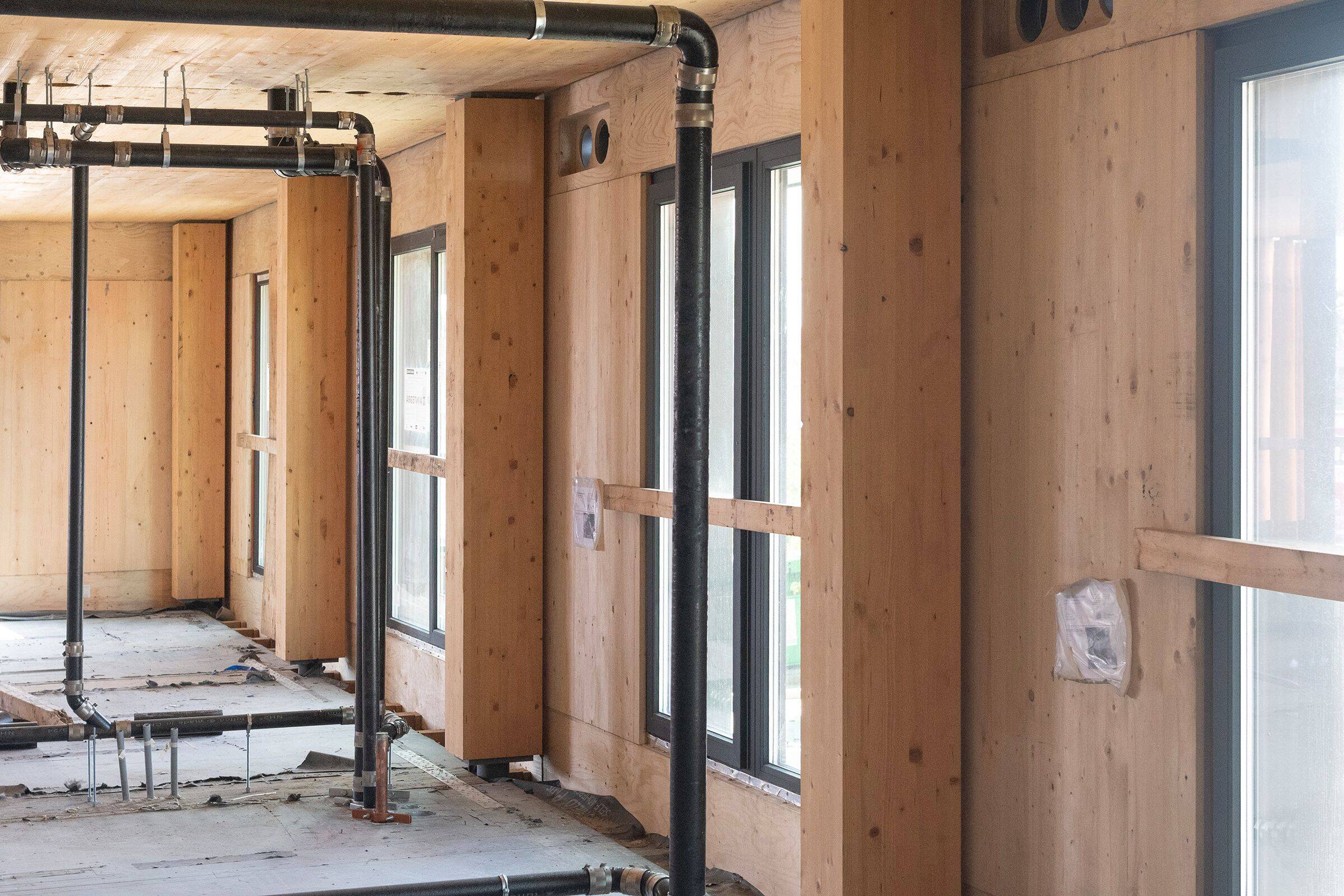

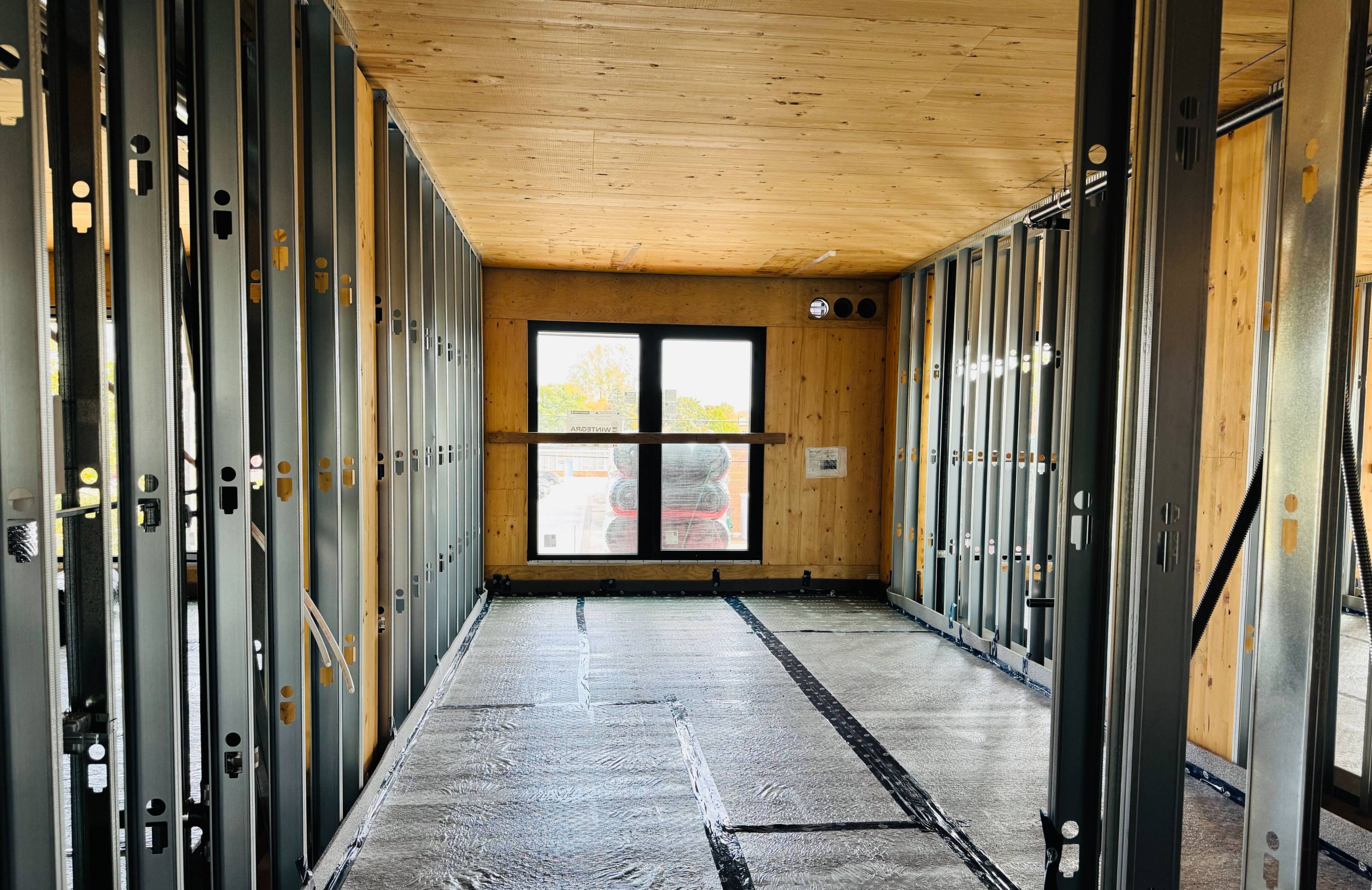

The exterior wall panels also come pre-assembled with windows, cladding, a thick blanket of rockwool insulation and the CLT. They slide into place, eliminating the need for scaffolding. Essentially, except for the concrete stair and elevator core, the entire building is constructed indoors in the Intelligent City factory in Vancouver using BIM and CNC routers, protected with a waterproof membrane, shipped to Toronto and snapped together like the Kenner Girder and Panel building set I had as a kid. This created some serious challenges for Windmill; Stephen Savell, Partner in developer Windmill says:
“The biggest challenge was changing the way our design and construction partners think about delivering a project of this scale. Meaning we had to figure out all the details much earlier than a standard construction project since the entire structure and envelope systems were being prefabricated in a factory. This meant items like all the vertical plumbing and electrical penetrations, the envelope details, etc. needed to be worked out well in advance so the drawings could be converted into digital twin modeling for production by Intelligent City.”
Meeting the tough Passive House standard requires insulation, but also airtightness; the panels may be cut in Vancouver, but they have to fit together and get tested in Toronto. That’s why accuracy and tolerances matter. The Passive House standard makes sense for residential buildings; it significantly reduces operating costs, almost eliminates noise from the exterior, and delivers fresh filtered air to each unit. Passive house buildings are also more resilient; if the electricity fails, the interior can stay warm or cool for days.

The floor cassettes solve several problems inherent in conventional mass timber construction. They are hollow-core assemblies that provide space for ducts, conduits, and insulation, built up with Laminated-Veneer-Lumber (LVL) or Mass Plywood Panel (MPP) on top of a Cross-Laminated Timber (CLT) base. It reduces the number of bulkheads required and keeps the wood ceiling clean. It also significantly reduces sound transmission, often a problem with mass timber buildings.
One Planet Living framework
Windmill is a leader in applying the holistic One Planet Living standard, which promotes "using materials from sustainable sources" and "making buildings energy efficient." It is rarely used in North America, because it goes so far beyond normal real estate development concerns. However, Windmill also considers the usual suspects, such as LEED v4, Toronto Green Standard Tier 2, and CAGBC's Zero Carbon Building Standard.
To reduce upfront carbon emissions, the developers went with mass timber, but not the conventional slabs of Cross-Laminated Timber; instead, Hälsa uses Intelligent City's "Platform for Life" system of mass-timber floor cassettes, columns, and prefabricated Passivhaus exterior wall envelope panels. Intelligent City’s building systems were developed by the company’s president and former CTO, Oliver David, and the firm itself was founded by Oliver Lang, whose architectural practice, LWPAC, designed the project. Intelligent City claims:
“Our technology-driven mass timber solutions offer unparalleled quality and efficiency. The result is a faster design and planning process, and quicker on-site construction. Our commitment to innovation delivers high-quality urban housing faster, reducing environmental impact and enhancing community livability.”