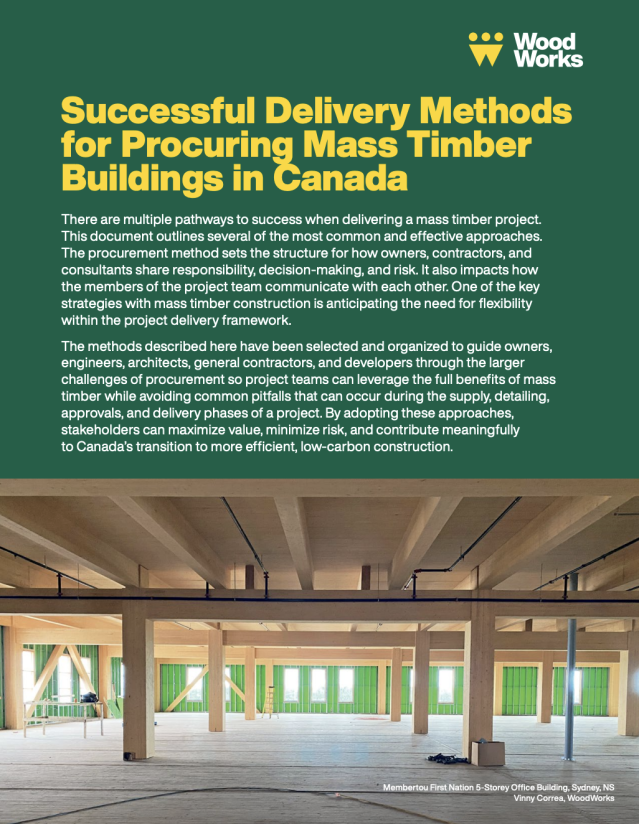
Successful Delivery Methods for Procuring Mass Timber Buildings in Canada
This document provides guidance on common and effective procurement delivery methods for mass timber buildings in Canada, outlining how different approaches shape responsibility, decision-making, risk allocation, and communication across project teams. It emphasizes the need for flexibility within procurement frameworks to accommodate the unique requirements of mass timber construction. Intended for owners, architects, engineers, contractors, and developers, the guide supports informed selection and implementation of procurement strategies that address challenges related to supply, detailing, approvals, and delivery—enabling coordinated, efficient project outcomes.
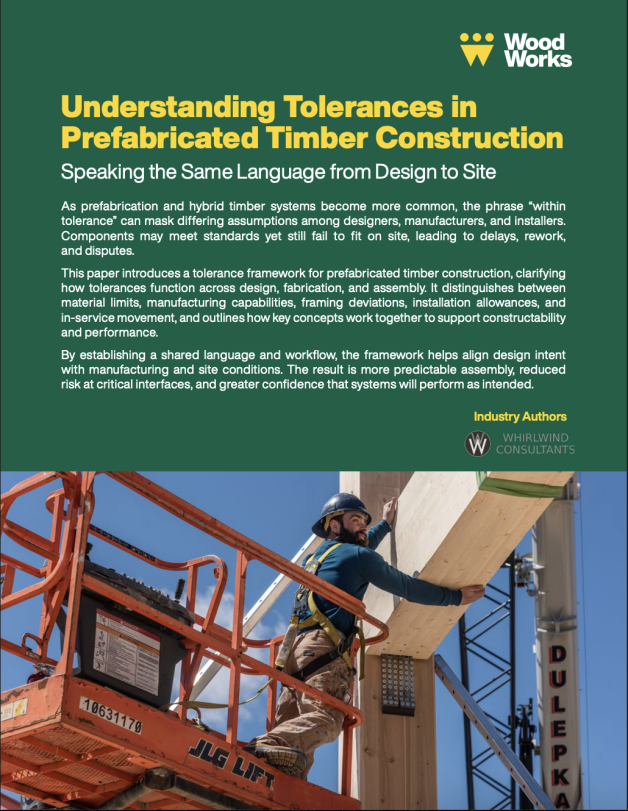
Understanding Tolerances in Prefabricated Timber Construction
As prefabrication and hybrid timber systems become more widely adopted, tolerance coordination has emerged as a critical factor in project success. Misalignment between design intent, manufacturing capability, and site conditions can lead to fit-up issues, delays, and rework. This Solutions Paper introduces a practical framework to help project teams define, communicate, and manage tolerances across all stages of a project. A step-by-step workflow supports the translation of standards into clear fitment strategies, helping teams improve coordination, reduce risk, and achieve more predictable project outcomes.
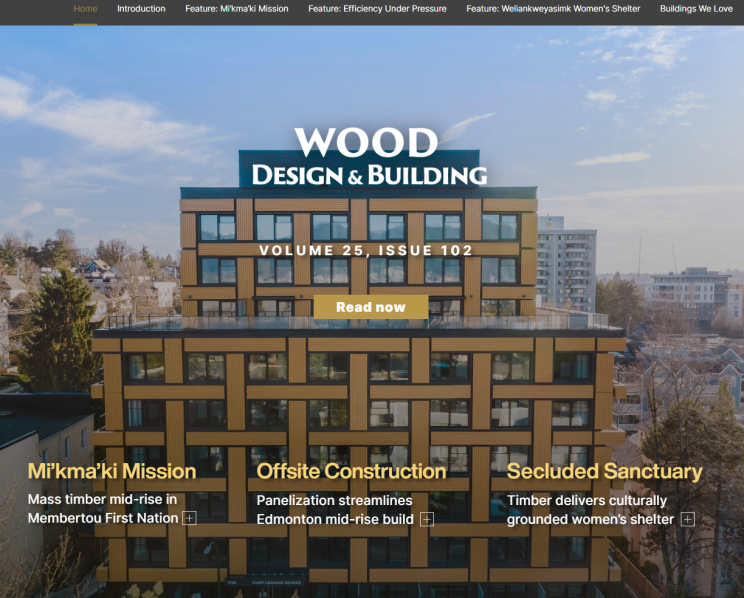
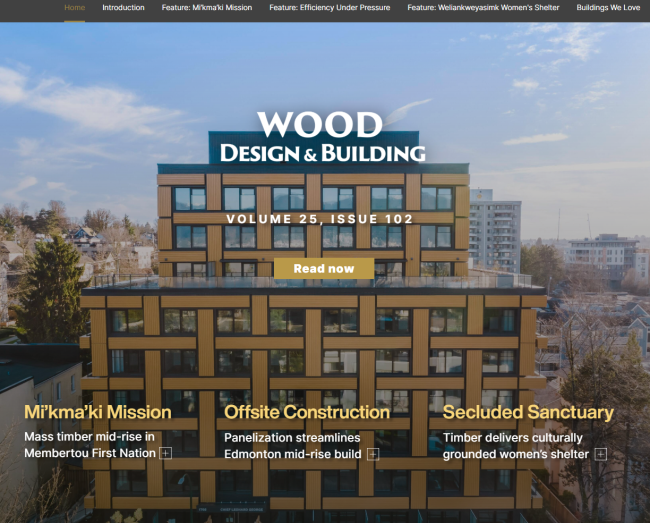
Wood Design & Building magazine
Wood Design & Building magazine showcases the projects and ideas shaping wood construction across Canada and beyond. From leading-edge designs to practical advice, the magazine brings together the work and ideas driving the industry forward. In the latest issue, a curated selection of projects highlights how wood is being used to deliver not only structural performance, but also cultural, social, and community impact. Alongside these features, technical perspectives explore prefabrication, efficiency, and the evolving role of wood in a more productive and sustainable built environment. View the latest issue here and click here to subscribe and have the magazine delivered to your inbox for free 6x per year.


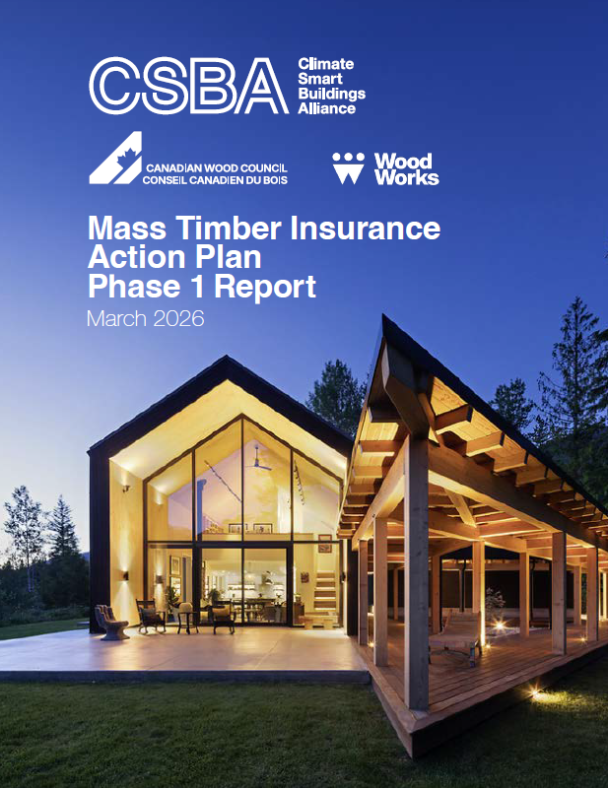
Mass Timber Insurance Action Plan: Phase 1 Report
The Mass Timber Insurance Action Plan: Phase 1 Report presents a coordinated industry effort to address one of the most significant barriers to scaling mass timber construction in Canada: the cost and availability of insurance. Developed through collaboration between the Climate Smart Buildings Alliance and the Canadian Wood Council, the report identifies key drivers of elevated insurance rates—including limited claims data, gaps in insurer-focused research, contractor experience, and constrained insurance capacity—and evaluates targeted solutions to address them.
Through four focused workstreams, the report outlines practical, industry-led approaches, including the development of a contractor risk assessment tool, a proposed large-scale testing and training facility, and a potential government-backed insurance model to unlock capacity. While not all solutions proved immediately viable, the findings establish a clear path forward, with several initiatives advancing to implementation in Phase 2.
This report provides a foundational roadmap for reducing risk, improving confidence, and enabling broader adoption of mass timber as a high-performance, climate-smart building system in Canada.
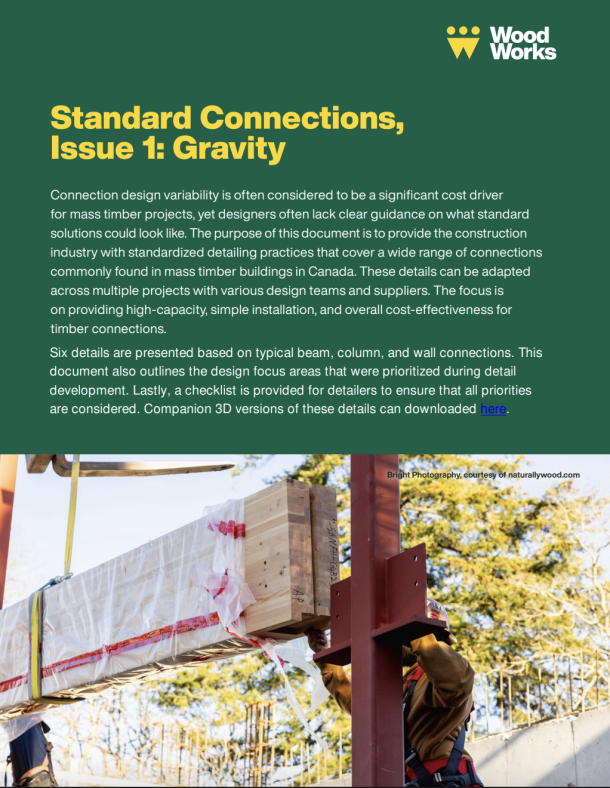
Standard Connections, Issue 1:
Gravity – Solutions Paper
Connection design variability is often a significant cost driver in mass timber projects, yet designers often lack clear guidance on standard solutions. This document provides the construction industry with standardized detailing practices for a range of common mass timber connections in Canada. These details can be adapted across projects, design teams, and suppliers, with a focus on high capacity, ease of installation, and cost-effectiveness. Six details are presented based on typical beam, column, and wall connections, along with key design priorities and a checklist to help ensure they are addressed.
Wood Design & Building magazine
Wood Design & Building magazine showcases the projects and ideas shaping wood construction across Canada and beyond. From leading-edge designs to practical advice, the magazine brings together the work and ideas driving the industry forward. In the latest issue, a curated selection of projects highlights how wood is being used to deliver not only structural performance, but also cultural, social, and community impact. Alongside these features, technical perspectives explore prefabrication, efficiency, and the evolving role of wood in a more productive and sustainable built environment. View the latest issue here and click here to subscribe and have the magazine delivered to your inbox for free 6x per year.

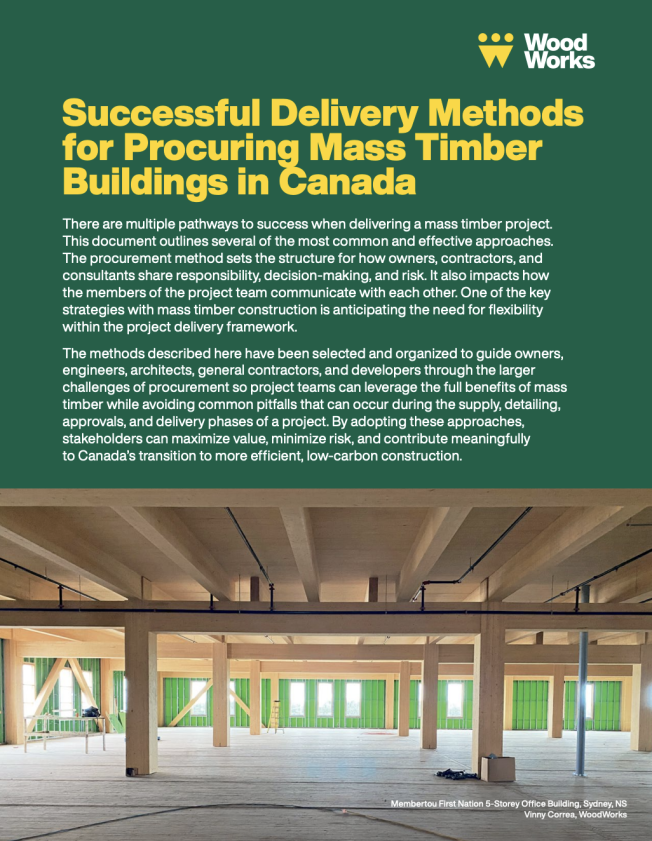
Successful Delivery Methods for Procuring Mass Timber Buildings in Canada
This document provides guidance on common and effective procurement delivery methods for mass timber buildings in Canada, outlining how different approaches shape responsibility, decision-making, risk allocation, and communication across project teams. It emphasizes the need for flexibility within procurement frameworks to accommodate the unique requirements of mass timber construction. Intended for owners, architects, engineers, contractors, and developers, the guide supports informed selection and implementation of procurement strategies that address challenges related to supply, detailing, approvals, and delivery—enabling coordinated, efficient project outcomes.
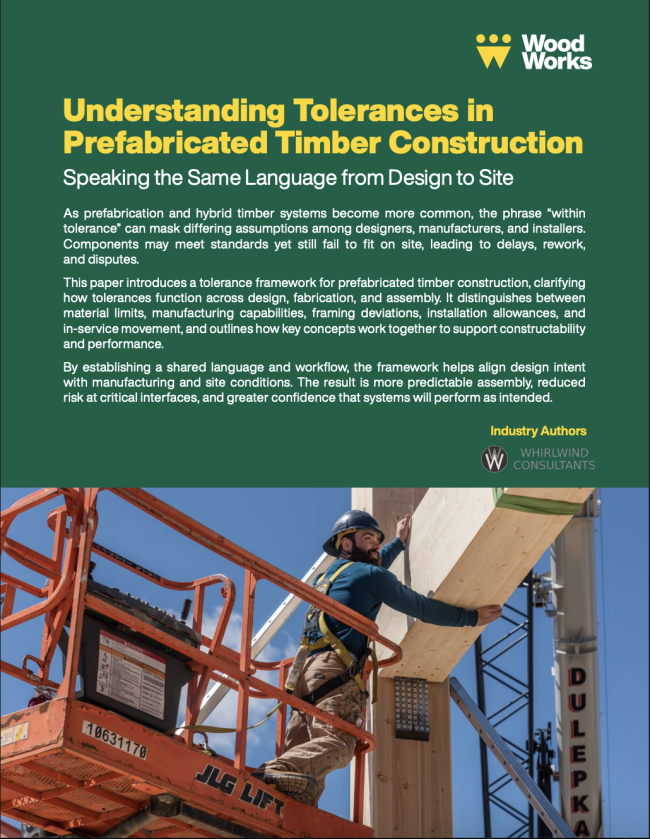
Understanding Tolerances in Prefabricated Timber Construction
As prefabrication and hybrid timber systems become more widely adopted, tolerance coordination has emerged as a critical factor in project success. Misalignment between design intent, manufacturing capability, and site conditions can lead to fit-up issues, delays, and rework. This Solutions Paper introduces a practical framework to help project teams define, communicate, and manage tolerances across all stages of a project. A step-by-step workflow supports the translation of standards into clear fitment strategies, helping teams improve coordination, reduce risk, and achieve more predictable project outcomes.
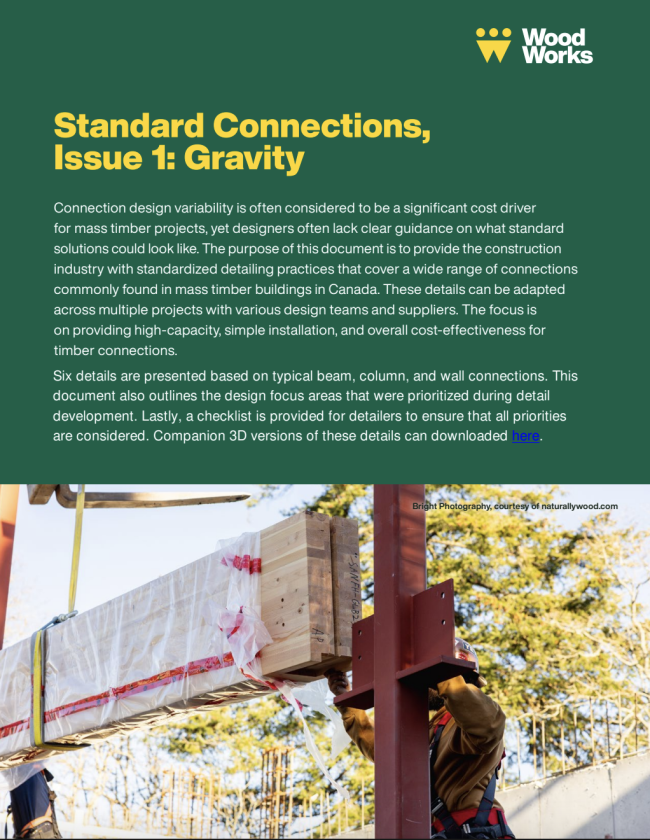
Standard Connections, Issue 1:
Gravity – Solutions Paper
Connection design variability is often a significant cost driver in mass timber projects, yet designers often lack clear guidance on standard solutions. This document provides the construction industry with standardized detailing practices for a range of common mass timber connections in Canada. These details can be adapted across projects, design teams, and suppliers, with a focus on high capacity, ease of installation, and cost-effectiveness. Six details are presented based on typical beam, column, and wall connections, along with key design priorities and a checklist to help ensure they are addressed.
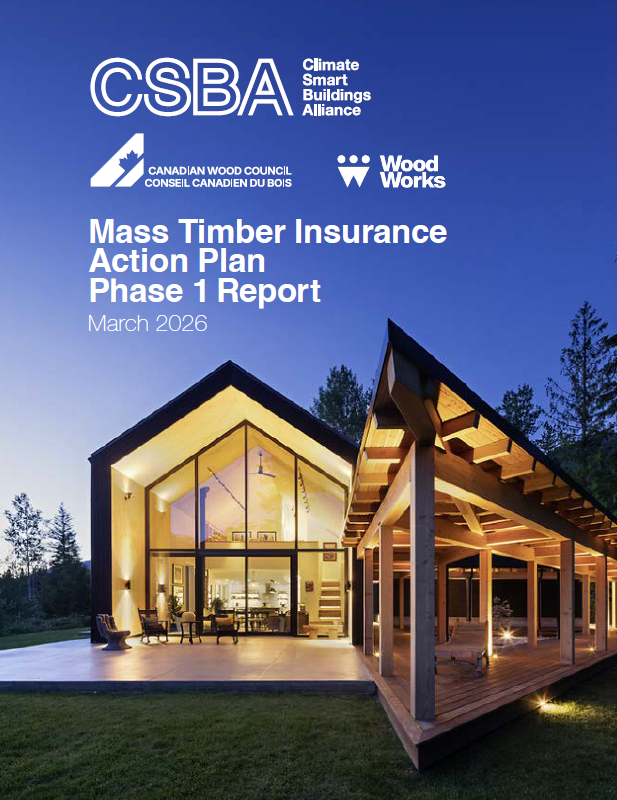
Mass Timber Insurance Action Plan: Phase 1 Report
The Mass Timber Insurance Action Plan: Phase 1 Report presents a coordinated industry effort to address one of the most significant barriers to scaling mass timber construction in Canada: the cost and availability of insurance. Developed through collaboration between the Climate Smart Buildings Alliance and the Canadian Wood Council, the report identifies key drivers of elevated insurance rates—including limited claims data, gaps in insurer-focused research, contractor experience, and constrained insurance capacity—and evaluates targeted solutions to address them.
Through four focused workstreams, the report outlines practical, industry-led approaches, including the development of a contractor risk assessment tool, a proposed large-scale testing and training facility, and a potential government-backed insurance model to unlock capacity. While not all solutions proved immediately viable, the findings establish a clear path forward, with several initiatives advancing to implementation in Phase 2.
This report provides a foundational roadmap for reducing risk, improving confidence, and enabling broader adoption of mass timber as a high-performance, climate-smart building system in Canada.